Dr Madhumita explores how artificial intelligence reshapes literary translation on DifferentTruths.com, balancing automated efficiency with the preservation of cultural depth.
AI Summary
- The Evolution of Translation: Artificial intelligence tools and large language models provide rapid drafts, ensure structural consistency, and assist research, though literature inherently relies on creative deviation rather than standardised accuracy.
- Critical Ethical Concerns: Relying heavily on machine-generated output risks authorship ambiguity, potential underpayment for human post-editors, and the stylistic homogenisation of smaller, indigenous languages.
- A Collaborative Future: Sustainable literary translation requires human expertise to remain central, treating artificial intelligence as a supportive companion rather than a total replacement.
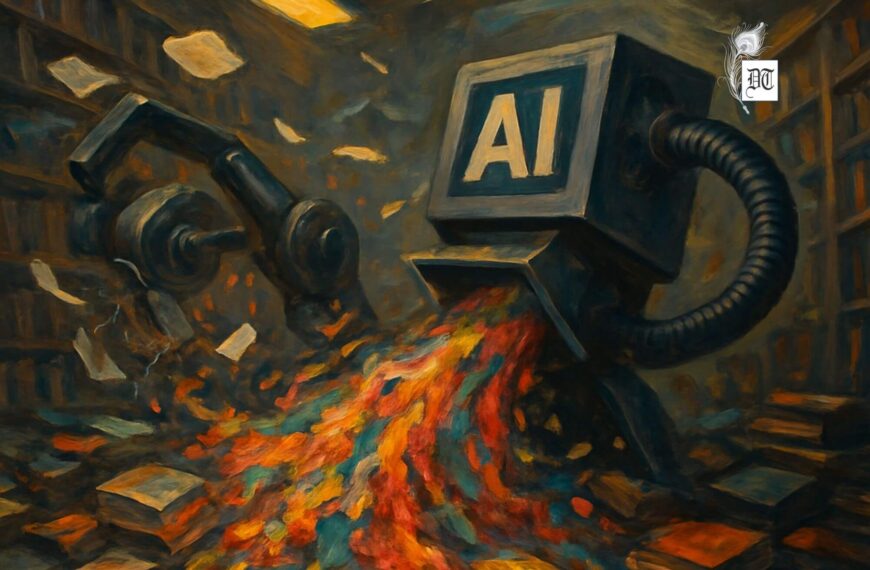
Translation has always been more than the replacement of words from one language with words from another. In literary translation, the translator enters the inner world of a text and recreates its emotional, cultural, and artistic life in a new language. A poem, novel, drama, or short story carries not only literal meaning but also atmosphere, silence, rhythm, idiom, symbolism, and cultural experience. Therefore, literary translation is a creative and interpretive act. With the rapid growth of artificial intelligence, especially neural machine translation and large language models, the field is entering a new phase. AI tools can now produce fluent translations within seconds, compare multiple versions, suggest idiomatic alternatives, and even imitate literary styles. The central question is no longer whether AI can translate, but whether it can translate literature in a way that preserves artistic value.
Recent developments show that AI-based translation tools are becoming institutionally accepted. The European Commission, for example, describes its AI language tools as systems that translate, generate, summarise, and improve multilingual content, with eTranslation offering secure neural machine translation across EU official languages and others. Such examples prove that AI is no longer a marginal tool; it is becoming part of the professional translation ecosystem. Yet literary translation differs from administrative, technical, or commercial translation because literature relies on creative deviation rather than standardised accuracy.
AI Support
AI can support literary translators in several important ways. It can provide a first draft, suggest synonyms, identify repeated motifs, compare parallel texts, explain obscure references, and assist with research on cultural or historical contexts. For long novels, AI can help maintain consistency in names, places, repeated phrases, and character-specific speech patterns. It can also be useful for translators working from less familiar dialects or historical registers, though its output must always be checked carefully.
Large language models are especially significant because they not only translate sentence by sentence but also respond to prompts about tone, genre, character voice, and intended readership. A translator may ask an AI system to produce a literal, poetic, children’s, or culturally adapted version, and then compare the results. In this sense, AI can function as a creative assistant. It does not remove the translator’s work; it multiplies the number of choices available to the translator.
Assistance vs Authorship
However, assistance is not authorship. A machine-generated version may be fluent but aesthetically weak. It may choose common phrases where the original demands strangeness. It may normalise the very difficulty that gives a literary work its power. Literature often depends on ambiguity, broken syntax, irony, regional speech, symbolic repetition, and silence. AI systems are trained to predict probable language, while literature frequently becomes memorable by resisting probability.
Research on machine translation and literary creativity shows mixed but important results. Guerber and Toral found that human translation scored highest in creativity, followed by post-editing, with machine translation scoring the lowest, suggesting that post-editing may limit translators’ creativity. This is a crucial finding because literary translation requires creative risk. If the translator begins with a machine draft, the structure and vocabulary of that draft may silently influence the final version. The translator may correct errors but remain trapped within the machine’s literal or conventional framework.
Human vs Machine
At the same time, recent studies suggest that large language models may outperform earlier neural machine translation systems. Castaldo, Castilho, Moorkens, and Monti’s 2025 study on LLM-based literary translation post-editing found that post-editing LLM-generated translations can reduce editing time while maintaining a comparable level of creativity in certain high-resource language contexts. This indicates that the future will not be a simple opposition between human and machine. Instead, the quality of AI-assisted literary translation will depend on language pair, genre, translator skill, training data, editorial process, and ethical control.
A recent reader-centred study also complicates the debate. Readers often find AI-generated literary translations acceptable but prefer human translations for clarity and immersive effect, highlighting that automatic metrics may miss reader preferences. This is especially important because literature is ultimately experienced by readers, not by algorithms. A translation that scores well on fluency may still fail to move, surprise, or disturb the reader in the way the original text does.
Serious Ethical Questions
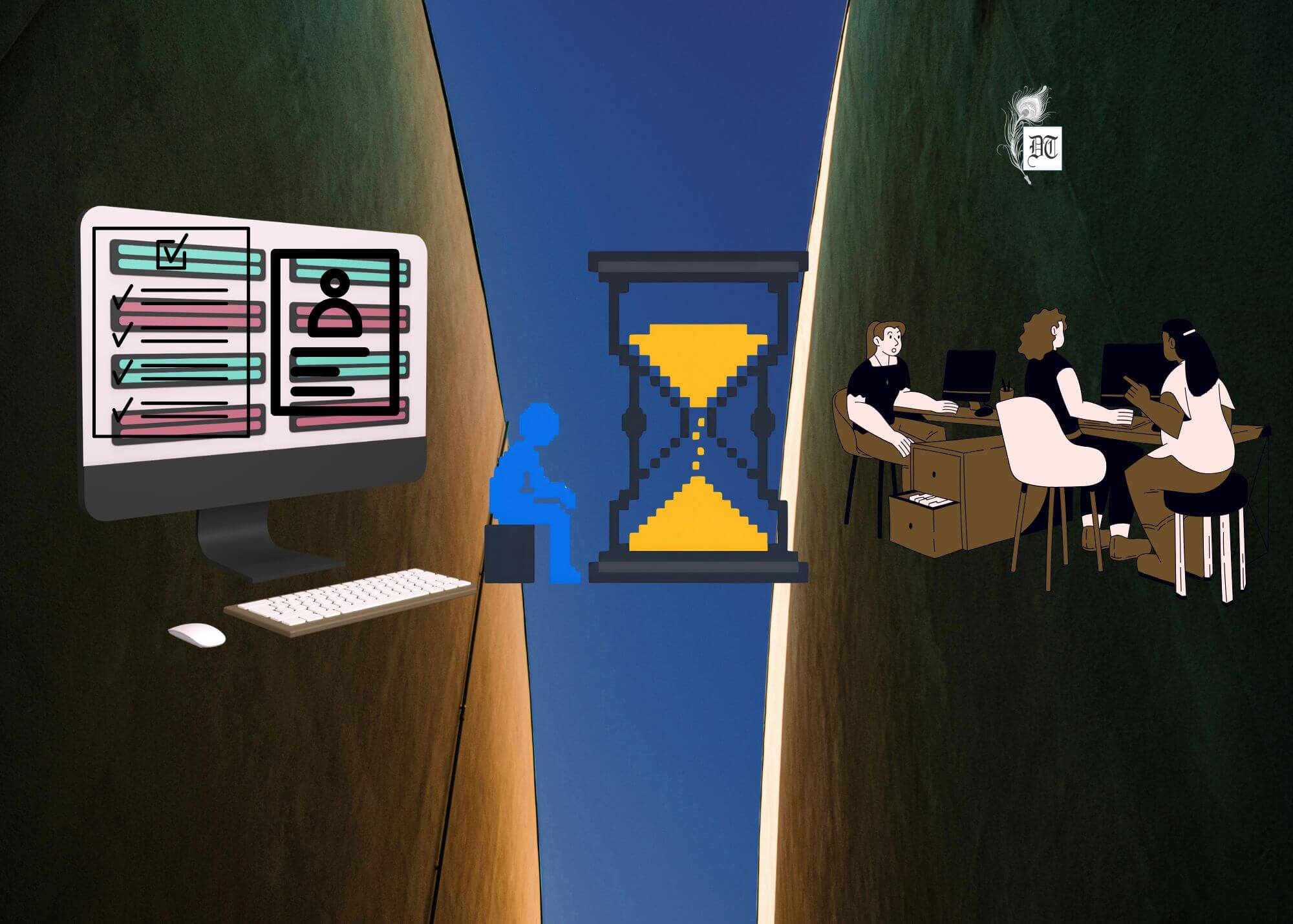
The use of AI in literary translation raises serious ethical questions. First, there is the question of authorship. If a translation is generated by AI and edited by a human, who deserves credit? Is it the original author, the AI company, the post-editor, or the publisher? Second, there is the issue of payment. If publishers treat translation as machine output with minor human correction, translators may be underpaid for work that still requires deep literary judgement.
Third, AI may threaten linguistic diversity. Major languages with large digital corpora are likely to receive better AI support, while smaller, oral, indigenous, or less digitised languages may be misrepresented or ignored. UNESCO’s Recommendation on the Ethics of Artificial Intelligence warns that AI may affect cultural identity and diversity and may concentrate cultural content, data, markets, and income in the hands of a few actors. This warning is directly relevant to literary translation. If AI systems are controlled by a small number of global companies and trained mainly on dominant languages, they may produce translations that sound smooth but are culturally flattened.
Stylistic Homogenisation
There is also the danger of stylistic homogenisation. A great literary translator often preserves difficulty, foreignness, rhythm, and cultural texture. AI, however, often tends toward clarity, fluency, and predictability. These are useful qualities in technical translation but not always in literature. A folk song, a Dalit autobiography, a modernist poem, or a regional novel may lose its force if translated into polished, global English without the social and cultural tension it carries.
The future literary translator will not disappear; the role will evolve. Translators will need new forms of digital literacy, including prompt writing, AI evaluation, corpus comparison, post-editing, and copyright awareness. But these technical skills must be added to traditional literary skills, not replace them. The translator of the future must remain a close reader, cultural historian, stylist, critic, and creative writer.
Human translators will become even more important as evaluators of AI output. They will decide when to accept, reject, revise, or completely rewrite machine suggestions. They will protect character voice, cultural nuance, social context, and emotional truth. They will also have to defend the ethical value of translation as intellectual labour. In literary publishing, transparency may be necessary: readers should know whether a work was human-translated, AI-assisted, machine-generated, or post-edited.
Collaborative Future
The most promising future is collaborative. AI can handle repetitive support tasks, produce rough drafts, and offer alternatives. Human translators can provide interpretation, judgement, beauty, and responsibility. In this model, AI becomes a tool of expansion rather than replacement. It may help bring more world literature into circulation, especially for small publishers and under-translated languages, but only if human expertise remains central.
AI will undoubtedly shape the future of literary translation, but it will not end the need for human translators. Literature is not merely information; it is experience, voice, memory, and form. AI can assist in conveying meaning, but literary translation requires recreating artistic life. The future will therefore depend on how responsibly AI is used. If publishers use it only to reduce cost, literary quality and translators’ livelihoods may suffer. If translators use it critically and creatively, AI may become a valuable companion in the translation process. The task ahead is to build a human-centred model of AI-assisted literary translation, one that values speed without sacrificing beauty, access without erasing diversity, and technology without diminishing the translator’s creative dignity.
References
1. Abdelhalim Aly, S. M., & Alsahil, A. A. (2025). Artificial intelligence tools and literary translation: A comparative investigation of ChatGPT and Google Translate from novice and advanced EFL student translators’ perspectives. Cogent Arts & Humanities.
2. Castaldo, A., Castilho, S., Moorkens, J., & Monti, J. (2025). Extending CREAMT: Leveraging large language models for literary translation post-editing. Machine Translation Summit.
3. European Commission. (2026). AI translation and language tools.
4. Guerberof-Arenas, A., & Toral, A. (2022). Creativity in translation: Machine translation as a constraint for literary texts. Translation Spaces.
5. UNESCO. (2021). Recommendation on the Ethics of Artificial Intelligence.
Picture design by Anumita Roy

Dr Madhumita Ojha, a Hindi literature scholar, specialises in folk literature, cultural studies, gender, and marginalised narratives. She earned an MA and PhD in Hindi from Presidency University, plus a BEd from Mahatma Gandhi International Hindi University, Wardha. Author of Folk Literature and Culture, she has published extensively on Kinnar narratives, LGBTQ representation, women’s studies, and Dalit literature. She serves as a guest lecturer at the Hindi University, Howrah, Kolkata.
 By
By
 By
By