
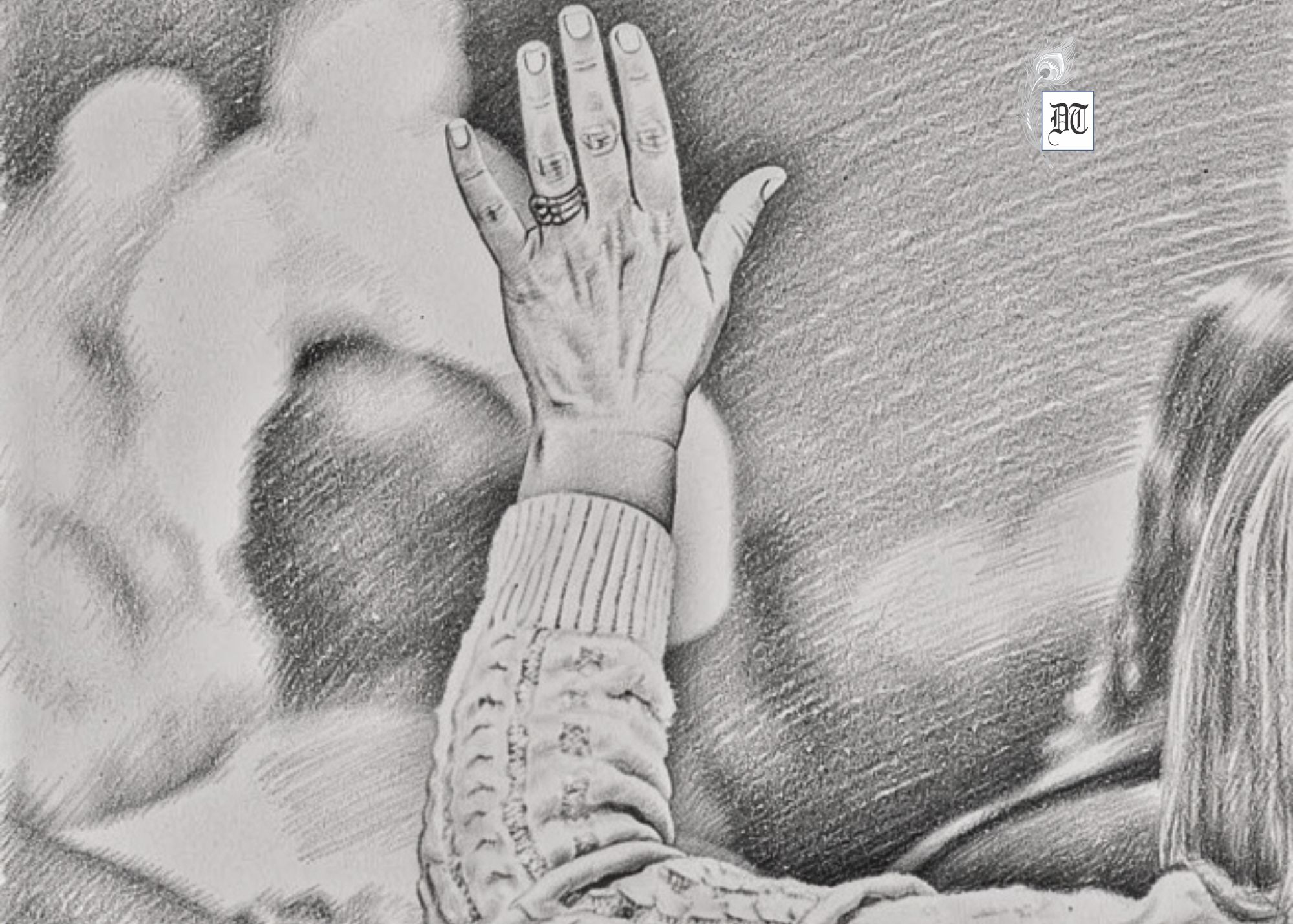

Arindam explores the pulse of Indian democracy on DifferentTruths.com, highlighting how citizens’ voices and dissent shape our nation’s enduring spirit.
AI Summary
- The Power of Dissent: Peaceful protests by India’s youth on July 20, 2026, serve as vital reminders that democratic institutions must remain accountable to the governed.
- Journalism’s Role: Independent reporting serves as a bridge, amplifying the quiet, dignified voices of citizens seeking fairness, transparency, and institutional integrity.
- Democratic Conscience: True statehood requires listening to the populace; a resilient Republic thrives not on blind obedience but on an ongoing, courageous national conversation.
I. The Morning the Republic was Questioned
Some mornings swallow themselves in the anonymity of an ordinary day. Others sketch themselves into history without a trumpet.
July 20, 2026, was one of those mornings.
Before Parliament’s corridors had settled into their familiar rhythm, another India had already awakened. It did not collect under chandeliers or around polished tables but on busy trains, weary buses, shared taxis and on foot. These young citizens carried briefcases, not backpacks; hope, not certainty; and questions, not manifestos.
There have been many protests in New Delhi. It has taken over slogans of victory and of doom. Governments have changed, and parties have come and gone. Each generation, however, finds its reason to turn to the capital of the nation. The event was a march born of more than one grudge. It was a mirror to our shared fears of fairness in examinations, a contracting job market, a loss of faith in institutions, and a creeping sense that merit was no longer king. Public reporting of the July 20 mobilisation mirrored this broadening of purpose, shifting from immediate concerns to deeper questions of accountability and democratic participation.
What struck me was not only the size of the gathering but also the inevitable clashes with the State. Democracies have always had to balance dissent and authority. What remained was something more subtle.
These were youthful faces.
Some are just out of school. Others are recent graduates, and their degrees haven’t opened any doors. Many were preparing for exams they believed were unfair. Hundreds had travelled kilometres, not because they believed change was a given, but because silence was no longer an option.
For years, we have been told that India’s greatest demographic dividend is its youth. Economists praise it. It’s what politicians use. Corporate leaders talk of it with confidence. But demographics are not destiny. They become an opportunity only when society recognises the aspirations of those who will inherit the future.
The demands weren’t all that radical. They were Constitutional requirements: A fair audit. A transparent recruitment process. A job that matters. Trustworthy institutions. The liberty to ask questions without being thought disloyal.
It was independent journalists, many with little more than a microphone and camera in the crowd, who were instrumental in revealing this truth. There are studio arguments that have turned into something like scripted ideological warfare, but field journalism reveals that ordinary people have a quiet dignity. The young women speak with grace rather than anger; the students choose reason over rhetoric; the parents wonder if their children’s hard work will matter. These street and campus conversations spoke of a generation more interested in fairness than in show.
The microphone doesn’t create sentiment. It just makes what is already there louder.
Numbers are powerful – seats won, schemes launched, kilometres paved. But citizens experience governance differently. They remember broken promises. They remember whether they have built trust or fear in institutions.
There is a clear difference between hearing the noise of a crowd and listening to the voice of a generation. The latter is the real work of statesmanship.
History has shown us again and again that young people take to the streets for a reason. During the freedom struggle, the Nav Nirman agitation, the Total Revolution of JP and the subsequent anti-corruption movements, the students were the early warning system of the Republic. They differed in method and politics, but the message was the same: when institutions grow remote, the streets become the schools of democracy.
No responsible democracy should romanticise protest. Public order issues. Law should be the final arbiter. Another principle is equally important: Citizens must never believe that peaceful dissent is futile. The strength of democracy is not the absence of protest but its capacity to hear it without fear.
Watching the day’s events unfold in Delhi, one thought kept coming back: what if they decided not to come? What if apathy had replaced disappointment? What if the belief in democratic participation had faded away?
That would have been the bigger tragedy. Apathy is far more dangerous than dissidence—still, a citizen protests, believing that the Republic can hear. Already, a silent one may have given up.
That is why the images of July 20 should be remembered as democratic testimony, not partisan theatre. In every young face in that crowd, there was an unspoken question: “Does my country still hear me?”
Governments might respond with policy. Parties with Words. Courts with judgements. The reporters answer in different ways.
We hear.
Sometimes the best thing you can do for the public is listen. A camera doesn’t just record events. It takes the nation’s emotional temperature. It tells future generations not only what happened but also how people felt living through history.
Journalism is important not because it always brings down governments, but because it ensures that every government believes the governed matter.
That may be the first lesson of July 20
The Republic does not exist only in the sittings of Parliament. And it continues to thrive outside those walls, with its youngest citizens still possessing voices worthy of being heard.
II. The Republic Under Siege
There are times in the life of a nation when facts are not enough. Law is the reason for an action. Medical science explains the defence of administration. But then something is left out.
The answer is conscience.
Another image crept into the national consciousness that July morning, even as the country’s eyes were on the march to Parliament. Sonam Wangchuk was being rushed to Delhi’s Safdarjung Hospital. The image spread faster than the official statements: a frail man, weeks without food, helped by the security personnel – an almost symbolic path from the open streets to the cold walls of a hospital room.
Officials said the intervention was medically necessary, done on medical advice and with judicial oversight to save his life. Wangchuk had pledged to continue his peaceful fast, and his supporters read the move differently. The difference in perspectives was reflected starkly in public reporting.
Such moments happen in any democracy. The State says it’s saving a life. The citizen says he is asserting his freedom. All these claims are difficult to discard. Constitutional democracies are not intended to remove such tensions but to regulate them with openness, moderation and civility.
What came next added a human dimension. Wangchuk’s wife, Dr Gitanjali J. Angmo, spoke with visible anguish not about legal technicalities or political slogans but about her husband’s dignity, consent and right to conduct his peaceful protest. “Saving lives is the most important thing,” the administration said. Later, the Delhi High Court refused to order transfer to a private hospital, leaving the larger debate open.
What history usually remembers is not competing legal arguments but competing images. Governments keep records. People remember pictures.
The Republic is replete with such defining images. Mahatma Gandhi marched to Dandi, a stick in his hand. Jayaprakash Narayan looked out at an ocean of expectant faces. Anna Hazare sat cross-legged at Ramlila Maidan. Farmers slept under tractors in the biting Delhi winter.
Now, whether you agree with his demands or not, there is the image of Sonam Wangchuk being carried to a hospital. Some saw it as compassion, others as compulsion.
Images have extraordinary moral power, for they question before they answer.
Can the State force medical treatment to save the life of a citizen? Does the right to peaceful protest include going on a long hunger strike? At what point does a father’s duty to protect become an interference? Does saving a life inadvertently compromise personal autonomy?
There are no simple answers. These are not questions to be answered with instant outrage or casual dismissal but with serious democratic reflection.
We live in a time that prizes certainty over contemplation. TV studios polarise issues before the facts have emerged. Social media acts as a judge before evidence is presented. Algorithms love outrage. But patience is a virtue that democracy needs and is hard to come by.
But the most important audience was not in Parliament or the studios. It was the Indian youth – the students who poured into Delhi, the graduates looking for jobs, and the young women insisting that merit alone determines success. New voters were trying to understand the relationship between power and citizenship.
They looked not only at what happened, but also at how it happened. The way they spoke. Handling of dissent. If the difference was accommodated and power was restrained.
Every generation learns from the behaviour of its public institutions. Some lessons are confidence builders. Other people plant doubt. This instance was one of those cases.
For some people, hospitalisation was a medical necessity. For others, it was a violation of liberty. Either way, it was democracy grappling with one of its oldest dilemmas: the line between protecting a citizen and honouring their agency.
It is in such crises that Constitutional morality is tested. Our Constitution was not written by men who thought a Republic of uniform thought was a good thing. They sought trouble and disagreement. Their framework was designed to enable dissent to live alongside dignity.
Decency. That word resurfaces in Constitutional jurisprudence as the invisible thread that binds liberty, equality and justice. Freedom without dignity is just a licence. Dignity without equality is mathematics. Justice without dignity is a process.
The images of Sonam Wangchuk resonated because they were not simply the picture of one activist. They became a mirror of the Republic itself.
Can institutions rule without degrading dignity? Can governments protect citizens without seeming to silence them? Can disagreement remain peaceful without being suspect?
These are questions that confront every government, regardless of its political affiliation. For power passes. The principles of the Constitution are eternal.
The Delhi sun climbed higher in July. It rained as thousands kept marching toward Parliament. Some carried placards, some water bottles, many tired from overnight journeys, most clutching little more than hope. Few would ever meet Wangchuk, but they shared a belief: citizenship is incomplete if it ends with a vote every five years. It includes the right to question, to persuade, and to dissent – and above all, to be heard.
The Republic should never fear such citizens. History teaches us that those most invested in the nation’s future are often the ones who question it peacefully.
Indifference doesn’t strengthen democracy. Engagement does. At times, the greatest engagement is to stand quietly as a citizen who will not surrender conscience or hope.
III. Is Power Able to Shut Down the Media?
There is an old truth in journalism: governments only become mad at newspapers when newspapers start doing their job.
Power is the search for order. Questions of journalism. Every free society must have tension within it. Nor is either meant to overpower the other; they keep each other honest.
That relationship is once again under strain in India. The debate is no longer confined to traditional newsrooms. Today, a journalist with a smartphone, a portable microphone and an internet connection can reach millions without owning a network or corporate backing. The reporters standing in the crowd would let the common people speak to the nation directly.
This is digital journalism’s quiet revolution. The gatekeepers were different. The gate has mostly disappeared.
People like Ajit Anjum, the sort of reporter who walks into villages, railway stations, campuses and protests to ask the one question that television studios too often ignore: “Tell me what you’re feeling.”
It’s a deceptively simple question, but it brings something essential back to the craft. The story comes back to the citizen.
He takes his time with students and youth, engaging them without theatrics, fancy graphics, choreographed shouting matches or the rush to call winners before the facts have settled in. Instead, we hear tentative voices, worried smiles, futures not yet decided, and a deep desire to be heard.
That is journalism at its most elemental: presence.
The press was not meant to be an arm of the State, nor its permanent opposition. Its Constitutional function is more humble and higher: to bear witness.
The Indian Constitution does not specifically mention freedom of the press. Still, the Supreme Court has time and again held that it is an extension of freedom of speech and expression under Article 19(1)(a). The framers understood that when fear filters information, citizens cannot make meaningful use of their freedoms.
History is a painful reminder. Censorship under the 1975 Emergency silenced not only newspapers but also public discourse itself. Editors had cut out stories and left blank spaces. Journalists learned the law could shut them down.
But the Emergency also proved that silence under compulsion is not silence at all. The return of democracy brought the suppressed questions to the surface again. Governments came and went, but the questions stayed.
Every generation learns this lesson again. Technology changes. Power changes. Journalism evolves. Truth doesn’t.”
There are a few blunt instruments of censorship today. It works through economic pressure, legal harassment, online intimidation, selective access, and polarisation, seducing journalists into taking sides rather than seeking facts.
These problems are not unique to India. Democracies around the world face the paradox of information abundance and trust scarcity. The scarcity is a heavy burden for journalists.
Governments must resist the temptation to muzzle criticism. Journalists should not become activists in reporters’ clothing. Verification, not ideology, is the source of credibility. The best journalism is not the noisiest. It’s the most careful journalism.
A free press cannot demand accountability from others while it avoids accountability itself. I respect independent journalism not because it’s perfect but because it’s self-correcting. Journalism knows error. Propaganda never does that.
Governments are not primarily afraid of journalists. Fears informed citizens. The mic is just a tool. It is strong in what it amplifies. The young graduate wonders whether merit still matters. The farmer is asking about procurement. The teacher decries standards slipping. The mother is anxious about her child’s future. The student is questioning a compromised exam.
Newsrooms can’t manufacture these voices. They are already in the field. All journalism does is connect them up.
In times of national disquiet, independent journalism is vital. Statistics rarely tell the story reporters uncover when they leave air-conditioned studios for the crowded streets: faith—not blind faith but faith touched by questioning.
The young woman who is calmly speaking into the camera is applying for citizenship. When a student respectfully disagrees with authority, they strengthen democratic culture. The cynical unemployed graduate can run down the Republic’s moral capital. Their voices need to be heard—not always because they are right, but because they remind us that democracy is a conversation that never ends.
History shows us, too, that criticism is an early warning system. Editors notice the cracks in institutions before others do. Despair arrives at reporters before it appears in policy papers.
Today’s story of the discomfort of power is often tomorrow’s accepted story. In the end, Parliament hears the inconvenient questions. The whistleblower denounced today may be honoured tomorrow.
Power can silence the media for a time by censoring newspapers, pressuring channels, and threatening reporters. But the need to question will always find a way. When one platform goes quiet, another voice speaks up. One is silenced, and a hundred others awaken.
Truth is not comfortable. It doesn’t always win quickly or completely, but it lasts. That persistence is the lifeblood of democracy.
The first victim of a dictatorship is seldom the newspaper. It’s curiosity. The game is over when the people stop asking questions.
The job of journalism is not just to publish facts. It’s curiosity. A nation that questions itself is a nation that renews itself. It stops. And then it starts to give away its freedom.
IV. Silence also speaks
Every Republic has its moment of pause, not for self-praise or self-protection but for self-listening.
Perhaps the present is one of those moments.
One day, what happened in July 2026 will be history. New elections will bring new governments. Television studios will search for new controversies. The news cycle will continue.
But history is less about the headlines and more about the character. It asks not just what happened but how the nation responded to uncomfortable questions.
It listened? Or did it just answer?
There is a significant difference.
To listen is to be humbled. Easier for the authority to respond.
I think of the thousands marching on Parliament. I don’t remember the banners, but the faces: the young woman with resolve, not rage, in her eyes; the student talking about honest tests, not revolution; the graduate seeking employment, not a handout; and the parent trailing a child because fragile hope was better than despair.
They’re not the Republic’s enemies. Perhaps its most faithful custodians are those who still believe their voices matter.
One remembers Rabindranath Tagore’s prayer: “Where the mind is without fear and the head is held high…” He was not talking about a government but a civilisation – where thought is still free, where truth is sought without fear, where reason is unshackled from prejudice, and where courage is measured by the willingness to hear dissent.
This moral resilience India has shown time and again. It survived colonialism, partition, wars, the Emergency, assassinations, insurgencies, communal violence and economic shocks. Every generation has thought that democracy is dead. Each found new strength not only in governments but also in the people.
The school teacher who won’t compromise integrity. The judge who recalls the Constitution ahead of convenience. The civil servant who knows the difference between loyalty and servility. The policeman who uses his power sparingly. The journalist who asks one more embarrassing question is also part of this invisible architecture—the student who still believes in a better future.
Together, they are the invisible architecture of the Republic. Parliament is bricks and mortar. Conscience is the lifeblood of democracy.
This is why we need journalism. Not that journalists are wiser or more moral, but they have memories. They archive interviews, restore forgotten voices, and preserve photographs. This process is how countries tell the truth about themselves.
The oldest ally of power is the temptation to forget. The first duty of journalism is the duty to remember.
In a democracy, disagreement is not just tolerated; it’s necessary. Legitimacy is at its peak when people are free to dissent without fear.
Today’s challenge for India is as much moral as it is economic or political. Can we disagree without demonising one another? Can governments hear criticism without taking it as hostility? Can journalists pursue the truth without partisanship? Can one reject propaganda without falling into cynicism?
These are questions for the Republic.
The most powerful lesson of these weeks did not come from speeches, courtrooms or Parliament but from ordinary people in front of a reporter’s microphone. Some spoke hesitantly, others emotionally, some analytically. But behind their words was a common hope. Listen.
Before you judge me, listen. You listen before you write me off.
Governance that does not listen serves only itself. Journalism that stops listening is public relations. The Republic is above all that.
Editors have a peculiar position. We have no armies; we make no laws; we make no judgements. We work with simple tools: a pencil, a keyboard, and a question. Yet ideas often outlive power. The empires are over. Books are left. Governments change. Letters from jails never cease to inspire.
The Constitution grants us many rights. One of the most precious is the freedom to ask questions — without fear, without a permit, not because we loathe our country but because we love it enough to expect more from it.
Unquestioning patriotism is insecurity cloaked under the national flag. Real patriotism can withstand criticism.
A confident democracy is not afraid of peaceful citizens with placards, or journalists with microphones, or students with tough questions. Power can force obedience. Respect must be earned through fairness, transparency, accountability and compassion.
I conclude by returning to the image with which this write-up began. Not barricades or police lines, nor cameras or Parliament, but a young face looking into a microphone. There was no hatred in it—just anticipation.
That hope is India’s greatest democratic strength. Never is it to be wasted.
Governments will be different. Victories will be celebrated and then forgotten. Majorities come and go. Today’s controversies will be footnotes.
But somewhere, in a village classroom, a university hostel, or a packed railway compartment, another young Indian will begin to ask questions.
When that day comes, let us not ask the question of convenience. Instead, can we ask whether we have listened sufficiently?
The fate of a Republic is decided, not by the volume of its slogans, but by how seriously it takes its youngest citizens.
Power believes history is made in the Parliament. He is familiar with history. It is in the dust of the roads leading to the capital, in the hunger strikes that question a nation’s conscience, in the courtrooms where freedom debates authority, in the classrooms where dreams still matter, and in the newsrooms where profound truths ignite the night.
And sometimes in the eloquence of silence that will not yield.
When a country hears that silence, it finds something deep; this moment is not the silence of loss. It’s the quiet just before the renewal starts. And when young India speaks, every democracy must listen.
The test of a democracy is not whether it can produce obedient citizens, but whether it can hear those who question it. Every generation inherits a Constitution—but it must decide whether it will inherit its spirit.
Picture design by Anumita Roy

Arindam Roy has over four decades of experience in various newsrooms of renowned media houses. He is the Founder, Publishing Director, Editor-in-Chief of Different Truths, and Kavya Kumbh Publishing Consultant (KKPC). He has co-authored ten chapters in six Coffee Table Books (CTBs) of national and international repute and is the sole author of four forthcoming CTBs (Times Group). He has also published four international poetry anthologies as the Publisher and Editor-in-Chief, participated in several poetry and literary festivals, and won awards and accolades. Arindam co-authored the novel Rivers Run Back with an American writer. He stays in Bangalore and Prayagraj.
 By
By
 By
By
 By
By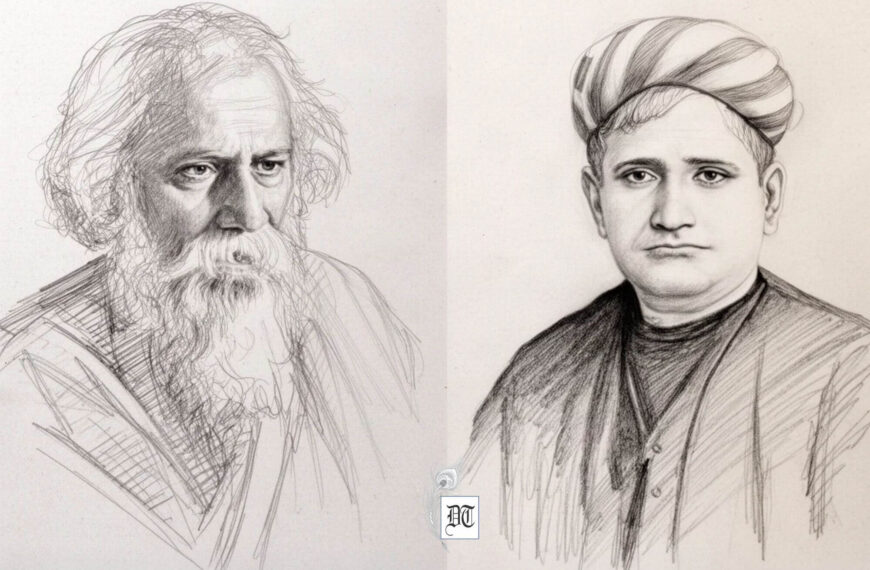
 By
By