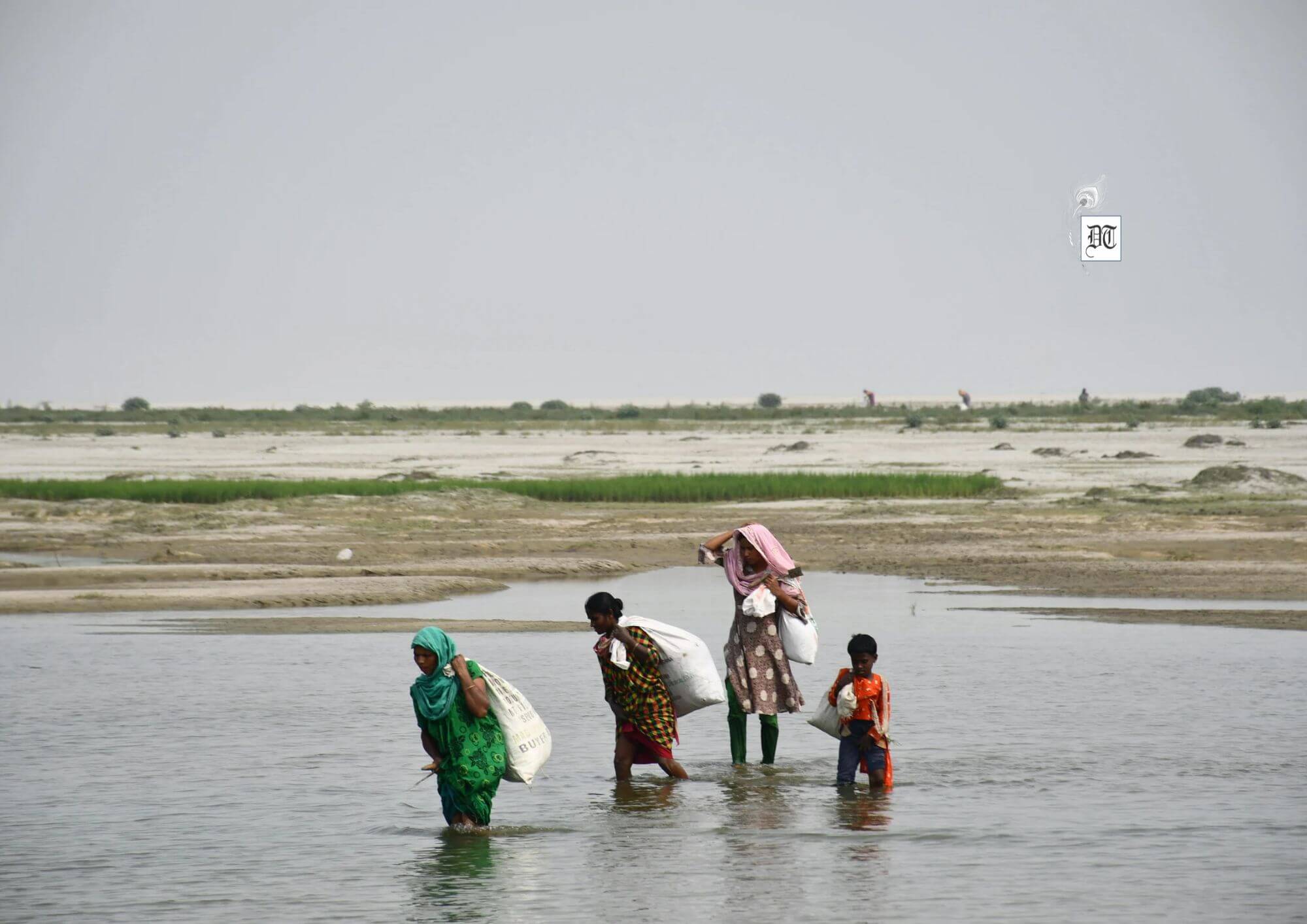
Prof Bhaskar explores the complex socio-political dynamics of migration, state power, and borders in this insightful article on DifferentTruths.com.
Key Takeaways
- Flawed State Policies: The Detect-Delete-Deport framework ignores historical realities like the 1947 partition and conflates ordinary migrant workers with illegal infiltrators.
- Systemic Errors: State agencies frequently misidentify and wrongfully deport Indian citizens, exemplified by recent legal battles involving displaced workers from Birbhum.
- Political Motives: The majoritarian agenda leverages mechanisms like the Special Intensive Review to disenfranchise voters and push a “one party-one rule” paradigm; the more it is eye-catching and imposing, the more credible the agenda. People also learn that the state is omnipotent – it can do and undo anything. One such agenda is to discover the infiltrators into India, particularly in the border state of West Bengal, and push them out to Bangladesh.
The state’s voice revealed that these infiltrators had illegally entered India, probably over decades, changed the demographic composition and depleted India’s resources. So, they are to be detected and deported.
No sooner had the government assumed power in West Bengal post-2026 than it launched the political scheme of ‘detect, delete, deport’ against a particular religious community – deporting them to the neighbouring country of Bangladesh, considered not-much-friendly, in the east of India bordering West Bengal. However, West Bengal is not the only border state of Bangladesh. This follows the concern of the Home Ministry in the Government of India about the changing demographic composition of the country. In keeping with its master’s voice, the new government of West Bengal continued to accuse the former governments of ‘Muslim appeasement’. It launched all possible steps to ‘detect’ without caring for human rights or international repercussions. Power has its own assumptions.
This dubious Detect-Delete-Deport (DDD) followed the phrase ‘ghuspetia‘ (infiltrators) that was received from the master’s voice in Delhi. The issue is more serious than what is being told and done. The reasons lie first in the 1947 partition of British India, when many left former East Pakistan, now Bangladesh, and came to India as refugees, independent of their choice. The 1946 riots on both sides, East Pakistan and West Bengal, explained the forced displacement of people understood as refugees. The people seen as refugees can by no stretch of imagination be accused of having changed the demographic composition of post-British India.
The second was the 1971 Indo-Pak war and influx of people from Bangladesh. Following self-assessment for better livelihood, the influx continued. It is not known how many left India to enter Bangladesh, but the major perception remains that people will be on the move from the poorer region to the less poor region, and this is not India-specific; it stands true globally. Many of these people on the move do not understand state sovereignty – they live locally, which may be mono-local or multi-local.
My primary surveys in West Bengal suburban areas during past decades revealed that most of the Bengali Muslims used to enter West Bengal and some other parts of India for short- to medium-term work like that of a mason, mat maker, mosquito net maker, driver of vintage commercial vehicles, umbrella mender and all that. Even in the Kareli area of Allahabad, I found workers called ‘Bihari’, who used to take a mid-day meal as well as very short-period physical rest in a community kitchen run by a Bengali woman, most of whom were engaged in pulling rickshaws manually in 2005 and were actually Hindi-speaking Muslims.
Errors occur, including errors by state agencies, that may have a miserable impact on the people, particularly the intra-country migrant workers. For example, four Indian nationals who were deported to Bangladesh a year ago by Delhi police on suspicion of being illegal infiltrators in 2025 were brought back following the Apex Court judgement. These persons were really migrants from the district of Birbhum in West Bengal to Delhi. They were deported in June 2025. They were brought back on July 08, 2026, after a year-long legal battle (Source: The Hindu, July 10, 2026). This questions the ‘true detection’ of who to deport and who not.
The state has boundaries; society does not. So innocent people move intra-state and inter-state, where West Bengal may not be an exception, though concern remains for the densely populated state. Targeting West Bengal, however, is an exception because there may be some other states on the border also that might have experienced alleged infiltration that needs engagement of competent state agencies to discover.
Real Detect-Delete
When the majoritarian political party thinks it is the government and the government is the state and the state is the country, then it takes the responsibility to demolish all others that are not its allies. The consequences are observed in the irrelevance of the Aam Aadmi Party (AAP), mainly in the Delhi capital region; the Trinamool Congress in West Bengal; the Lalu Party in Bihar; and so on. The aim is ‘one party-one rule’. The ideologues of the rulers are also different, like Savarkar of the Hindutva regime at present, in lieu of Mahatma Gandhi of the former regime, and so on. Some of the regional political parties are captured through injecting greed and ambition to become part of the majoritarian party, like that of Nitish Kumar’s party or the Nitish-led government in Bihar.
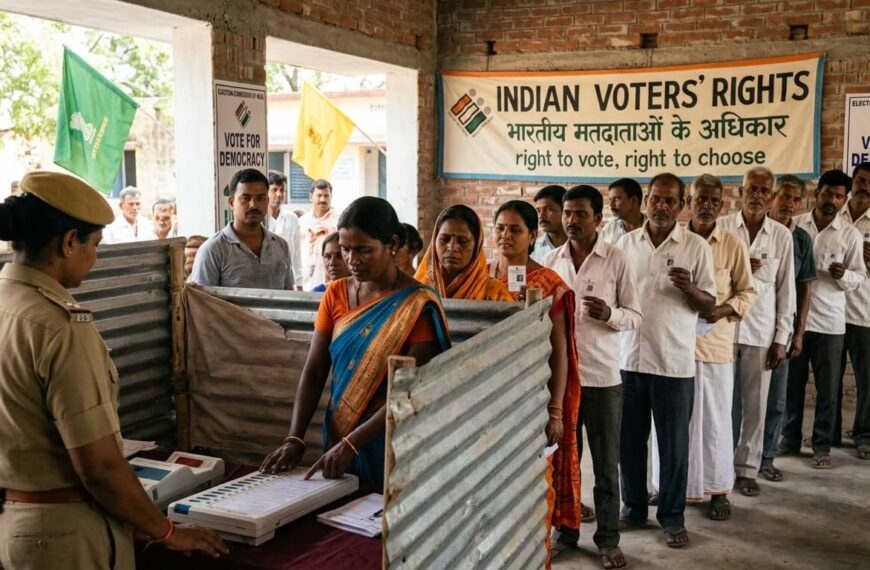
One method of ‘detect, delete’ was the invention-operationalisation of Special Intensive Review (SIR), operationalised by the ‘autonomous’ Election Commission of India (ECI), that glorified ‘logical discrepancy’ in disenfranchisement, meaning thereby the exclusion of a large number of voters in West Bengal just pre-2026 election for legislative formation in the Assembly.
So, the real intention of the state remains distant from the innocent people if it was DDD or another D (disenfranchisement). West Bengal remains at the centre, a state in exception. Let there be no confusion – West Bengal is not a sovereign state; it is an integral part of India.
Picture design by Anumita Roy

Prof Bhaskar Majumder superannuated as an Economics professor from GB Pant Social Science Institute, Allahabad. He served as a visiting professor at Central University of Bihar (Patna), Sri Sri University (Cuttack), Banaras Hindu University (BHU), Science College (Calcutta University), and others. He published extensively in 26 reputed journals, authored 11 books, co-edited two, and contributed 38 chapters. He completed 26 research projects funded by the Planning Commission, GoI ministries, ICSSR, the World Bank, NTPC, and Tata Chemicals. An international academic, journal reviewer, and PhD supervisor, he holds degrees from the University of Calcutta. He is our National Editor: Economics and Social Science.


 By
By
 By
By