
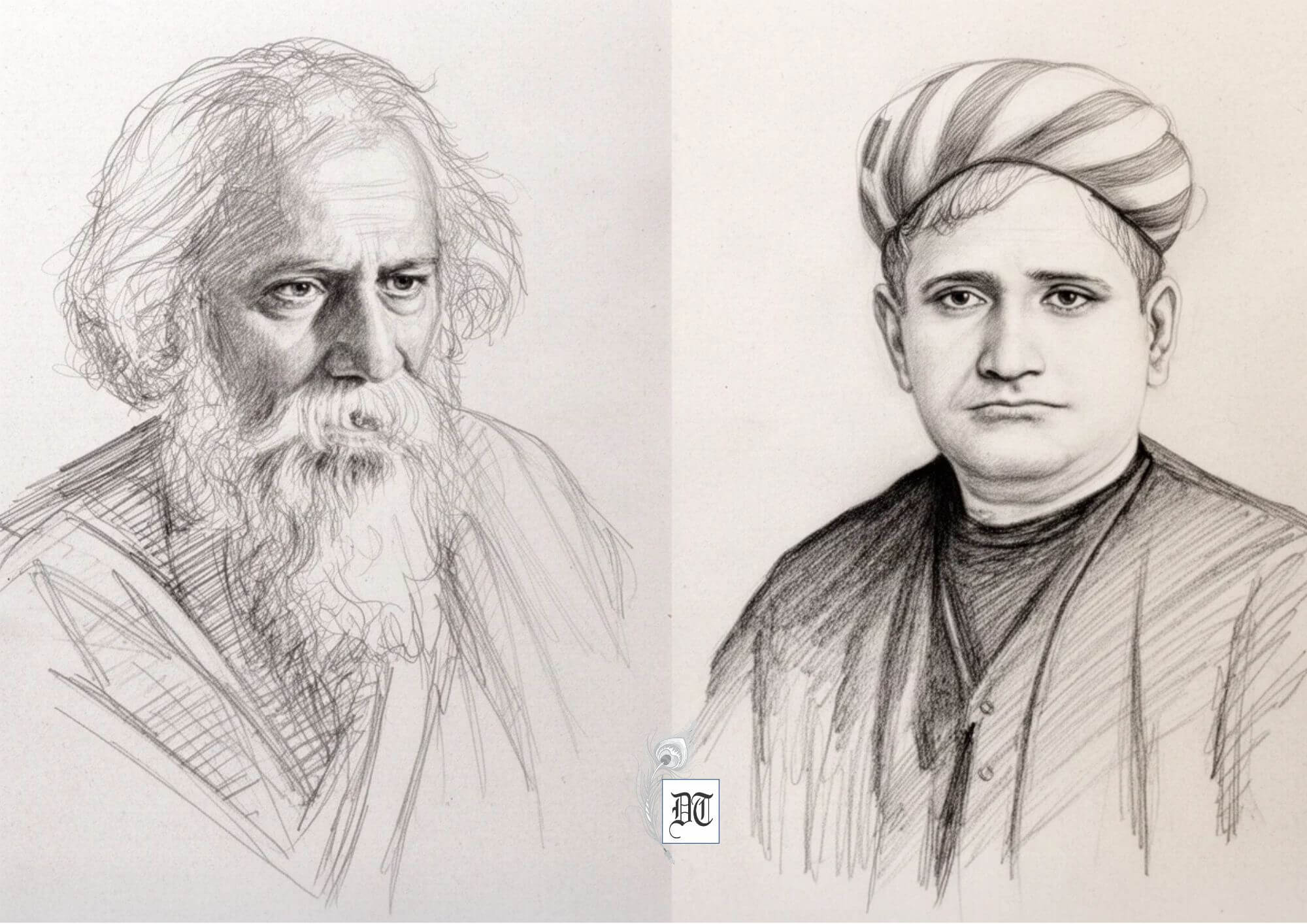
A People’s Integration Council press release condemns the Solicitor General’s remarks during TM Krishna’s Supreme Court challenge. A report on DifferentTruths.com.
Key Takeaways
· Constitutional Challenge: TM Krishna’s petition questions whether the State can constitutionally compel students to sing religious stanzas invoking Hindu deities.
· Professional Conduct: The People’s Integration Council strongly protests the Solicitor General’s use of inflammatory labels instead of addressing legal questions.
· Historical Precedent: The release highlights past compromises by freedom fighters and the 1986 Bijoe Emmanuel ruling protecting conscientious objectors.
In a joint statement, vide a press release, on behalf of the People’s Integration Council (PIC) by several signatories[i], it was stated:
Courtroom One in the Supreme Court heard an important argument on September 22, 2026, pertaining to TM Krishna’s challenge to the 2026 amendment to the Prevention of Insults to National Honour Act, 1971. The Carnatic musician has also challenged a Ministry of Home Affairs circular which makes all students sing all six stanzas of Vande Mataram at official functions. Four of those stanzas invoke Hindu deities.
The next hearing in the SC is scheduled for October 12, 2026
Arguing for the petitioner, Dr S. Muralidhar raised plain constitutional questions. Can the State compel a child to sing a hymn to a goddess? Does conscience yield to a circular? The Solicitor General, Tushar Mehta, did not answer those questions. Instead, as reported by The Hindu and other media outlets, he said that “law-making cannot happen as per Naxalites.” Dr Muralidhar protested. Mr Mehta repeated the word. Dr Muralidhar protested again when the hearing ended. The Bench, headed by the Chief Justice, said that it would take no note of that submission; however, it did not ask for a withdrawal of that remark. The country watched it all live, the release stated.
Peoples Integration Council (PIC) shares Dr Muralidhar’s outrage and joins his protest.
The Solicitor General is not an ordinary litigant. He is the second law officer of the Union. He speaks for every citizen, including those who sue the government. His duty is to assist the Court, not to brand the other side. A label is not an argument. When the almost highest law officer reaches for one, he tells the public that dissent is disloyalty. Words spoken in court on a live stream carry far beyond the courtroom. They can inflame those who already hate.
This is not new. Those who question the government are called anti-national, Dimagi Naxals, or worse. Or they are met with whataboutery about past governments. The method is the same each time. It avoids the question. It chills the questioner. A democracy needs the reverse. Such phraseology has no place in legal discourse in the first court of the land, the release emphasised.
The law on this question is old and settled. The 1986 landmark Supreme Court decision in Bijoe Emanuelle had protected the rights of 3 Jehovah’s witness students who were conscientious objectors. They respectfully stood when the National Anthem was sung in the school assembly, but would themselves not sing it as their faith forbade them from bowing before any temporal ruler other than their God Jehovah. Their conduct was held protected by Articles 19(1)(a) and
25(1) as it did not in any manner infringe public order, morality or health or any other restrictive conditions mentioned in Part III.
The Constitution says more. Article 28(3) forbids any State-recognised or State-aided school from requiring a student to take part in religious worship without consent. A hymn to Durga, Lakshmi and Saraswati, sung under compulsion, raises that question squarely. It deserved a straight answer. It received an epithet.
History, too, deserved a hearing. In 1937, on Rabindranath Tagore’s advice, the Congress Working Committee, with Nehru, Subhas Chandra Bose, Patel and Azad, chose only the first two stanzas of Bankim Chandra Chattopadhyay’s song. Those stanzas praise the motherland. The later stanzas carry religious imagery that Muslim comrades in the freedom struggle could not accept. The leaders chose unity over completeness. On 24 January 1950, Dr Rajendra Prasad built on that settlement when he declared Vande Mataram the National Song, to be honoured equally with Jana Gana Mana, the press release deliberated.
That settlement held for nearly ninety years. The Lok Sabha unpicked it in fourteen minutes. Three members spoke. LAFC asks two things: The Solicitor General should withdraw his remark. The Court should make clear that its proceedings are no place for such labels, from any side.
We close with the closing words of Bijoe Emmanuel: “Our tradition teaches tolerance; our philosophy preaches tolerance; our Constitution practises tolerance; dilute let us not it.”
[i] Justice Iqbal Ansari, former Chief Justice Patna High Court, Justice Amar Saran, former Judge Allahabad High Court; Adv Sanjay Hegde; Air Vice Marshal (r) Kapil Kak; Fauzia Khan, former MP-RS; Dr. John Dayal senior journalist; Prof. Radha Kumar; Lalita Ramdas Mumbai; Aditi Ghosh Mehta IAS (r); Teesta Setalvad Mumbai; Shabnam Hashmi; Prof. Mridula Mukherjee, Prof. Ira Bhaskar; VN Rajashekhar Bangalore, Ahmad Jawed, Gen Sec AIMMM; Vickram Crishna Mumbai; Anita Mathew Idduki Kerala; Lubna Sarwath Hyderabad, Dev Desai ANHAD; Navaid Hamid, Secretary, People’s Integration Council & former member, National Integration Council
Picture design by Anumita Roy

Different Truths Press Release

 By
By
 By
By
 By
By
 By
By