Prof Bhaskar explores how the dangerous nexus of media, money, and muscle power undermines true democracy on DifferentTruths.com.
Key Takeaways
- Media-Money-Muscle Nexus: Mass media acts as a corporate reflector and tool for power rather than an independent watchdog of objective social reality.
- Electoral Manipulation: Political funding and muscle power heavily determine governance, evident from electoral bonds to shifting loyalties within regional regimes.
- Submerged Citizenship: Ordinary citizens are reduced to passive voters waiting for political benefactors, while a privileged elite controls policy and public life.
What follows here is a juxtaposition of incompatible phrases that aims to analyse whether social power exists in the presence of media-money-muscle power. Theory is known to almost all that, after the invention of money, human social relations started changing fast to money relations. Media is only a reflector of social reality if reality is the goal to be unearthed.
Media follows power, and media is also bought by power – the former is political power, and the latter is corporate power. This is why media selects its ‘own people’ and arranges stories for distribution among people, mostly through electronic media, like TV channels. Generally, innocent people in a country like India swallow what is distributed by these channels due to their incapacity to think independently. Often, media deviate from their ethical responsibility to present only facts and go for the distribution of gossip and opinions. The media changes its colour depending on who comes to power – appeasement that may be because of actual and expected assured money for advertisement.
The freedom of speech started being curtailed since the time of the Internal Emergency, June 1975, during the Central rule under Smt Indira Gandhi as the Prime Minister of India. All learnt lessons of the ‘Delhi consensus’ through the murder of democracy. History has come back through a different route, maintaining electoral democracy in principle with de facto deviations through disenfranchisement; that is, SIR-disciplined. The immediate outcome was the establishment of the double-engine government in West Bengal post-2026, which West Bengal had to wait for several decades since the invention of universal franchise. Conformism helps – Delhi-Kolkata conformism.
Just as the economy of India is constituted by at most the top 10.0 per cent of the population, so also the polity is determined by the privileged, who may not exceed 10.0 per cent, notwithstanding what the voters think about it. In the economy, money works as the prime mover that takes money and donates/funds money to oil the election processes; in the polity, it is money-muscle that oils the political processes. Major political parties thought ‘nothing wrong’ in taking black money through Electoral Bonds, and even the State Bank of India allegedly declined to reveal which political party got what till donations through Electoral Bonds were declared illegal by the Apex Court of India. But by then, enough unaccounted money had accumulated in the treasury of dominant political parties. Of course, time is needed to deliver a judicious judgement, that too if the issue is drawn to the attention of the judiciary.
Muscle is an integral component of power in electoral politics in particular and in the lives of people in general. This muscle power, however, is not autonomous but works under an umbrella that is provided by the ruling political party. As an example, the musclemen who were ‘functioning’ in processions and bombings in the Trinamool Congress pre-2026 joined the BJP government post-2026 in West Bengal. The reason for this is that protection is ultimately provided by the agencies of the government and not by innocent people who complete their tasks by voting.
It also may be that the real protector remains disguised: the Godfather in the political party around whom the decisions revolve. The consensus in democracy then is really the Godfather consensus. The target for the major or dominant party or group or Godfather is the creation of an opposition-less polity that may have a danger of demolishing democracy and the Constitution of India.
The derivatives-corollaries of such a nexus of money-muscle-media are many, of which some are visible to the people if they are alert to observe and some are concealed; the example of the latter is growth of monopoly power through state patronage, appointment of loyal persons in lucrative posts in state agencies, post-superannuation benefits for the conformists and so on. The system that evolves gets lacerated.
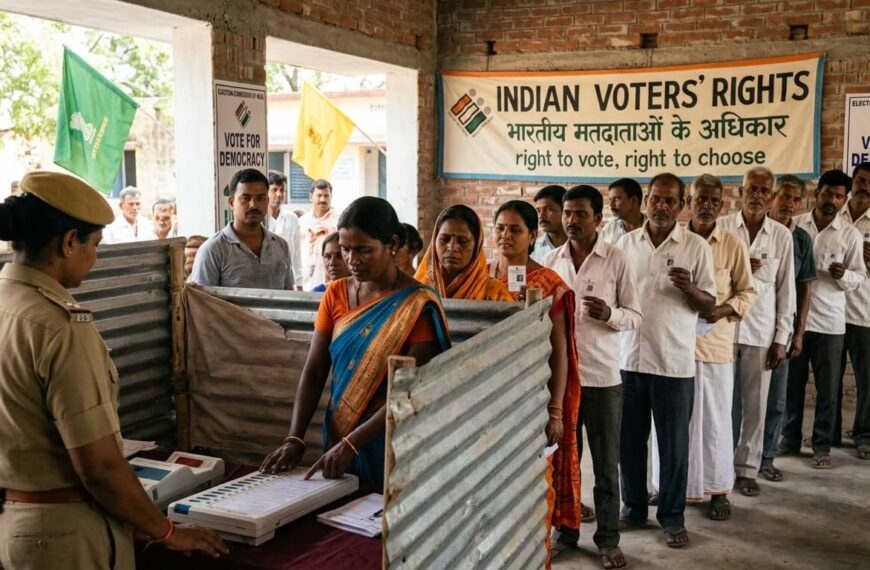
In MMM (Media-Money-Muscle), another M is missing, that is, Man. However, man is submerged in MMM to the extent that he is involved in public-political life apart from the innocuous duty of casting a vote with one number-one value once every five years. In many situations, this man remains confused and waits to follow the Guru (non-religious) or Godfather. In differentiated states in India, this MMM takes different forms – somewhere in caste-form, somewhere in money-greed form, somewhere in security-searching form. In polity, government changes, but man remains the same; that is not necessarily a product of, or transformed by, Valmiki in society. Social power, thus, needs to be understood both in association with and separate from political power, the latter MMM-determined and determining.
Let some confusion be eradicated here before any conclusion is drawn on the role and relevance of MMM. Ethics as a barometer does not work in this MMM, as it may be elsewhere.Ethics belongs to the innocuous persons and not to the man-manipulators.Innocent people have a high elasticity of expectation that the new ruler will shower them with benefits, which seems unlikely. After all, India is a land of 1500 million people that can hardly be protected universally.
Picture design by Anumita Roy
Prof Bhaskar Majumder superannuated as an Economics professor from GB Pant Social Science Institute, Allahabad. He served as a visiting professor at Central University of Bihar (Patna), Sri Sri University (Cuttack), Banaras Hindu University (BHU), Science College (Calcutta University), and others. He published extensively in 26 reputed journals, authored 11 books, co-edited two, and contributed 38 chapters. He completed 26 research projects funded by the Planning Commission, GoI ministries, ICSSR, the World Bank, NTPC, and Tata Chemicals. An international academic, journal reviewer, and PhD supervisor, he holds degrees from the University of Calcutta. He is our National Editor: Economics and Social Science.
 By
By