
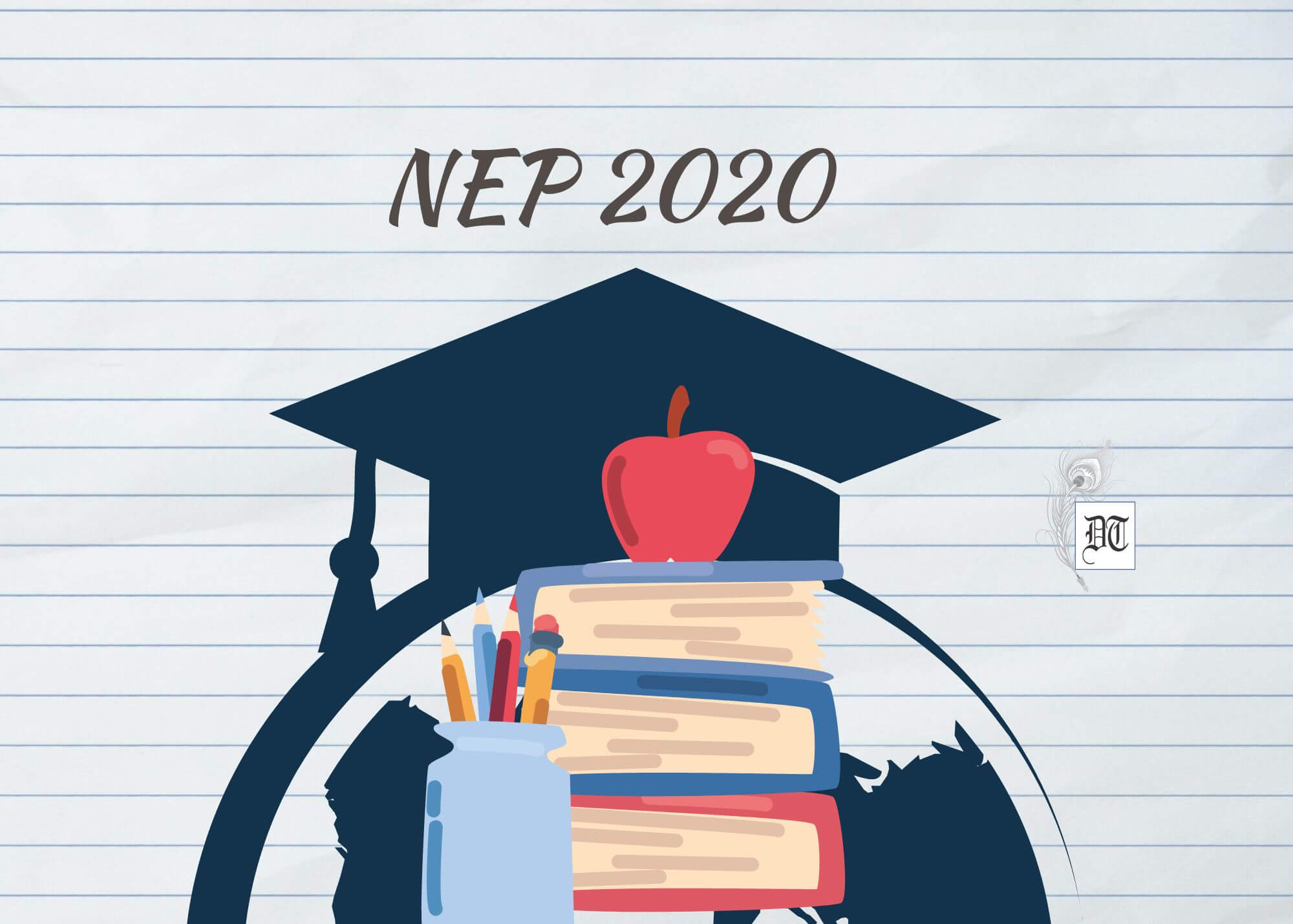

Dr Navodita warns of potential linguistic barriers and cultural isolation in India due to the National Education Policy 2020’s emphasis on mother tongue education. An exclusive for Different Truths.

As spelt out in para 4.11 of National Education Policy (NEP) 2020, the medium of instruction up to Grade 5 will be in mother tongue, regional language or home language. This could continue to Grade 8 and beyond as well. While on the one hand, the effort is on to make education more accessible and easier for people of India, the real question is- does this make learning more difficult at a later stage?
Does this in any way create citizens who will find it difficult to adjust in homogenised English and global cultures? Does this imply in any way that the linguistic will affect “cultures” in education? If so, how?
Aim of Education
The aim of education is to promote peace, encourage diversity and inculcate appreciation for different heterogenous communities and identity groups that exist in the world. Education is derived from the Latin word ‘educare’ that means ‘to bring up’ or ‘to bring forth’. According to an education theorist, RS Peters, there are three essential features of education: imparting knowledge and understanding, ensuring it is beneficial, ascertaining it is morally uplifting.
When we teach children from a very young age, right from toilet training to introducing the alphabet, we speak not just in mother tongue but different local languages or English as well. Why such discrimination with English, then, for the medium of education? Is that taking the post-colonial syndrome a bit too far?
Impending Disaster
Such an education would be impending disaster for it may give rise to more fissiparous tendencies instead of a more homogenised culture within the Indian sub-continent. A lot of geographical states and regions in India are more of linguistic conglomerates than unified by a single religion or culture.
Linguistically, an UP-Hindu has more in common with an UP-Muslim than with a South Indian-Hindu. The aim of this policy The lack of consideration for linguistic minorities will overshadow administrative failure of this aspect of education policy, thereby leading to more mediocrity and less excellence in the field of education. Moreover, for college admissions in Europe, studies are conducted in other European languages. This implies students have to again learn a new language.
There needs to be serious thought given to what should be the right ‘lingua franca’ for the nation. Language policies can make or shape the future of our younger generation. Hence, we better be safe than sorry.
Picture design by Anumita Roy

Navodita Pande teaches Mass Media and Communication and English to ICSE/ISC school in Assam. She also trains students in Yoga, gratitude and healing. She loves to paint, write and read as her pastimes. She lives in Assam with her daughter.


 By
By

 By
By
 By
By