
Dr Rositta shares the untold story of Mumbai’s fearless female peacekeepers on DifferentTruths.com, who built lasting community harmony.

Key Takeaways
- Grassroots Resilience: Ordinary homemakers and female social workers in Mumbai slums bravely stepped forward during the 1992-1993 riots to shelter neighbours, run night vigils, and protect their communities.
- The Mohalla Committee Movement: Supported by top police officials like Julio Ribeiro, this citizen-led initiative successfully leveraged women’s leadership to foster inter-faith dialogue and keep Mumbai riot-free for decades.
- Enduring Impact: Despite modern challenges like rising polarisation, volunteers continue to anchor grassroots peace and social rehabilitation across the city.
When I first met and interviewed these women, like most people, I could not have guessed that so much raw courage, boundless zeal and fierce determination lay hidden beneath their down-to-earth manner, fragile frames and infectious laughter! Meet the female peacekeepers of the western Indian metropolitan city of Mumbai, who work silently and anonymously as part of a miraculous people’s movement that has kept the peace for over thirty years now.
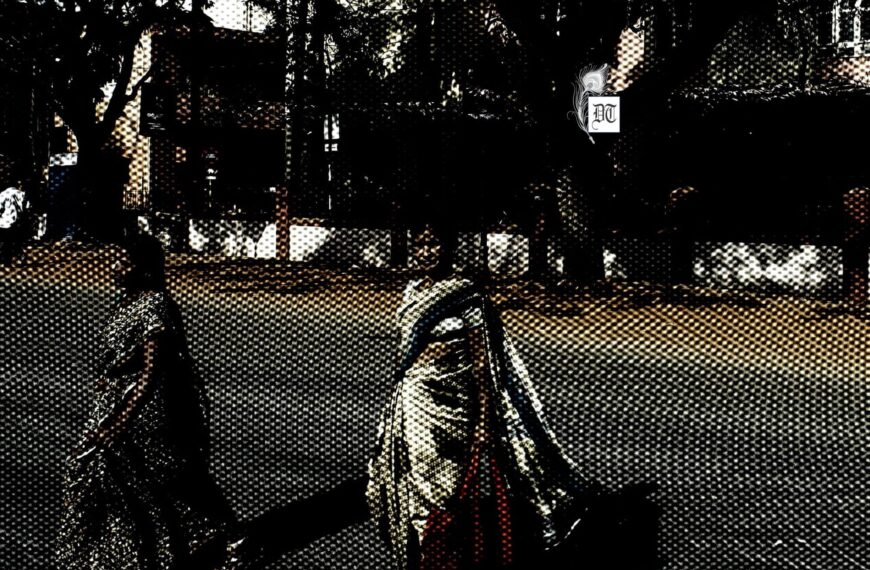
Mumbai (then Bombay) saw one of its darkest times when it was visited by the nationwide 1992-1993 Hindu-Muslim riots (stemming from the demolition of the Babri Masjid at Ayodhya). Violence on a scale never seen before was unleashed in the usually peaceful city. As is usual with riots, the maximum damage was inflicted in the slums where the poorest lived and in the middle-class localities. As female riot survivors recall, “Hindu and Muslim communities shared harmonious relations. But these riots changed it all. Suddenly, no one trusted each other. Neighbours who had lived together for decades were now discriminating against and betraying each other in the name of religion.” While the men either fought or remained indoors to save their lives, the women of Mumbai’s slums and chawls gathered together, slowly, surely, one by one, to save their families and their city. Ordinary homemakers, with little formal education, egged on by female social workers, organised campaigns to render relief and rehabilitation, to supply essentials, to set up refugee camps, to secretly shelter their neighbours from murderous gangs, and above all, to keep watch through the long nights and collectively drive away politically instigated rioters and other antisocial elements. They did these things at great personal risk, while the police sided with extremist forces in the Hindu majority community. As they recollect, “The whole city burnt from the 7th to 10th of January, 1993, while the government did absolutely nothing.”
Based Peace-Building Initiative
All these individual efforts gained new life with the birth of the Mohalla Committee Movement. ‘Mohalla’ in Urdu means a locality or a small area. This community-based peace-building initiative took shape during 1993-1994 under Julio Ribeiro, former police commissioner of Mumbai and a highly decorated retired IPS officer, and his close associates, at the behest of veteran slum peace activist Ms Sushobha Barve and former Sheriff of Mumbai Mr Fakhruddin T. Khorakiwala. Sushobha Barve, a one-woman army, had spent her days and nights in some of the tensest areas of Dharavi, Jogeshwari and other slums of Mumbai, brokering peace between Hindus and Muslims. The then newly appointed police chief of Mumbai, Satish Sahney, gave his wholehearted support to the initiative in a sincere attempt to restore the broken relations between the police and the public, between Hindus and Muslims, and to involve the community in curbing the vicious cycle of communal violence. “Initiated by social activist Sushobha Barve, the association took shape when senior police officers, including former police commissioners Julio Ribeiro and Satish Sahney, supported the move and guided the members” (Hindustan Times, Nov 18, 2014).
This was a movement of, by and for the people, free from the malicious influence of politicians and religious leaders. Anyone who had no criminal record and no political affiliation could become a member of the Mohalla Committee. These local peace committees, made up of citizens from all walks of life, spread to every nook and cranny of the city. Police officers and local community leaders attended their meetings. Issues were discussed forthrightly, and plans were made to stop rumour-mongering and to counter extremist goons. The preventive strategies worked, and peace prevailed.
Both Julio Ribeiro and Satish Sahney, former IPS officers and two prominent founding figures of the Mohalla Committee Movement, emphasise the key role women played. It was women social workers who approached police and civilian authorities demanding justice; it was ordinary women from the slums and chawls who protested against the apathy of the community and the criminal negligence of the state in allowing the bloodbath to take place. Women played a key role in organising public hearings and peace and reconciliation meetings, which made errant police officers apologise to victims and urged opposing parties to come together to find amicable solutions to local issues. Many a conscience was brutally shaken when mothers who had lost their children and wives who had lost their husbands to the mindless violence confronted police officers publicly in these meetings. The focus was on rebuilding trust and healing the bitterness within the community in active collaboration with a drastically changed police force.
Peace Activists and Social Workers
As the months and years rolled by, the Mohalla Committee meetings became an umbrella platform attracting both individual women citizens with a deep civic consciousness, across classes and communities, as well as female social workers and women-led NGOs in the city, right from SHED (Society for Human and Environmental Development) to BMMA (Bhartiya Muslim Mahila Andolan). There was only one common label that identified all of them – ‘women’ – and only one common goal: ‘peace and harmony’.
In the slums of Dharavi, another people’s movement flourished, ‘Hum Sab Ek Hain’ (meaning We all are one, in Hindi, led by the late Waqar Khan, a commoner turned selfless peace activist, and ably supported by courageous and dedicated social workers like Bhau Korde and Yasmin Shaikh, and in the slums of Jogeshwari, Lal Mohammad, an experienced peacemaker who had often risked his life to foster inter-religious harmony, and his associates succeeded in dousing the communal flames and creating a peaceful neighbourhood. These men recruited many women into their initiatives, and together they played key roles in the Mohalla Committee movement. Women from both communities planned and organised Hindu and Muslim festivals jointly; women police officers joined these harmonious gatherings; and young girls and boys received valuable lessons in inter-religious understanding, respect, and tolerance. It is the mothers who ensured that the seeds of communal hatred, the poison of religious fundamentalism, did not take root in the next generation. As they say now, “We tried our best to see that 1992-1993 produced mature citizens, not terrorists.”
By 1999, women’s grievance redressal cells were started within the Mohalla Committee movement, with the active support of Julio Ribiero, to discuss and find solutions to problems faced by women across communities and to empower women from the slums, who had a major role to play in peace and progress. Top-ranking police and civilian officials would attend these meetings to hear women directly. Another initiative, Cricket for Peace, enabled Hindu and Muslim youth to mingle harmoniously and understand each other through friendly sports events. Then came the poster competitions for children, which again unleashed their creativity in serving the cause of peace and unity. Communal Harmony Week is another novel initiative of the movement, organised in collaboration with the Mumbai Police.
Keeping Mumbai Riot-Free
In 2019, the Mohalla Committee Movement, now rechristened as Mohalla Committee Movement Trust (MCMT), celebrated its silver jubilee and 25 years of keeping Mumbai (Bombay) riot-free. Spread across 13 police zones, with over 2000 members, the MCMT’s role is to quell, tackle, or peacefully resolve any rumours, news, or disputes that might lead to communal tensions (Hindustan Times, Nov 1, 184). Female grassroots-level coordinators and facilitators of the MCMT speak nostalgically of their humble beginnings in 1993-1994: “Women were incredibly brave. Women had the leadership qualities. It is the women who would come out and oppose violence. It is the women who would fight for their rights, who would organise night vigils to combat rioters, who would arrange for aid and relief…” They witnessed a historic moment in which the women of Bombay, cutting across religious divides, opposed religious disputes in which they had no interest and fought for their lives, their families, and their city. They remained unfazed when Hindu and Christian women were threatened for helping Muslims or when Muslim women were questioned for mingling with Hindu women. One of the MCMT veterans asserts, “I give full marks to the raw courage of the women in the slums, the so-called unrefined and illiterate women. They were more proactive than the educated, upper-class women who led more sheltered lives. These women faced dangers and struggles every day, so when the riots happened, they could respond immediately and effectively. They were the ones who really defused terrifying situations and kept the peace, saving hundreds of lives.”
The long and momentous journey of these women as peace activists and community builders continues, with interesting twists and turns. Today, much has changed. Community-based initiatives like the MCMT struggle with rising religious polarisation, malicious political interference, corrupt bureaucracy, lack of funds, and a shortage of dedicated volunteers to provide free service. But committed female volunteers keep the MCMT strong despite the many challenges it faces. While they feel apprehensive and disillusioned by the rampant religious intolerance in the country, they refuse to believe that all is lost.
MCMT Volunteers: All Religions and Castes
The most recent example of this never-say-die spirit is the service rendered during the Covid-19 pandemic that affected the slums of Bombay. MCMT volunteers from all religions and castes worked shoulder to shoulder with the public in raising their own resources and rendering relief to the poorest sections even as the disease and the lockdown crushed people from all sides. Above all, they resolved religious tensions in sensitive areas from Versova to Millat Nagar, from Marol to Amboli and Bandra. In numerous instances during the pandemic, they ensured that Hindus and Muslims carried on with their business activities smoothly, that COVID-positive patients were not socially ostracised or denied access to essential services, and that senior citizens were taken care of. They thus enabled a massive rehabilitation mission to be implemented in perfect peace, even as the rest of the country witnessed a wave of Islamophobia generated by biased ruling elites and media channels.
Even now, Mumbai’s women peacekeepers continue community service and peace-building work, battling all the odds. Despite everything, they are confident that Mumbai will not see religious violence, thanks to the strong foundations of peace and harmony they have built up over a quarter century. May their faith be proved true, may their experiment be repeated across the country and the world, and may their smiles continue to light up myriad lives!
Author’s note: The article is based on the interviews and interactions during 2019-2021 with numerous women peace workers and activists, many of whom have chosen to remain anonymous. We salute their long years of silent and selfless work behind the scenes.
References
· https://www.hindustantimes.com/mumbai/mumbai-mohalla-committees-celebrate-20-years-of-peacemaking/story-ob9QkLetrTcF6OFWDQ7syO.html
· http://www.citizensforpeace.in/whats-news/215-mohalla-committee-movement-trust-mcmt
· https://nrinews24x7.com/25th-anniversary-of-mohalla-committee-celebrated-with-enthusiasm-in-mumbai/
· https://pradnyanblog.wordpress.com/tag/mohalla-committee-movement-trust/
· https://www.rediff.com/news/special/mumbais-mohalla-committees-giving-peace-a-chance/20190124.htm
· http://archive.indianexpress.com/news/mourning-dharavi-s-favourite-peacenik/446267/
· https://sabrangindia.in/article/community-poster-speaks-peace-bombay-1992-1993
· Nilesh, P. (2011). Negotiating Communal Harmony in Mumbai: Women in Mohalla Committees. Asian Politics & Policy. 3. 10.1111/j.1943-0787.2011.01295.x.
· Thakkar, U. (2004). Mohalla Committees of Mumbai: Candles in Ominous Darkness. Economic and Political Weekly, 39(6), 580-586. Retrieved April 201, from http://www.jstor.org/stable/4414609
· Vaitla, S. (2011). Preventing ethnic violence with local capacities: lessons from civil society in India: A dissertation submitted to the Graduate School – Newark, Rutgers, The State University of New Jersey.
Picture design by Anumita Roy

Dr Rositta Joseph Valiyamattam is a Fellow of the Royal Society of Arts, U.K., a scholar, poet, author and educator with over two decades of experience in higher education. A former visiting research fellow at the University of Edinburgh, she is currently a consultant editor with Orient BlackSwan India and an English faculty member at prestigious institutions in Hyderabad. With a gold medal and doctorate from Andhra University, she has published widely and champions literature, youth engagement, translation, theatre, oratory, and socially committed education.

 By
By
 By
By