
Ruchira explores the complex, passionate nuances of love and betrayal in a Kathak recital on DifferentTruths.com.
Key Takeaways
- Dual Nature of Love: Explores Ishq as both tender affection and consuming passion, juxtaposing divine romance with modern betrayal.
- Shifting Dynamics: Examines historical patriarchal roles alongside contemporary shifts in which women break societal fetters for personal gain.
- Artistic Brilliance: Highlights a captivating Kathak recital that portrays the full emotional spectrum from rapture to painful rupture.
Ishq: In the realm of literature, more particularly in Sufi poetry… The two words mentioned above carry deep significance. In West Asian cultures, including Arabic, Persian, and Urdu, and in Islamic culture, ‘Ishq’ denotes love, affection, and tenderness that humans feel toward others around them, including kin, offspring, and friends. It also denotes positivity, brightness, and cheerfulness. Love also has a more intense, passionate, and dark side. This involves numerous emotions: closeness, union (both physical and platonic), ecstasy, euphoria, and more.
Lal Ishq: The Betrayal
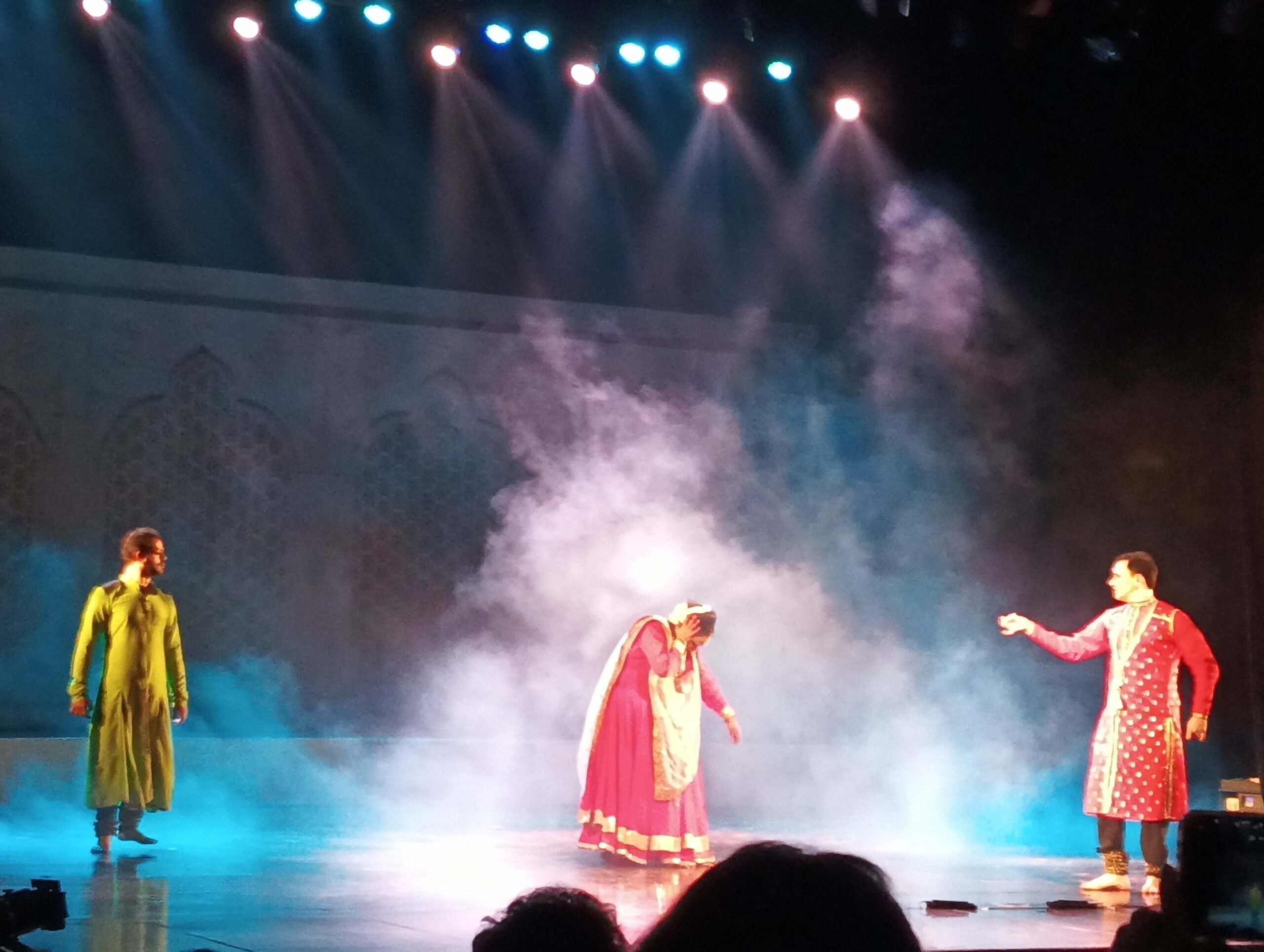
In the musical-dance-drama Kathak recital we went to see a few weeks ago, the exponents explore various dimensions of love.
Aeons ago, Radhika (Radha), the eternal beloved and consort of Lord Krishna, is believed to have blatantly betrayed her spouse, Ayan, and carried on a passionate, whirlwind extramarital affair with the blue God. It is believed that Ayan was a relative of Kanha, Radha’s paramour, which turned the situation more scandalous and controversial.
The passionate rendezvous of the amorous couple in the dead of the night, occasionally amidst pouring rain – with the banks of the silently flowing Jamuna as their favourite haunt – is all too well known to be reiterated here. In fact, the much-hyped “divine love” has been glorified and celebrated profusely in Indian classical and vernacular literature (mostly in Sanskrit), amounting to volumes. Even folklore is no exception.
Not anymore. In the mundane world that surrounds us at present – which is the macrocosm – human emotions have acquired sinister aspects. More often than not, love invariably culminates in betrayal. This betrayal takes many forms: physical, mental, financial, and more. Here we need to consider divergent situations: For centuries, in a predominantly patriarchal world, betraying individuals in love or a relationship had remained a prerogative of males. In contrast, women were left to swallow bitter tears, hide their agony and look after their offspring wherever applicable.
Lord Byron had aptly remarked, “Man’s love is of a man’s life a thing apart; ’tis a woman’s whole existence.”
Breaking the Fetters
Again, more and more changes are becoming apparent in society. Breaking the fetters of suppression and oppression, women of today unscrupulously betray the men in their lives for their own personal gains or other advantages.
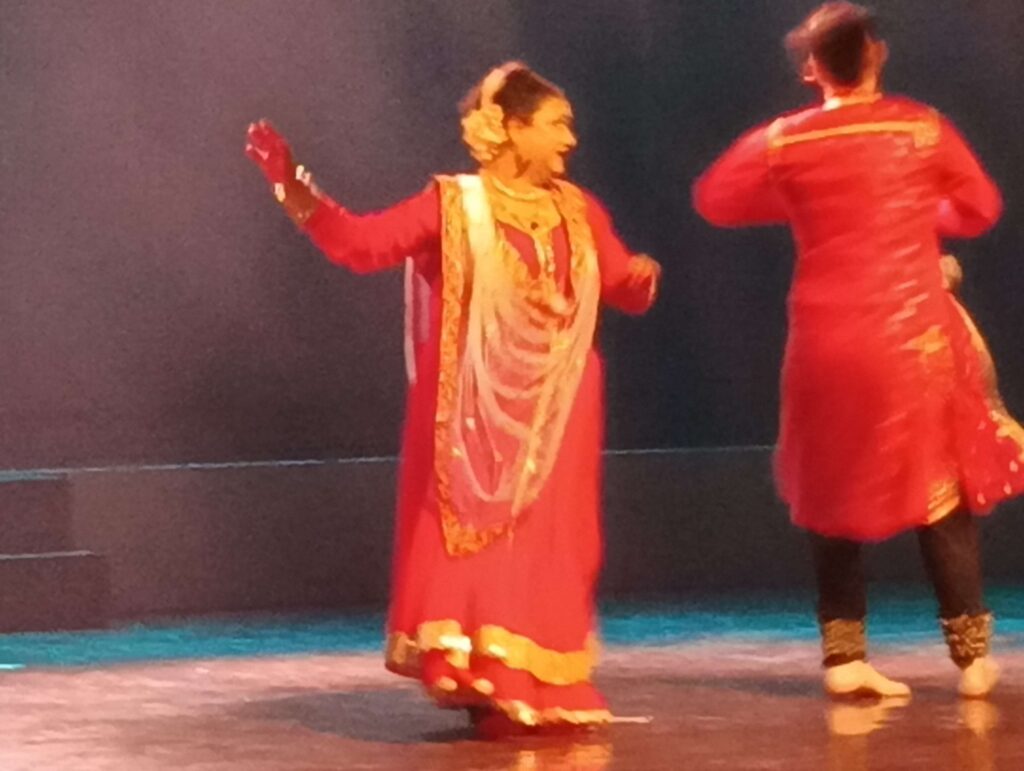
A few words about the colour red: Since the dawn of human civilisation, red has held tremendous significance and created awe in people’s psyche. Strong and vibrant, it depicts love, sexual passion, attachment, possessiveness, and positive energy. In certain faiths and schools of thought, red symbolises the sacred and auspicious, which is why it is widely used during social occasions.
For an uninitiated individual like this reporter, the theme also seemed to echo Shakespeare’s oft-quoted line, “Frailty, thy name is Woman.” Initially, Radha betrays her spouse; later, the tables are turned, or rather, she gets a taste of her own medicine when the frivolous and playful Casanova (shall we call him?) Kanha deserts her after spells of rangraliyan (using a Hindi term), amorous relationships, fun and frolic.
A tad heartbroken, but not shattered, Radhika now turns inward… Her feminine energy finds peace in being true to herself. However, it leaves the spectators with one lingering question: is self-realisation enough? This remains for the discerning individuals to ponder.
Love’s Fickle Nature
Love’s capricious, fickle nature is powerfully portrayed when we see Radha catch Kanha flirting with the Gopis. The entire gamut of emotions from rapture to rupture is presented – the couple’s arguments, ruffled emotions, mock fights followed by reconciliation, at times passion reaching its pinnacle, and withdrawal, rift and widening chasm.
“Love is a many-splendoured thing.” The title and the entire presentation do full justice to this concept and theme.
Thus, Lal Ishq juxtaposes ‘love’ on both a spiritual and worldly plane, which makes it more gripping. Towards the end, excerpts from Tagore’s significant poem “Dui pakhi” are included to symbolise the yawning abyss between the ethereal and the worldly.
Returning to the fundamentals, Sudeep Chakraborty, Dheerendra, and Alakananda Dasgupta captivated the audience with flawless expression, movement, and gesture. Their oeuvre, suitably accompanied by mellifluous, soothing music – the handiwork of Anirban, Sudha Raghuram, Himanshu Srivastava and many others – made the presentation more spectacular. Summing up, it was a delightful evening for classical song and classical (read: Kathak) dance lovers.
Visuals sourced by the reviewer

Ruchira Adhikari Ghosh brings a liberal, wide-ranging outlook shaped by extensive travel across India and abroad. Educated at Holy Child School, New Delhi, Sacred Heart Convent, Ludhiana, and Panjab University, Chandigarh, she holds a Master’s in English Literature and a postgraduate diploma in Journalism and Mass Communication. With three decades in media, she writes on travel, books, music, performing arts, women’s issues, and especially food, drawing inspiration from rich life experiences. She is our Features Editor.


 By
By
 By
By
 By
By