
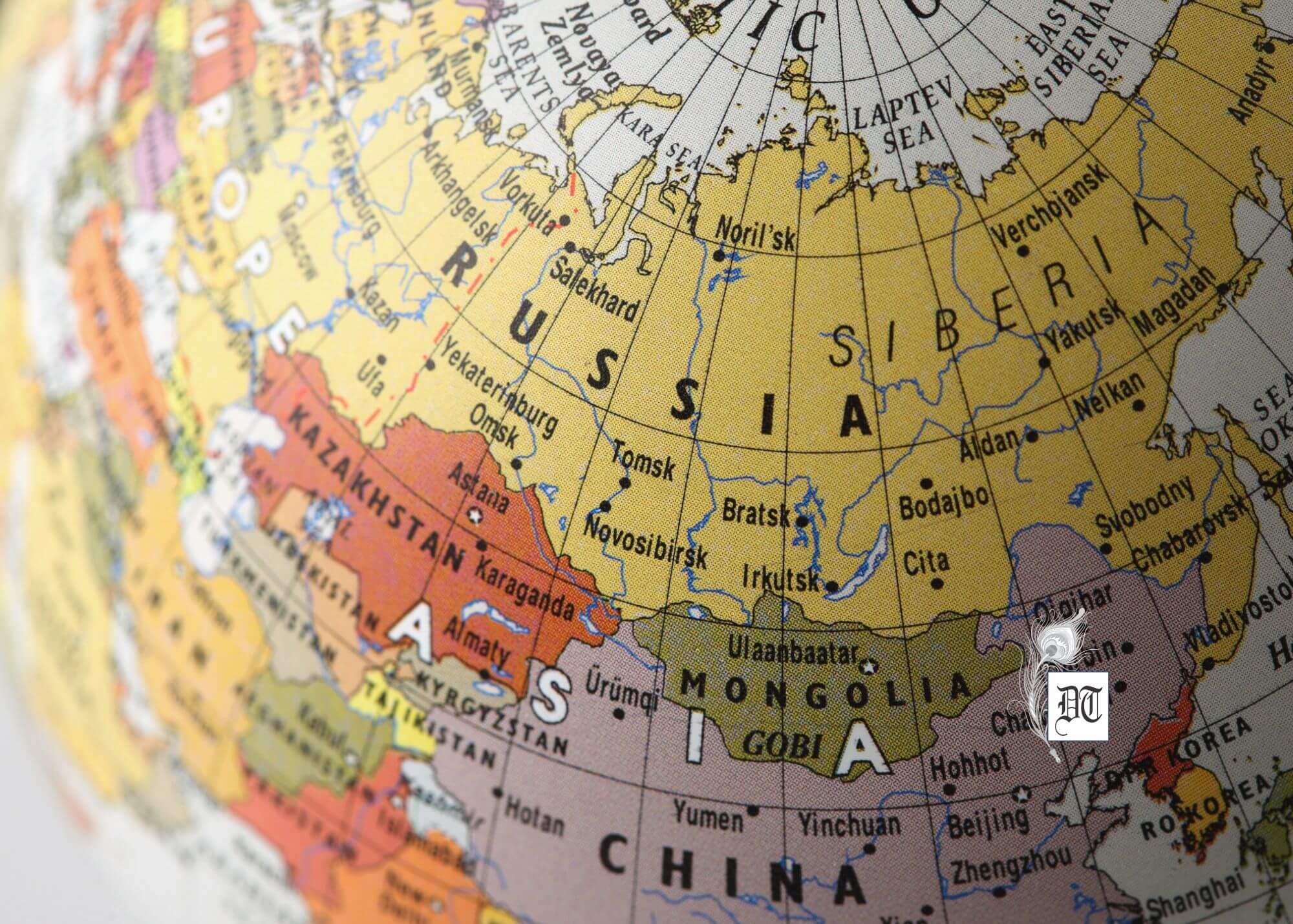
Following his re-election, Putin’s focus on Central Asia highlights its strategic value amid shifting regional dynamics influenced by China’s growing presence, opines Concetta, exclusively for Different Truths.

Following his 2024 re-election, Putin prioritised Uzbekistan as his third foreign visit, signalling Central Asia’s strategic importance to Moscow. Despite Western sanctions, Russian-Central Asian trade has increased, with Russian companies dominating Uzbekistan’s energy sector and controlling a quarter of Kazakhstan’s uranium production.
Shifting Regional Dynamics
Central Asia’s five nations (79 million people total) have historically been under Russian influence since Soviet times. Recently, regional leaders have shown independence—Tajikistan’s president publicly challenged Putin at a 2022 summit, and Kazakhstan’s President Tokayev made symbolic gestures like speaking Kazakh instead of Russian during Putin’s visit and refusing to recognise Russia’s claimed territories in Ukraine.
Nevertheless, these nations maintain membership in Russian-led organisations and depend on Moscow for security guarantees and economic opportunities through migrant worker remittances.
China’s Growing Presence
With Russia distracted by Ukraine, China has expanded its regional footprint. After launching its Belt and Road Initiative in Kazakhstan in 2013, China has become the primary trading partner for most Central Asian countries and is moving beyond economics into political engagement.
At the 2023 China-Central Asia Summit, Xi Jinping pledged to support the region’s sovereignty and security, traditionally Russia’s role. However, local populations remain sceptical of Chinese influence, concerned about imported labour, debt diplomacy, and China’s treatment of Uyghur Muslims.
Implications for Russia-China Relations
Putin acknowledges China’s economic influence while emphasising Russia’s “special ties” with the region. So far, both powers have avoided confrontation over their regional interests, but maintaining this balance grows increasingly difficult.
Central Asian nations are strategically engaging both powers while also building relationships with alternative partners like Turkey. Russia’s historical dominance is fading, and as Moscow and Beijing pursue competing regional agendas, their broader partnership may face new tensions.
Source:
Ubaydallaeza, Dilnoza. The Independent, 5 April 2025.
Picture design by Anumita Roy

Concetta Pipia is retired from environmental design, law, and business. She turned to writing and founded the Aspiring Writers’ Society and its e-zine, the AWS e-zine, where she is co-editor. Her poetry has been published in various anthologies, including “Expressions on War,” “Purush Anthology,” “Poetry on a Plate with Spicy Mango,” etc., and e-literary magazines, including “Different Truths.” Concetta is a certified well-life coach who loves horticulture and dogs.
 By
By
 By
By
 By
By
Pointed!