
Ruchira reviews the biopic Achena Uttam on DifferentTruths.com, exploring the centenary life of legendary Tollywood icon Mahanayak Uttam Kumar.

Key Takeaways
- Biopic Concept: Atanu Basu’s film blends reality and flashbacks, exploring Uttam Kumar’s life from his humble childhood to Tollywood stardom.
- Star-Studded Cast: Saswata Chatterjee shines as Uttam Kumar alongside stellar portrayals of iconic leading ladies like Suchitra Sen and Supriya Choudhury.
- Emotional Depth: Moving Rabindranath Tagore songs and unique storytelling offer a fitting, poignant tribute to Bengali cinema’s enduring colossus.
Had he lived, the legendary Tollywood matinee idol Uttam Kumar, better known as Mahanayak (Superstar), would have celebrated his centenary this year.
Around the time millions of his fans were joyfully celebrating his birth centenary, this reporter coincidentally managed to watch one of his so-called biopics, titled Achena Uttam. Albeit a bit late, since the film was released in 2022. The film’s concept and technology were unique in certain respects.
Directed by Atanu Basu, the film shuttles between reality and flashback mode to cover Uttam Kumar’s hunky-dory interactions and activities in the hours before that fateful day, 24th July 1980, when he walked into Sunset.
The opening scene shows Uttam leaving the studio premises, complaining of slight uneasiness…he gets into his car and drives off. A few hours later, he is rushed to the hospital by family members since the uneasiness persists. Under consistent medical care, as Uttam Kumar lies on his hospital bed, vignettes from his interesting life and chequered career in the tinsel world flash before his mind’s eye. As the word ‘Achena’ (unknown, enigmatic) name indicates, hitherto unexplored aspects of his life are revealed: humble, inconspicuous childhood; loss of a sibling; struggling phase in Tollywood; camaraderie with his younger brothers and mother, who was the pole star of the actor’s life; his musical talent; the homely jalshaas conducted in the Chatterjee family home; and so forth.
Next, the focus shifts to his heroines and co-actresses. Suchitra Sen was glamorous and vivacious, while Savitri Chatterjee was a quiet beauty with doe-like eyes and long Rapunzel-like hair. Don’t overlook the enigmatic, vamp-like Supriya Choudhury, who revealed her true colours off-screen in real life. The passionate Uttam-Supriya romance is well-known and need not be reiterated here. To grip viewers’ attention and heighten the drama, the director brings all the divas, one by one, to the ailing actor’s bedside.
Achena Uttam highlights the milestones in Kumar’s life. The inside story about the making of the blockbuster Nayak, directed by Ray, the titan of cinema, the moment of pride and glory, and how, way back in 1966 (the year of its release), Ray and Kumar travelled together to the Berlin Film Festival to receive the award. It also brings alive how, after a bitter argument with his wife, Gouri Debi, during his own birthday bash (a call from the “other woman” acting as the catalyst), Uttam stormed out of his Bhabanipur home, never to return. Each leading character acquitted themselves honourably in their respective roles. Rituparna Sengupta as Suchitra Sen, Srabonti Chatterji as spouse Gouri Debi, Sayantani Choudhury as Supriya, Ditipriya (of Rani Rashmoni tele serial fame) as the petite Sabitri Chatterji and Biswanath Basu as kid brother Tarun Kumar. Viewers were obviously impressed by the choice of Priyanshu Chatterjee to play Satyajit Ray, since the resemblance between the duo is stunning!
The stellar performance was that of versatile Saswata Chatterjee (I’ve always adored the mischievous streak in him), who played Uttam Kumar’s role perfectly to a T, not surprising considering that his father, the late Dr Shubhendu Chatterjee, an eminent actor himself, and Uttam had shared the screen many a time and were also thick friends off-screen.
Kudos to composer-music director Upali Chattopadhyay, who has culled a few sentimental Rabindranath Tagore songs to depict Mahanayak’s myriad moods at various points in time: ‘Ki payi ni tari hishab milate’ (I have no desire to measure the losses incurred lifelong) and ‘Ami jene shunei bish korechi’ (I lost the desire to live and deliberately consumed hemlock) are some examples.
All in all, the film is a befitting tribute to the colossus of Bengali cinema.
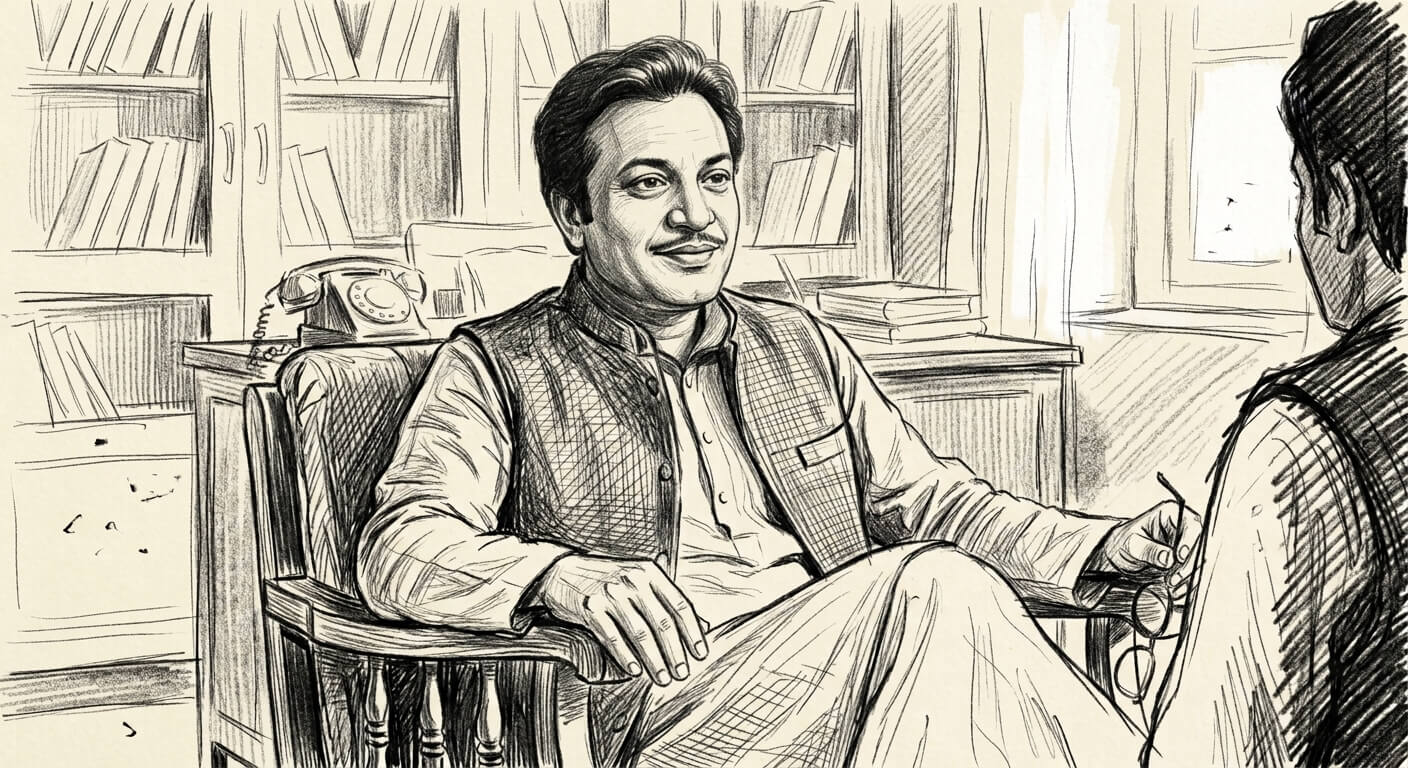
Picture design by AI

Ruchira Adhikari Ghosh brings a liberal, wide-ranging outlook shaped by extensive travel across India and abroad. Educated at Holy Child School, New Delhi, Sacred Heart Convent, Ludhiana, and Panjab University, Chandigarh, she holds a Master’s in English Literature and a postgraduate diploma in Journalism and Mass Communication. With three decades in media, she writes on travel, books, music, performing arts, women’s issues, and especially food, drawing inspiration from rich life experiences. She is our Features Editor.

 By
By
 By
By
 By
By