
Prof Bhaskar explores systemic inequality, structural bias, and silent marginalisation across diverse Indian communities of a deeply stratified nation on DifferentTruths.com.
Key Takeaways:
· Systemic Disadvantages: Marginalised communities, low-income workers, and residents of backward states face disproportionately higher standards of proof and scrutiny than privileged groups.
· Institutional & Social Bias: Ground-level realities expose entrenched biases, from regional and elitist sports politics to unequal administrative enforcement against minorities.
· The Differentiated Nation: India functions as a collection of fragmented regions and castes to disclose, copy, and distribute rather than as a unified entity.
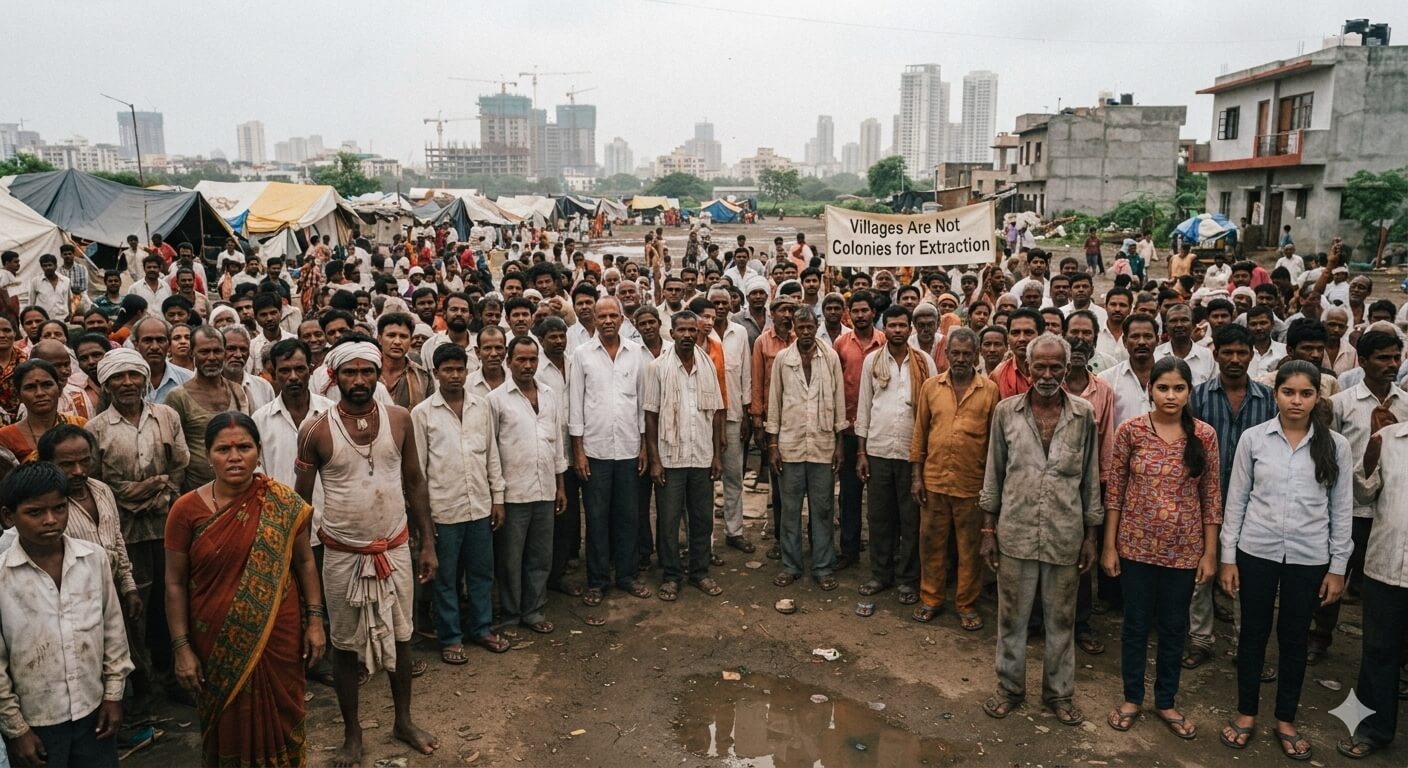
People in the back, by selected indicators, or people in backward states are asked to prove more than the average state in India, or people living there are asked to prove themselves. People living at the bottom of the socio-economic ladder often do not dare to speak in public in the presence of the privileged. Often, fear works for distressed women trying to express their views.
The system that evolved, or what man made, is systemically against people with low incomes, against labour, against women, against Dalits, against Adivasis, against villages. So, what remains?
Let me pose a few examples below:
Box 1: Unequal States, Unequal Individuals
| Some pseudo-elitism, read sadism, works like the ‘Vaibhav Suryavanshi syndrome’: someone who comes from a remote village in the Samastipur district of Bihar, is 15-plus and has proved his batting capacity in international cricket through the IPL. As observed by Mr Agarkar from Mumbai, Suryavanshi forced his way into Team India for the Ireland and United Kingdom tours in June-July 2026, obviously to play international cricket. Surprisingly, he was forced to sit on the bench for the two-game series against Ireland, which India lost. There’s nothing wrong with losing to a team like non-significant Ireland. What was surprising, though, was not allowing the wonderkid from Bihar to play in the inaugural match against the United Kingdom, which India was saved from by the mercy of Raingod. What seems sadistic is to invite the kid’s parents to come to the United Kingdom and Ireland at state cost, as his parents did. This was not for the parents to see their cricket legend sit idle outside the playground. I doubt the real intentions of the captain and coach of the cricket team, who opined that the kid would have to go through the whole process that other players did, like observing the inefficiency of other senior players and learning from their repetitive failures, taking water to the players on the playground in need, etc. I doubt parochialism-sadism in the whole process that is to be unlearned – the sooner, the better. |
Source: Electronic Media, June 2026.
Box 2. Unequal Communities, Unequal Rights
| What generally remains concealed in the public domain is the ground-level inequality in administrative-executive actions or threats of action. This was what I observed in Allahabad a few years ago while going to buy some eggs from a shop near my residence in the morning. The seller gave me six eggs, as I asked, in a paper bag with no gripping handle. When I asked for a light plastic carrier, the seller said the government of Uttar Pradesh had banned it. As I said, ‘But other sellers are using plastic bags.’ His immediate response was, ‘O log alag hai.’ I understood my supplier-seller was from a minority community who needs to obey rules and laws that others probably understand less or can afford not to understand. |
Source: Primary Survey, 2011 (Unstructured).
Box 3. Unequal People Vertically Arranged
| In my survey in a village in the district of Allahabad, Uttar Pradesh, long ago, the village known as the snake charmer’s village revealed special poverty within general poverty. At around 4 pm on the date of the survey, I observed a mother visibly in her late thirties and her teenage daughter taking a meal together on one broken dish – the meal composed of rice cooked a day ago with a little rotten curd. Hopefully it would satisfy their appetite. Following my brief conversations with her, I was made to understand that it was the only meal that they were taking – no meal before and no possibility of a meal later on the same day. Voice does not come out from an empty stomach. |
Source: Field Survey, 2017.
Box 4. Voice of the Voiceless
| In the presence of the Brahmin, the Dalit does not talk, as I understood from my conversation in the village of Bhaganpur, in the district of Allahabad, Uttar Pradesh, in 2005. Standing near a large pond, I asked the Dalit respondent if he was used to eating fish, and he said ‘No’ when a Brahmin was present. As soon as the Brahmin left, I scolded the Dalit, and he confessed that he used to consume fish. In response to my further questions, he said, ‘Tadi, Daru, Machli eksath chalta hai’ (Drinks and fish go together), and that is considered impure. The point was that the Dalit person had to prove his purity in food habits in the presence of the vegetarian upper caste. |
Source: Field Survey, 2005.
All this makes me understand that people have less unity than is often assumed; they are vertically distanced by hunger-fear and have different voices or practice silence. It also makes me understand that India is not one but many, or that India as a nation lives in differentiated regions – castes – communities.
Picture design by Anumita Roy
Prof Bhaskar Majumder superannuated as an Economics professor from GB Pant Social Science Institute, Allahabad. He served as a visiting professor at Central University of Bihar (Patna), Sri Sri University (Cuttack), Banaras Hindu University (BHU), Science College (Calcutta University), and others. He published extensively in 26 reputed journals, authored 11 books, co-edited two, and contributed 38 chapters. He completed 26 research projects funded by the Planning Commission, GoI ministries, ICSSR, the World Bank, NTPC, and Tata Chemicals. An international academic, journal reviewer, and PhD supervisor, he holds degrees from the University of Calcutta. He is our National Editor: Economics and Social Science.
 By
By
 By
By
 By
By
 By
By