
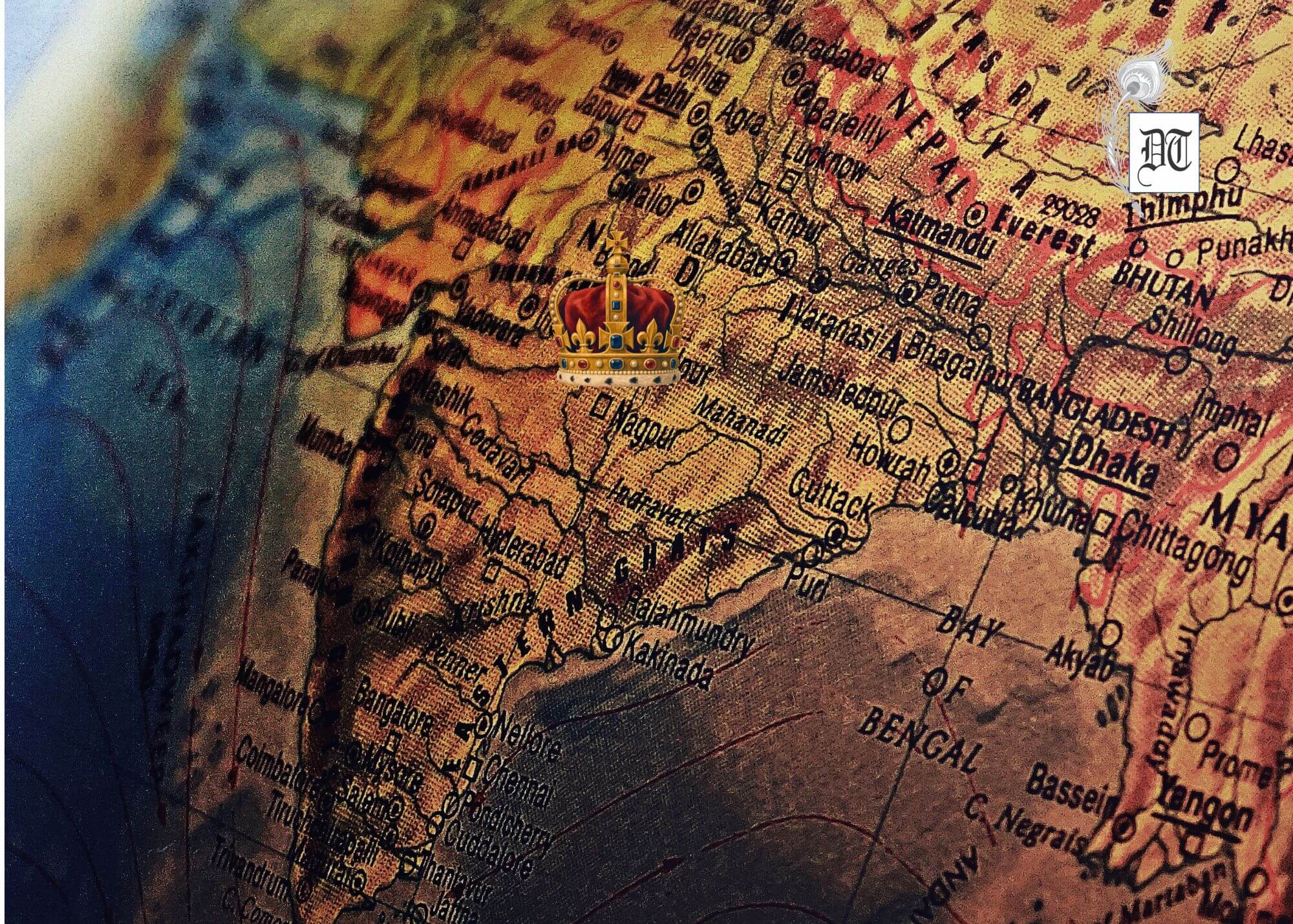

Penned by Dr Gill, this compelling historical analysis re-examines the twilight of British rule in India on DifferentTruths.com.
AI Summary:
- Churchill’s Prediction Defied: Winston Churchill’s dismissive 1947 prediction that India would fail under the weight of independence proved entirely unfounded.
- The 1857 Catalyst: Unlike the fragmented and structurally weak 1857 revolt, post-World War II India possessed immense military veterans, educated leadership, and unified momentum.
- Resilient Democracy: Despite partition’s scars and ongoing political challenges, Bharat has risen stronger, outperforming imperial expectations and establishing a vibrant civilisational democracy.
A decade short of the centennial anniversary of the failed 1857 revolt engendering the 1858 Crown rule, the British surrendered their golden geese to their rightful owners, found stepping stones in a stream of unleashed communal blood, and artfully skipped back to their drizzly island for their ritual afternoon tea. They feared a victorious repetition of 1857 in 1957.
Sir Winston Churchill, Britain’s charismatic World War II leader and architect of the 1915-16 Gallipoli Campaign debacle and the 1943 Bengal Famine, is said to have predicted, in 1947, that “If Independence is granted to India, power will go to the hands of rascals, rogues, and freebooters; all Indian leaders will be of low calibre and men of straw.”
Whatever the veracity of the contested citation, there is a consensus on Churchill’s hostile and derogatory attitude to and opinion of India and Indians. He dismissed Mahatma Gandhi as “a half-naked fakir”. The diaries of his Secretary of State for India, Leopold Amery, cited by the historian Ramchandran Guha, inform: “I hate Indians. They are a beastly people with a beastly religion.”
Twenty-two years short of India’s century of independence, the extent of Churchill’s grim prediction remains unfulfilled, at least within the territory of the Republic of India.
Deriving from the Latin ‘centum’, a century is one hundred years, a hundred runs in cricket, or a Roman military centum, commanded by a centurion.
Cognitive psychology interprets one hundred as the perceptive, symbolic threshold of the many, separating it from the very many. In the case of British crown rule over India, it would translate as a long and very long, challenging Indian patience.
The British seized and held India by wielding their expertise in guile, one of their core pragmatic values. Their most elite special force, the Royal Marine Commandos’ Special Boat Service (SBS), flaunts this proficiency in its motto — BY GUILE.
But on March 22, 1947, when Mountbatten assumed the viceroyship of India, he knew their time was up. He was no doubt under advisement from the intelligence services, so vividly captured as the Ethnological Survey by Rudyard Kipling in KIM and TN Murari in its sequel, THE IMPERIAL AGENT.
By the end of World War II, India was beset by a hundred-year itch. Even without a remake of mysterious burnt chapattis being thrown on thresholds across the Indian subcontinent to incite the 1857 revolt, a sentiment was percolating in all mindsets, classes, and creeds. In Indian culture, completing one hundred years of life is regarded as exceptionally auspicious; Indians were fiercely determined, before 1958, to prevent the goras from celebrating their second century of institutionalised looting.
The symbolic significance of ‘hundred’ has been embedded in the Indian mindset for millennia, frequently signifying plentitude or amplitude rather than exactitude. “May you live a hundred years” is a popular blessing for a full lifespan. ” A hundred sacrifices” or “a hundred gifts” signify great merit. A hundred-rupee note (or more, due to inflation) continues to be a ceremonial gift, with an added rupee for infinity, and families celebrate their centenarians with special honour.
‘Hundred’, in Indian poetry, often appears as a synonym for countless, which implies infinity.
By the nineteen thirties and forties, the Renaissance inspired by Raja Ram Mohan Roy, Swami Vivekananda, and Rabindranath Tagore had matured into a formidable force. Indians were determined to reclaim their inheritance the British had appropriated piecemeal. Indians discarded India’s degenerate royal leadership, cavorting on elephants, collecting luxury cars, and renting female company in Europe’s casinos and nightclubs, and got on with it, following their crop of brilliant barristers and their refined gurus.
Colonel Creighton – of KIM fame – and the Ethnological Survey (ES) were the theoreticians of the Central Special Branch, which mutated into the Department of Criminal Intelligence and finally the Intelligence Bureau in 1920, which it remains to this day within the government of India. The collaborating inheritors of Kipling’s Kim, the Tibetan Buddhist monk Teshoo Lama, the Saraswat Brahmin horse trader Mahbub Ali and Lurgan Sahib, could not have failed to register that the failure of 1857 and brutal repression would come to haunt them in the future: if not earlier, then in 1957 / 58. In 1945, it loomed over the horizon, simmering across the length and breadth of Bharat’s mindsets.
After all, the end of World War II was only twelve years short of the 100th anniversary of the 1857 Revolt, already being referred to as the First War of Independence, in preparation for a second round, if necessary.
And this second war of independence would not fail since it did not suffer from the weaknesses inherent in the first, passed off as a communal conspiracy by the losers. The revolt failed because of inherent, structural weakness within Indian society and the revolting troops.
At the time of 1857, India’s literacy rate was around 9%, and there were no means for the modern concept of Franco-American nationalism to reach the minds of the peasantry and yeomanry, locked in survival mode. There was also little industrialisation, denying activists the catchment area of a revolutionary proletariat concentrated in factories.
The average Indian still looked towards monarchical structures to ensure security and create opportunities to prosper.
The soldiers in the East India Company were hereditary professionals whom Indian royals — their traditional employers — had failed to provide with steady employment. They took the best service offer available, which happened to be the East India Company (EIC), which ensured job security, rewards and a field allowance called batta. The withdrawal of bhatta shortly before 1857 was a breach of contract by the British, and the warriors seethed, receptive to the argument that the new bite-me rifle cartridge contained pork and cow fat.
Punjabi troops did not participate in the revolt, conducted by leaders they believed had invaded and abetted in the invasion of their land.
In 1758, Maratha generals Raghunath Rao and Malhar Rao Holkar captured Lahore, replaced the governor, imposed a one-fourth tax of Chauth, and left Punjab lightly guarded against marauding Afghans. In the 1845-1849 Anglo-Sikh wars, the British Order of Battle shows that most of the soldiers had been from Uttar Pradesh, killing Punjabis to annex their land for the British.
When the Uttar Pradeshis revolted in 1857, the Punjabis saw little reason to shed blood and restore power to those who, only seventeen years earlier, had wrested their sovereignty from the British.
In 1857, the East India Company (EIC) army had 232,000 Indians, which included 16,000 Punjabi Sikhs and half as many Punjabi Mussulmans and Gurkha units, compared with 45,000 Europeans. That meant roughly 80,000 weathered and well-led Europeans, Punjabis and Gurkhas, facing 152,000 seasoned troops only under the junior, tactical leadership of warrant officers. Their bickering political leadership was riven by communal conflicts and plagued by a single-point agenda. These lads promised a very tough tactical fight, but strategic manoeuvring was beyond their grasp.
At the time of the revolt, the EIC had no Indian King’s Commissioned Officers (KCOs) but only Viceroy’s Commissioned Officers (VCOs), now called Junior Commissioned Officers (JCOs) — the indispensable vertebrae of Naib Subedars and Subedars, equivalents of warrant officers in Anglosphere armies, providing a battalion with its junior leadership.
The 1857 EIC battalions were not structured on platoons but on 100-man companies led by 12 non-commissioned officers (NCOs) and 2 VCOs supervised by British KCOs. As such, the rebel leadership of VCOs had neither training nor experience in manoeuvring and/or out-manoeuvring medium-sized or large bodies of troops.
Neither did they have a central commissariat to ensure logistics, falling back on foraging.
From the chaos of jockeying for short-term leadership, the communal rifts among the political leadership plotted and planned to seize power in the post-Revolutionary world.
These factors were absent in post-World War II India.
The literacy rate had increased to roughly 13% for a larger population.
There was better communication across India due to schools, railways, roads, buses, the telegraph and radio in its infancy.
A second generation of mainly barristers, publishers, newspaper editors and their printing presses, and business tycoons had mastered the art of modern big business, accountancy, donations, and parliamentary party politics. They could actually teach the English a thing or two.
Well before Netaji Subhas Chandra Bose’s Indian National Army finally surrendered to Allied forces in the Malay Peninsula in August 1945, it had shaken the English and forced them to self-assess with sobriety.
By the end of World War II, with 2.5 million battle-hardened serving veterans, the Indian Army was the largest professional force in human history. These combatants, spoiling for a fight, had witnessed their British high command meekly surrender to the Japanese in Singapore. They had followed their fleeing officers with iron discipline when they about-turned in Burma to seek sanctuary in India and led their officers back by spearheading the Chindit force. They had shot, stuck their bayonets into Germans and Italians charging towards them and away from them, and captured them shivering with fright.
Were they to revolt, they would only be facing — if at all — 40,000 to 45,000 UK-domiciled British personnel. And British troops had no stomach left for a fight. They were keen to be reunited with their families and start benefiting from the welfare state William Beveridge’s November 1942 Insurance and Allied Services Report promised.
And, this time, the Indians had earned an ace up their sleeve — the Dehra Dun Military Academy, since 1932. By the end of World War II, there were enough Indian officers to lead and decimate 45,000 British troops: two major-generals, ten brigadier-generals, thirty colonels, and ranks below them.
Then came the Indian sailors’ Royal Navy mutiny of 18–25 February 1946, involving at least 10,000 sailors. It was a frightening teaser, feeding nightmare scenarios.
These details, in Mountbatten’s in tray, certainly frightened him enough to let Edwina loose on her charm campaign and unleash Cyril Radcliffe and his footrule.
Irrespective of the semantics under which they are executed, all heists and con games reach their apex, and in 1947, the bell tolled for the British. They knew their time was up, and their prowess in guile withstood the test of circumstances. Throwing their proclaimed self-image to the winds, they were able to hop out of India, clean as a whistle, leaving the population of the Indian subcontinent divided in fratricidal hatred, which gives no sign of abating. They were able to fan, with a foot ruler and pencil in an India-ignorant lawyer’s hand, the fires of communal hatred ignited by the Great Calcutta Killings of 1946.
Yet, by dint of brains, cultural base and hard work, India has succeeded in defyingWinston Churchill’s dire prediction of independence.
No vibrant democracy can function without admitting, within its processes, a certain number of rascals and rogues. The UK’s Profumo affair, the John Stonehouse Disappearance, the Parliamentary Expenses scandal, the Suez Crisis collusion, the Poulson Affair, Cash for Honours, Cash for Questions, Partygate and Johnson-era controversies are only some of the ones that were exposed. This presupposes that others got away and makes one wonder if Mr Churchill’s geography was up to scratch.
Hindsight would dismiss Churchill’s prediction as spite-inspired wishful thinking at the loss of his cash cow. While India has progressed, Churchill’s country has regressed, his words thrown on reversed monsoon winds. Even The Economist, from its lofty moral perch, would be hard put to explain how and why.
A civilisational culture had slipped into one of history’s periodic cycles of decline that plague all nations. One cycle does not destiny make but may catalyse change. Bharat has now emerged stronger and better. Expect the wisdom of its leadership to toss rascals and rogues the odd bone to feed its democracy and continue to provide a model of enlightened progress in its turbulent neighbourhood.
NB: Progress means gradual and steady improvement, and moving forward towards a goal. Cambridge & Merriam-Webster dictionaries.
Picture design by Anumita Roy

Dr Azam Gill is a France-based novelist, analyst and retired tenured Lecturer of Toulouse University, France. He has authored nine books, including four thrillers — Blood Money, Flight to Pakistan, Blasphemy and JADINY, and contributed to six anthologies. He also writes for Different Truths, The Express Tribune, and The International Association of Thriller Writers and blogs at https://writegill.com/. He served in the French Foreign Legion, the French Navy, and the Punjab Regiment. JADINY: Just Another Day in New York, his latest novel, is the first counterfactual/alternative history thriller about the 9/11 Twin Tower attacks. He is our Editor-at-Large, Europe.


 By
By
 By
By
 By
By
 By
By