Prof Bhaskar reflects on decades of teaching, critiquing state-sponsored student branding, miseducation, and political polarisation on DifferentTruths.com.
Key Takeaways
- Teaching Experience vs State Branding: Over decades of university teaching across India, Prof Bhaskar never found students to be “Urban Naxals” or anti-national, observing them instead to be well-mannered and focused on nation-building rather than subversion.
- The State-Society Antagonism: A widening gap exists between the ethical society and the legal state, driven by political power structures that fabricate internal enemies and rely on miseducation to control public narratives.
- The Peril of Power-Sponsored Accusations: Baseless labelling by privileged political figures—ranging from pellet guns on protesters to dismissing youth as disloyal—destabilises democracy, damages education, and breeds an environment of fear.
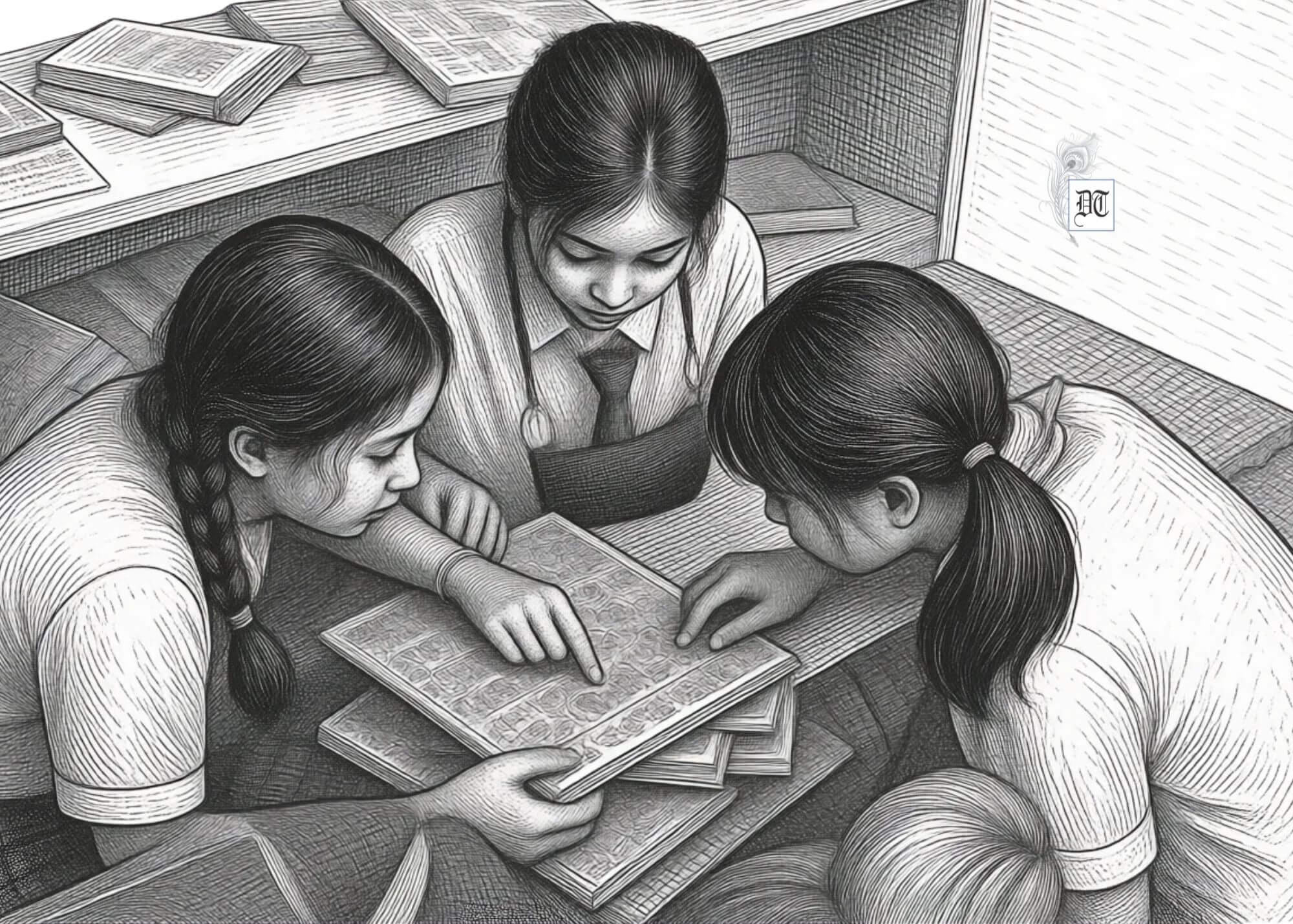
In my formal teaching tenure from August 01, 1978, to June 30, 2022, in different universities in India, I never got the chance to accuse the students of being ‘Urban Naxal’, ‘Dimagi Naxal’, Maoist, ‘tukde-tukde gang’, ‘deshdrohi’, and all the rubbish. The aim was to build the nation and not to blame the future of the nation by arresting them in the cobweb of malice, hatred, and branding.
The focus is not on me but on collectivism. There is a society where students constitute a major part. There is a ‘core state’ that is supposed to work as the reconciliatory body in case of diverging interests among social groups. Over the past decade, I have found an antagonistic relation between a legal unit that is the state and an ethical unit that is the society. One has to keep in mind that the state took birth in the womb of the society. Then the question is, why a visibly antagonistic relation?
One answer may be the non-satiety of the core state of India – it needs an enemy. Externally, there is Pakistan. But internally? The students are least capable of being enemies if my experience stands – I found students intolerably well-mannered in all four major states that I was directly engaged in teaching. Why blame the students? …
What seems relevant is quality education in a fear-free environment, as was thought by Gurudeva Rabindranath Tagore while he set up Visva-Bharati in West Bengal. From the bottom-layer educational institutions with MDM introduced in 1995 to the university layer, the same student-friendly environment needs to exist if a nation is to be built.
One sign of miseducation is throwing brickbats at students like ‘urban Naxal’ and ‘Dimagi Naxal’, and some days later it may be ‘Dimagi Urban Naxal’, which makes the stability of the country brittle. Being ‘brainy’ is a fault. Already, following the Home Minister, Chhattisgarh state has been declared free from the menace of ‘Naxalism’ or Maoism before March 21, 2026. So, what remains? It was difficult to accuse all protesting students as ‘Dimagi Naxal’, as declared by the PM on August 15, 2026, for it encompasses 25.0 per cent of the eligible voters. So, the students are to be categorised as obedient and disobedient – the latter may be termed ‘Dimagi’, and ‘Dimagi’ is taken as an abusive word for those who are deshdrohi. Still, it is a large number, say, 20 crores. Plus, the other religion-based enemy within – another 20 crores. It seems 40 crore is a very large number to arrest and put in jail. What is the way out?
An explanation from the parliamentary affairs minister, Kiran Rijiju, on August 16, 2026, was uncalled for and in a binary mode. He clarified in his master’s voice on August 15, 2026, on ‘Dimagi Naxal’, that the PM did not point at the opposition like Rahul and Co. He allegedly opined that the following were ‘Dimagi’ Naxals:
1. Who support Maoists and reject the Indian Constitution?
2. Who stand with separatists and support Article 370?
3. Who wants to cut the chicken neck to separate the Northeast from India?
Misinformation led to many more consequences apart from oral venom that kept the country partially blind because of false beliefs.
Some ‘Hathiyaari Naxal’ (armed Naxal) was also invented, which dragged the country down a wrong path. The central question for the economy-society-state thus is to root out or eliminate Naxals of different varieties and make people’s lives safe. I fail to understand what innocent people will do with such robust ideas.
My idea is that the Adivasis, Dalits and income-poor people are not competent to brand the privileged political persons (PPP). Because of parliamentary unquestioned privilege, some MPs brand the protesting students as ‘gutter’, some as ‘dimagi naxal’, and some as ‘tukde tukde gang’ rather than looking at their own past by education. The privileged get Z-category security – what type of security do the common people get? The insecure people elect the secure people and then are branded as ‘deshdrohi’. The reason is the ‘determinant-determined’ frame or ‘judges-judged’ frame or ‘guardian mode’. Innocent people do not know how to brand the privileged – they live or die in fear also.
The privileged persons who justified the lathi charge and firing from pellet guns on the protesting students in Delhi and firing from AK-47s in Jehanabad, Bihar, have self-authorised themselves as the custodians of Bankim-Vivekananda-Shyama Prasad without having much idea about the image of the youth in the writings of Vivekananda.
My observations around India are that even the victims of Partition 1947 participate actively in National Flag hoisting on August 15 each year. My reading was/is that nobody is anti-desh, as I observed in different corners of the country; people were observed to be mostly innocent about concepts like state-economy-polity, other than being voters once every five years, and that too not knowing about the candidate to be elected.
When accusing the victim of being state-sponsored or institution-sponsored, it becomes venomous. If the victim is the future of the country, then the country is doomed to failure. Prolonging this accusation prolongs miseducation that is hardly understood by the one or two privileged persons accusing.
Miseducation is often prolonged through persons in power whom innocent people believe or accept as protectors or godfathers. The latest one is blunt support for the use of force, lathis and pellet guns, on the students protesting at Jantar Mantar in Delhi against corruption in education. The parliamentary affairs minister, Kiren Rijiju, on August 15, 2026, allegedly supported the use of force, as he understood it, for his probable misjudgment that the student anti-socials were marching towards the Parliament building to capture the Parliament. I fail to understand how capturing a mere building leads to capturing the political ideas and documents. It seems it helps him if he discovers anti-socials among the protesting students. Another example was that of Manan Kumar Mishra, Chairman of the Bar Council of India – unfortunately so – who wasted enough time to beg an apology for his miseducation-conceived dictum against the NALSAR, Hyderabad, students who objected to the presence of the CJI in the convocation at the university in August 2026. It was not known what the cause of Mishra’s retreat was.
When miseducation takes the form of accusation, it is most of the time power-sponsored. A long time ago, the accusation of being unemployable was meant for the youth during the tenure of Rajiv Gandhi as PM. It was not clear then, and it is not clear now, if all those employed were employable because often employment in India is corruption-linked, network-linked, etc., and not guided by merit. The problems remain: state-agency-sponsored leaks of public examination papers for reasons best known to the power centres. The question remains who benefits from such leaks of examination papers and corruption in education.
Accusations at the level of individuals do not go a long way, and often that is evidence-less or gossip-based. What I feel concerned with is ‘representative accusation’ that shows misuse of chair or power. This is more because their voice is media-circulated pan-India or across countries. The matter of concern is that the core state decides what people will ‘take and talk’, and it creates a vocabulary that people buy also – power works. Most people find an easy solution to life if they echo ‘his master’s voice’. In difficult, deprived, dispossessed living, most people find no alternatives. Some people with differences, because of their education, suffer. The educated section could have an easy solution in terms of ‘naukar-chakar-bangla-gaari’ had they been power-obedient or sycophants. That did not happen so far. So, branding as ‘Dimagi Naxal’.
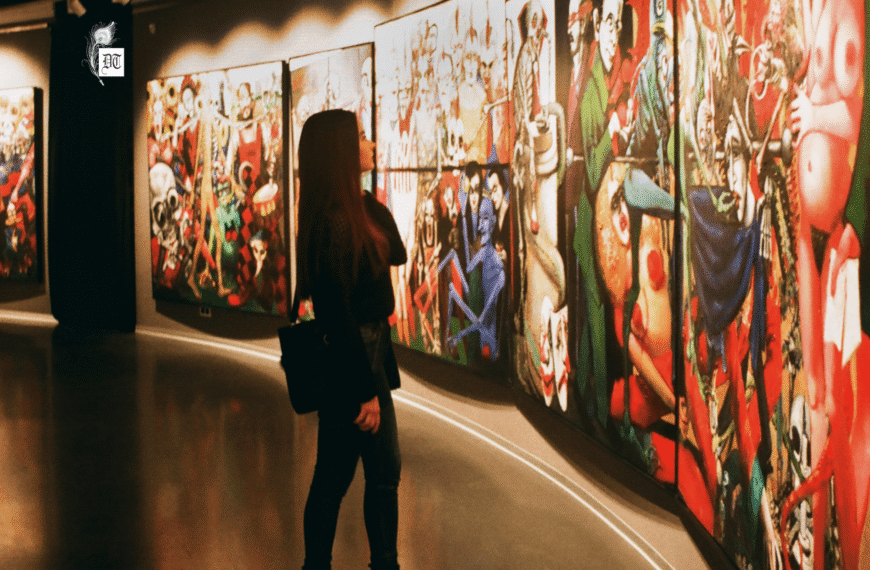
Picture design by Anumita Roy
Prof Bhaskar Majumder superannuated as an Economics professor from GB Pant Social Science Institute, Allahabad. He served as a visiting professor at Central University of Bihar (Patna), Sri Sri University (Cuttack), Banaras Hindu University (BHU), Science College (Calcutta University), and others. He published extensively in 26 reputed journals, authored 11 books, co-edited two, and contributed 38 chapters. He completed 26 research projects funded by the Planning Commission, GoI ministries, ICSSR, the World Bank, NTPC, and Tata Chemicals. An international academic, journal reviewer, and PhD supervisor, he holds degrees from the University of Calcutta. He is our National Editor: Economics and Social Science.

 By