
Dr Rositta spotlights Sushobha Barve’s long-standing dedication to peacebuilding, conflict resolution, and grassroots reconciliation across South Asia, in the third and final part on DifferentTruths.com.

Key Takeaways
- Pioneering Peace: Suemails Barve co-founded the Centre for Dialogue and Reconciliation (CDR) in 2000, spearheading community-led initiatives and dialogues across South Asian conflict zones like Jammu and Kashmir. Empowering Women: Through platforms like WISCOMP, she champions women’s pivotal agency and leadership in mediation, conflict management, and post-crisis rehabilitation.
- The Power of Listening: Bato discloses that it is based on empathetic listening, addressing socio-economic roots, and rejecting militarised solutions in favour of genuine civic engagement.
Note: This article in three parts chronicles the life of Sushobha Barve, one of India’s exemplary peace activists.
Part One describes Barve’s evolution into a successful peace activist and her crucial role in restoring peace and harmony to riot-torn Mumbai of the 1990s. Part Two continues with the peace initiatives and missions established under her leadership to ensure lasting peace in conflict-torn areas across India. Part Three focuses on the Centre for Dialogue and Reconciliation, co-founded by Barve, and the Centre’s path-breaking peace missions across India and South Asia.
The views expressed herein are based on the author’s personal perspectives emerging from her extensive interviews with Barve and other published sources listed in the references.
The Centre for Dialogue and Reconciliation: A Lifetime Achievement
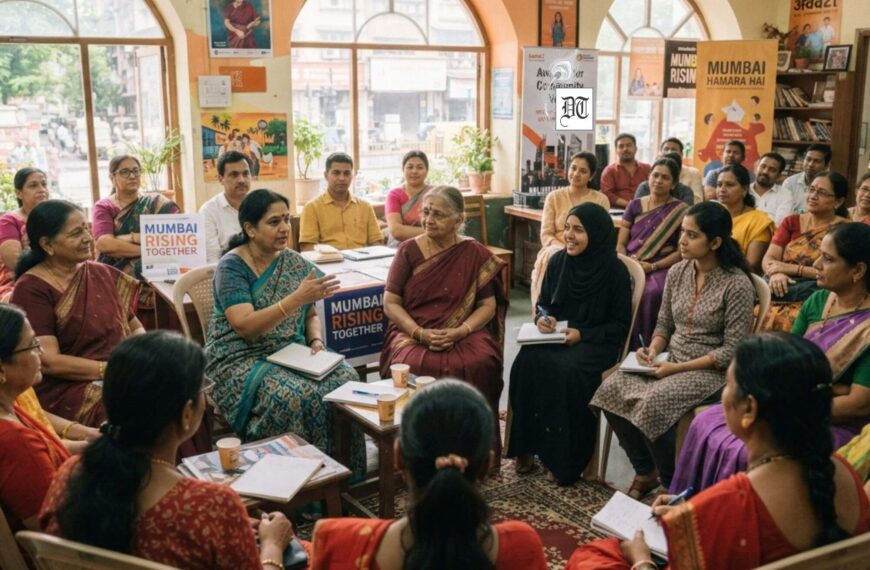
Moving forward, Sushobha Barve marked a major milestone in her exemplary journey with the formal establishment of the Centre for Dialogue and Reconciliation (CDR) in 2000. As the executive secretary and programme director of this Delhi-based Centre that she co-founded, she now spends most of her time across South Asian conflict zones such as Jammu and Kashmir, where the CDR is involved in major peace missions, and at her home in Gurgaon. The CDR describes itself as “an initiative that hopes to serve as a catalyst for internal and external peace in South Asia through a process of discourse and dialogue – a process that seeks to promote a peaceful approach to the resolution of conflict with justice and equity and the eventual goal of reconciliation” (https://cdr-india.org.in/index.html). Under the aegis of the CDR, Barve has formulated and implemented novel community peace and social welfare initiatives across communities in Maharashtra, Jammu and Kashmir and Gujarat, among other conflict-prone areas. She has also been actively involved in publishing articles and handbooks on conflict prevention, conflict resolution and holistic material and mental rehabilitation post-conflict for use across the Asian region. As part of the roundtable of Women in Security, Conflict Management and Peace (WISCOMP), Sushobha Barve has been actively involved in articulating and disseminating the crucial role of women in peacebuilding and their agency before, during and after conflicts and in seeking to build a corpus of knowledge concerning the successful mediation campaigns led by women even in the most difficult situations. For instance, writing for Communalism Combat in 2000, following her visit to Bangladesh, Sushobha Barwe reported how ill-treatment meted out to the Muslim minorities in India during the riots resulted in brutalities against innocent Hindu minorities in the neighbouring countries. People on both sides of the border were trapped in an endless cycle of violence. When she heard the Hindus in Bangladesh telling her how they had been asked to prove their patriotism repeatedly, she felt she was listening to the Muslims in India – it was the same sense of anguish at being asked to prove their integrity despite being loyal citizens who had made a conscious and voluntary decision to stay back in India or Bangladesh (https://sabrangindia.in/message-bangladesh/).
Soon after the launch of the CDR, Barve found herself facing another unprecedented conflict where her experience would prove invaluable – the Gujarat riots of 2002. Barve’s just and neutral stance that condemned violence by anyone, no matter what their affiliation or identity, and her rich experience as a peacemaker played a crucial role in the relief and rehabilitation of victims post the riots, especially in the battered city of Ahmedabad. However, this time, the challenges, animosity and polarisation she faced were a hundred times greater than in Mumbai.
In Jammu and Kashmir, since the year 2000, Barve has initiated several novel and noble measures – dialogues amongst Hindus and Muslims, dialogues amongst the residents of Jammu and those of Kashmir, women-led and women’s empowerment-oriented peace missions, and peace education programmes for teachers. As part of the Jammu and Kashmir peace initiatives, CDR trained local citizens, especially teachers, in peaceful conflict resolution in collaboration with UNESCO, organised the first India-Pakistan women’s peace talks across the Line of Control, a series of dialogues with the masses of Jammu and Kashmir in their homes and community spaces, and talks/pilot projects involving the women, youth, ordinary citizens and civil societies of India and Pakistan with regard to regional stability, trade, water, grassroots leadership and higher education. These dialogues were held both within Jammu and Kashmir and across the LOC with Pakistani stakeholders. Kashmiri women led the dialogues and were given an opportunity to display their excellent leadership skills in the domains of community building and peaceful conflict resolution. These initiatives resulted in fostering a spirit of harmony, community development projects, peace education for youth, and a host of research projects and high-impact publications.
In her 2002 article in Communalism Combat, Sushobha Barve, after touring Jammu and Kashmir and extensively interviewing the victims of terrorist/state violence, reiterated that unless the government took major steps to rehabilitate widows and orphans, the cycle of poverty, injustice and resultant militancy would never end. To quote Barve, “Civil society in India needs to awaken to the colossal dimension of the humanitarian crisis that confronts tens of thousands of young widows and orphans in the violence-hit Valley” (https://sabrangindia.in/kashmir-moral-dimension/). “The consequences of violence in Kashmir are enormous in terms of human and social costs. Look at the staggering figures — 50,000 dead, several hundred missing, around 30-40,000 young widows and about the same number of orphans. …About 16 months ago, a visit to five villages in Baramulla district proved shattering. Of the 35 widows whom we actually met, only two had received the compensation of Rs. 1 lakh… many of them had made several visits to the concerned authorities, spending a lot of time and money… they were informed that 8,000 applications were pending in the file. There was no money to pay them (https://sabrangindia.in/kashmir-moral-dimension/).”
During the peak of the pandemic, Sushobha and her fellow peace activists fought for the end of the internet lockdown in Kashmir, urging the Union government to ensure access to communication, release of political prisoners, and rebuilding of shattered education, banking, healthcare and horticultural systems. They argued that, instead of curbing terrorism, the internet shutdown was only making life miserable for ordinary citizens, especially local artisans who lacked access to their tourist/national/international customers, pushing the region into backwardness and attracting negative attention from the international media. More than bans and crackdowns, the government needed to work on lifting the region out of the economic crisis (https://thewire.in/rights/kashmir-is-in-a-lockdown-within-the-lockdown-this-must-end-now).
Later, as part of the Concerned Citizens Group (CCG), Barve, along with prominent civil society leaders and eminent citizens from across the country, held intensive discussions with the affected Hindu and Muslim communities in Jammu and Kashmir, placing before the nation the plight of the people who had been caught amid Pakistani terrorism, the BJP’s divisive religion-based politics and the massive political corruption by the Congress party. The imposition of the governor’s rule in the state only made matters worse.
Currently, as she expressed during our interview, as a member of the government-appointed peace committee, while she tries her best to create an atmosphere of dialogue in Jammu and Kashmir, she is deeply disappointed that the government believes in the use of force. Almost every other stakeholder speaks the language of war. She misses Mumbai’s cosmopolitan culture and its vigilant, peace-loving civil society that contrasts sharply with Kashmir’s deeply polarised society wherein citizens are unfortunately pitted against their own government. As recently as 2025, Barve lamented the fact that Track II diplomacy between India and Pakistan, spearheaded by NGOs and civil society groups, has taken a big hit because global funding for such conversations aimed at resolving even the most vexatious issues and preventing war has been stopped. Both governments are not keen on dialogue and prefer military solutions instead (https://www.dw.com/en/india-pakistan-crisis-deepened-by-lack-of-informal-diplomacy/a-72687265).
A Lighthouse for Future Generations: Educational Enterprises
As an Ashoka University Fellow (elected in 2004), Barve plays a meaningful role in educating the brightest young minds and the educational system of the country about the need for involving citizens in peace initiatives and addressing the root causes of violence. As the university website declares, “India has suffered religious and ethnic violence for centuries. Sushobha Barve’s citizen peace committees cut away its root causes” (https://www.ashoka.org/fr-be/pionnier/sushobha-barve). Ashoka University goes on to explain that the reason for Barve’s success, where most others have failed, is the fact that she is a great believer in genuine dialogue involving all stakeholders, that she looks at an issue holistically and targets the underlying socio-economic and socio-cultural reasons- the poverty and lack of development that lie at the roots of communal conflicts- instead of concentrating on the superficial religious colouring. Across South Asia, she seeks to implement her highly successful experiment of citizens’ committees that are trained to engage with the police and the administration to ensure peace and stability before violence breaks out and, more importantly, to work for the holistic and sustainable development of the locality on a constant basis. Time and again, Barve has been extremely vocal about the need to listen to the grievances of the masses, especially the victims, and to learn how to accommodate differing views and find solutions to problems. She rues the fact that citizens’ protests over genuine issues, sometimes as basic as drinking water, roads, schools and hospitals, are viewed negatively by the state machinery, especially in conflict-ridden areas such as Jammu and Kashmir and the North-east – where such protests are labelled as anti-national and crushed immediately.
Also, as part of the roundtable of Women in Security, Conflict Management and Peace (WISCOMP), Sushobha Barve has been actively involved in articulating and disseminating the crucial role of women in peacebuilding and their agency before, during and after conflicts and in seeking to build a corpus of knowledge concerning the successful mediation campaigns led by women even in the most difficult situations.
Barve’s parting message (during my interview with her) was that of the need to continue relentlessly with dialogue and discussion, with listening to people sincerely, with the heart and not just with the head. To quote her words from another interview, “Our Indian tradition, the subcontinental tradition, has been this – we hear of Gargi sitting with all these men in intellectual discussions… They must have listened to one another because the discussions went on for hours and hours and days on end. … even if you just listen with empathy, half of people’s grievances are addressed. … ‘Hamari sunvai nahi hoti (no one listens to us), I kept hearing this repeatedly from Bhagalpur to Bombay during the riots. For the last 30 years, people have been saying this. Do we think that only certain people in academia have all the wisdom and the rest don’t? …We must learn to listen so that people can express what they want in terms of personal, social and economic development. If we think that some ministry in Delhi has all the wisdom to make one policy, which is suitable for tribals in eastern India, Bodos in Assam, Nagas in Nagaland and Kashmiris in Kashmir – I’m afraid that it’s not going to work. We must be in a conversation to ask them for ideas and how they want to shape their destiny” (https://www.firstpost.com/india/swaraj-at-70-not-being-able-to-disagree-without-causing-huge-social-upheaval-is-dangerous-says-sushobha-barve-3932603.html).
In Conclusion: Always a Healing Stream
Sushobha Barve works away from the limelight, seeking to salvage numerous lives that have been brought to the brink of destruction by human madness. It is backbreaking and heartbreaking work, but the satisfaction of preventing a conflict, resolving a crisis or saving a life from doom is also immense.
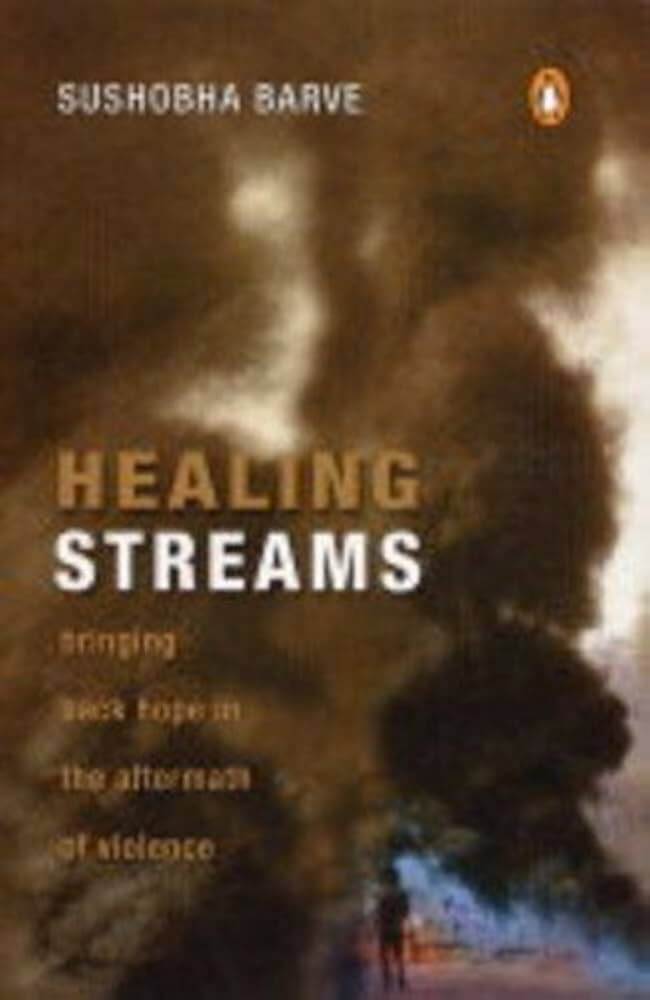
It is worth concluding with her words of wisdom at the end of her book ‘Healing Streams’ – “It is when we turn inwards and root out the seeds of hate, revenge, prejudices, humiliation and hurt from our own hearts, that we become instruments of change in turning the tide of history to a brighter and more positive future, where every group and every community feels secure and feels it has a part in building the future; where, rather than blaming the other, each one takes the responsibility of their share in the upheavals happening around them. We need small islands of hope which demonstrate that individual or small groups can make a difference… small islands of hope created by men and women who have dared to step out and release healing streams to douse the raging fires of communal hatred and division” (‘Healing Streams’, Penguin, 2009, p. 226).
References
Author’s extensive unpublished interviews with Sushobha Barve dated June 25, July 5, and October 17, ‘Healing Streams: Bringing Hope in the Aftermath of Violence’ by Sushobha Barve, Penguin Books, 2003
https://cdr-india.org.in/index.html
https://www.ashoka.org/fr-be/pionnier/sushobha-barve
https://thewire.in/rights/kashmir-is-in-a-lockdown-within-the-lockdown-this-must-end-now
https://thewire.in/politics/ramzan-ceasefir-shujaat-bukhari-bjp-pdp-kashmir
https://sabrangindia.in/kashmir-moral-dimension
https://sabrangindia.in/message-bangladesh
https://en.wikipedia.org/wiki/Centre_for_Dialogue_and_Reconciliation
https://www.dw.com/en/india-pakistan-crisis-deepened-by-lack-of-informal-diplomacy/a-72687265
https://sabrangindia.in/breaking-barrier/what-we-learnt-process
https://reliefweb.int/report/india/across-line-control-real-stakeholders-peace
https://www.mumbaimirror.com/opinion/finding-a-place-in-the-middle-700043
Cover Picture of the Book of the interviewee

Dr Rositta Joseph Valiyamattam is a Fellow of the Royal Society of Arts, U.K., a scholar, poet, author and educator with over two decades of experience in higher education. A former visiting research fellow at the University of Edinburgh, she is currently a consultant editor with Orient BlackSwan India and an English faculty member at prestigious institutions in Hyderabad. With a gold medal and doctorate from Andhra University, she has published widely and champions literature, youth engagement, translation, theatre, oratory, and socially committed education.

 By
 By