
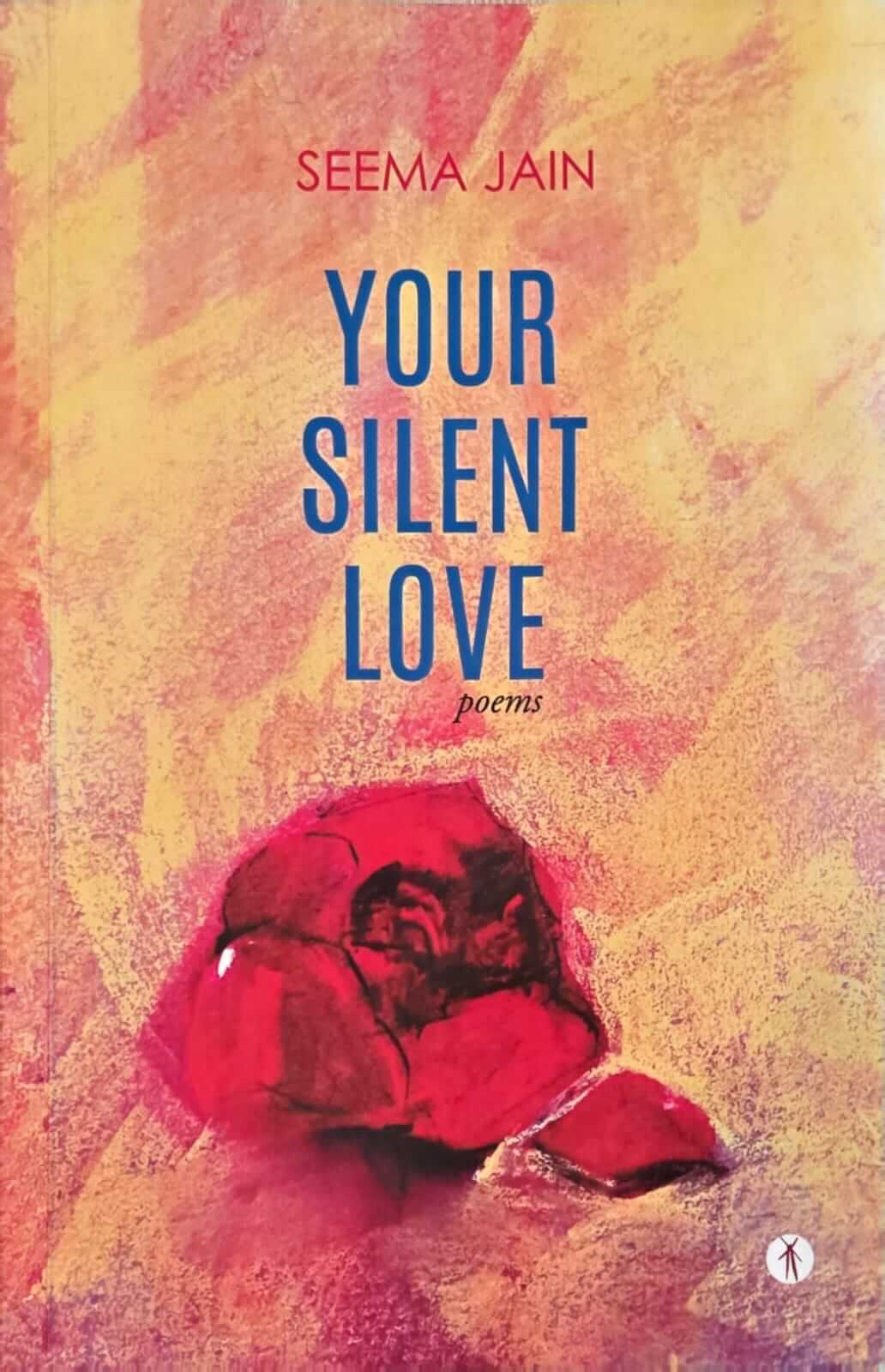
Lakshmi reviews Seema Jain’s Your Silent Love, which explores war, misogyny, and patriarchy, on DifferentTruths.com.
Key Takeaways
- Poetic Protest Against Conflict: Seema Jain contrasts childhood innocence with the brutal realities of modern warfare in Ukraine, Gaza, and Iran.
- Critique of Deep-Rooted Patriarchy: The collection challenges ancient societal norms and systemic misogyny, addressing domestic abuse and cultural stereotypes.
- Resilience and Hope: Weaving together mythological perspectives and contemporary issues, the poems ultimately champion human resilience and lasting peace.
Seema Jain, a bilingual poet, short story writer, translator, editor and critic, was the former Head, Dept. of English, and Vice Principal of KMV, Jalandhar. Her twenty published books include collections of poems in English and Hindi. Notable among her translations are Madhav Kaushik’s Suno Radhika (Listen Radhika in English) and Rachna Singh’s Agnipakhi. With strong endorsements from two eminent academics and writers, Malashri Lal and Sanjukta Dasgupta, Your Silent Love is a welcome addition to the corpus of English poetry.
The collection includes striking poems on war and violence, and on the ruthless opportunism of international alliances. Jain dedicates it to people caught in this vicious web of political hate:
‘To all those innocent people/who suffer for no fault of theirs-/ caught in war zones – hate zones – poverty zones’
Wilfred Owen (1893-1918), the English war poet, was politically incorrect. Even while serving as a soldier, he wrote vehemently against war and the horrors of trenches and gas warfare. So did his mentor Siegfried Sassoon (1886-1967), who satirised the ‘patriotic pretensions’ of those who fuelled war, like Ernest Hemingway in fiction, who argued powerfully against war despite (or because of) being a soldier. Some of us have grown up reading the powerful poems of Owen, who was killed in action at the young age of 25.
Jain contrasts the fright of her four-year-old daughter, who is scared of Diwali crackers, with the anguished cries ‘of thousands of children/ In Ukraine, In Gaza, in Iran/whose ears have gotten attuned/ To the roar of deafening missiles, rockets and/ Bombs exploding all around.’ (Fire, 112)
Ask a father what it feels like to have ‘his thirteen-year-old son’ shot by soldiers. (A Father’s Trauma, 41-42). Ask a mother how she felt when her child was ‘brutally axed’ in war. (Women and War, 104-105)
Seema longs for the childhood miracle of a magical pixie dust that could be sprayed on the global powers to stop the carnage of war (O For a Pinch of Pixie Dust, 35) and recalls other times:
It is said the battle of Kurukshetra ended with dusk/ And resumed the next dawn? / With the 24 x 7 wars today, what ‘progress’ have we made! (Kurukshetra – Between War and Peace, 106-107)
Her question resonates with every thinking individual:
Does victory in war prove any side right or wrong? (Survival in War Zone, 73-74).
The violent streak in human nature continues in Jain’s poems on women. In the crowded scene of feminist writings, we get some rare perspectives. Apart from films, theatre and art, creative and critical writings by erudite journalists have become a potent medium for exposing an essentially misogynistic social order. Addressing Manu straight from the shoulder, Jain’s poem on his infamous Smriti shows him for what he is – a deplorably anachronistic figure for the twenty-first century. Yet plenty of people are conditioned by his thinking about the three ‘roles’ of women as daughter, wife, and mother, while contemporary women, along with men, are speeding down a fast lane, catching up with their protean selves in a rapidly changing world.
I am Ankita in 2022. / You don’t know me! How would you? When you had designated, in your wisdom aeons ago/ That me and my kind are worthy of harsh beatings/ You had sown the seeds of that dark banyan tree/ of cultural stereotypes
From one branch of that gigantic tree/Hang mother-sister-daughter abuses/ Adorning the casual lingo of your descendants;
Today, when me and my sisters prove you wrong/By setting new benchmarks every day, your progeny refuses to outgrow/ Your outmoded rituals and ‘dated’ edicts. (I am Ankita in 2022, 29.)
Their cultural conditioning runs deep, making them so blind they cannot tell one woman from another. They lump all women within one category of lesser mortals, whether they are educated professionals, have talent and skills, or are school dropouts who are content to languish at home. What is worse, many women who have internalised patriarchy are complicit in the game. So, it takes on a patina of normalcy.
Jain’s poems on domestic abuse have courage tempered with restraint and satirical humour. It has been a while since the film Thappad, starring Taapsee Pannu in the lead role, sparked so much debate about the very act of slapping. In Jain’s poem, a slap fans out with metaphoric implications:
Some slaps fall on the face/ And are visible, palpable/ Some others get transformed into a cup of tea/smashed against the wall.
Or a metal dish/Thrown out in rage/With its contents strewn all over (Slap Thappad, 34)
This was generational.
If the cause of this violent act could be traced to the brutal patriarchy practised by men, we often forget to see the mothers as equally culpable for raising such bestial sons. They could have used their time to inculcate in their sons a healthy respect for sisters, girl batchmates, colleagues and wives. Where does all the formal education go? Why do women have such a low self-worth the minute they get married? These are large questions that beg for answers.
If a slap per se sends ripples across the social order today, slapping the husband back has equally complex ramifications, as we witnessed in Tamil Nadu more than a decade back when a senior police officer slapped his wife. She promptly slapped him back. She wasn’t just another police officer; she held a much higher rank than her insecure husband. The incident provided grist for the media mill, dividing her supporters into women and men, but it went a long way toward alerting men that their slap may have consequences. Again, the issue could be generational. One decade is a long span of time.
In the more recent past, the film Mrs Chatterjee vs Norway, starring Rani Mukherjee in the lead role of a simple homemaker, shows her fighting fiercely for the custody of her own children, whom the Norwegian government takes away on a strange order that allows the state to take into their custody children who are believed to be ‘suffering’ at home. Their mother’s affectionate scoldings in Bengali are misconstrued as ‘bad treatment’. Mrs Chatterjee’s husband, obsessed with acquiring the status of a ‘citizen’ in Norway, opposes her fight and slaps her. She promptly slaps him back. Nobody turned a hair in the fraternity of film critics and reviewers. Now we see how the wrestler’s akhada has also become a battleground for gendered combats, as in the case of Vinesh Phogat, our star wrestler who has won global laurels.
While interrogating the status of women in our myths, such as Sita, Savitri, and Gandhari, Jain moves on to a less-noticed cruelty. The stereotyping of women. Amrapali, the legendary courtesan, asks a disconcerting question:
Were all my beauty, / Talent and artistry a boon, or a vicious curse? (Amrapali, 77)
People cannot, or will not, see anything beyond her beauty.
There is every reason to hope that Jain, in her journey as a poet, would continue to hope for peace and harmony. The poet Emily Dickinson’s lines reverberate: Hope is the thing with feathers/that perches on the soul.
Book cover photo sourced by the reviewer

Dr Lakshmi Kannan, PhD, is a distinguished bilingual novelist, short story writer, poet, and translator. Her Guilt Trip and Other Stories (Niyogi Books, 2023) earned “Best Book of the Year 2023” in the India section of Literature, Critique and the Empire Today (UK). She was a Resident Writer at the International Writing Program, Iowa, USA; a Charles Wallace writer at the University of Kent, Canterbury, UK; a British Council writer at Cambridge, UK; and a Fellow at the Indian Institute of Advanced Study, Shimla.

 By
By
 By
By
 By
By
 By
By