


Arindam, Founder and Editor-in-Chief of DifferentTruths.com, reflects on the battle between human intelligence and AI limitations after a reflective conversation with Prof. Sanjukta.
AI Summary
- A casual WhatsApp chat with an eminent poet highlights how modern AI grammar tools often stumble by misreading human nuance and flattening creative voice.
- Over four decades of journalism across India reveal that human stupidity stems from systemic choices, which unguided AI tends to amplify.
- True storytelling and wisdom require lived experience and empathy; the future demands a human-first partnership to guide tech ethically.
On Thursday afternoon (June 18), as a gentle, cloudy veil draped over Bangalore, I exchanged messages on WhatsApp with Prof. Sanjukta Dasgupta in Kolkata. A poet, critic, and a renowned scholar in the world of letters, she and I were reflecting on the quirks of modern writing tools. Our conversation turned to the fallacies of autocorrect and how even advanced AI grammar checkers stumble—misreading nuance, flattening voice, or confidently “correcting” what was never wrong. In that light-hearted yet probing exchange, a casual remark from me about the deeper tussle between human folly and machine precision sparked this piece. It was one of those moments when technology’s promise collides with its limitations, reminding us why human intelligence remains irreplaceable.
In the quiet hours after newsroom lights dimmed—whether in the frenetic press of Delhi, the bustling lanes of Bombay, the sacred ghats and scholarly air of Varanasi and Allahabad, or the industrious hum of Indore—I have often pondered themes of human endeavour and error. Over four decades traversing these cities as correspondent, bureau chief, and editor, chasing stories for the Associated Press, Times of India, Hindustan Times, and beyond, I witnessed the raw pulse of our civilisation: its soaring ambitions and its tragic missteps.
AI is a recent phenomenon; it simply did not exist during my active years in mainstream journalism. Google had just about emerged, but those were innocent days of dial-up connections, physical archives, and human gatekeepers. To imagine AI has always hovered in the background would be a huge mistake—one that flattens the very arc of technological and human history.
Today, as Founder and Editor-in-Chief of DifferentTruths.com, a platform born from disillusionment with biased mainstream narratives, that simple WhatsApp exchange in cloudy Bangalore crystallised into a deeper inquiry: Are we witnessing Human Stupidity locked in battle with AI, or is it Human Intelligence confronting the subtler traps of Artificial Idiocy?
Let us begin with the storyteller’s lens, drawn from the streets I have walked. In Delhi’s corridors of power, I reported on policies crafted in haste, often ignoring ground realities. In Bombay’s film studios and financial alleys, dreams collided with cutthroat commerce. Varanasi and Allahabad, my roots, taught me the quiet wisdom of rivers and resilience, while Indore’s markets revealed the ingenuity and inequities of everyday enterprise.
Across these landscapes, human stupidity revealed itself not as mere ignorance but as deliberate choice—wars over illusions, environmental neglect for short-term gain, and systems rigged against the deserving. The exam leaks that have scarred lakhs of aspirants; the coaching mafias thriving in places like Bihar and beyond; and the bureaucratic apathy choking rivers like the Ganges or wetlands like Sonbeel (recalling Kallol Chowdhury’s book that I reviewed)—these are not anomalies but patterns woven from our collective flaws.
AI enters this narrative like a dazzling yet unpredictable co-protagonist. It promises to sift through chaos, offering solutions at speeds we mortals can scarcely match. In DifferentTruths, which I now helm, we occasionally use such tools to amplify marginal voices, analyse climate data, or even feature an AI summary to make it readable. Yet, as one who co-authored the novel Rivers Run Back, I know deeply that true storytelling springs from lived ache, moral ambiguity, and the poetry of imperfection—qualities no algorithm can fully replicate.
AI excels at pattern recognition but falters in wisdom. It is, after all, a mirror forged by human hands, often reflecting our biases at us with uncanny clarity. Today’s conversation with Prof. Dasgupta, herself a sharp critic of language and form, underscored precisely this: auto-correct and grammar tools may polish surface errors but frequently erode voice, context, and cultural cadence. At times, these introduce errors that weren’t there to begin with.
The Anatomy of Stupidity and Idiocy
Human stupidity, as the philosopher Dietrich Bonhoeffer warned, is more dangerous than malice because it is “incapable of learning.” We build nuclear arsenals while millions go hungry. We scroll through algorithmic outrage while forests burn and floods ravage. In my reporting years, I saw paper leaks—but the rot wasn’t that deep or monstrous—those that derail futures across states, affecting crores of young Indians chasing merit in a system tainted by greed, now. Analyses of NEET scandals and similar crises have documented over 70 major leaks in recent years, exposing a “conspiracy of corruption” involving politicians, coaching empires, and weak oversight.
AI amplifies this on a planetary scale. It does not originate stupidity but supercharges it. “Garbage in, garbage out,” as the old computing adage goes, now yields deepfakes swaying elections, biased hiring tools, or chatbots peddling misinformation with fluent conviction. Studies from Stanford, MIT, and others highlight how large language models inherit and magnify societal biases embedded in training data. When AI generates content echoing historical prejudices or hallucinates “facts”—or, as Prof. Dasgupta and I noted, overzealously “corrects” poetic or idiomatic expression—we glimpse Artificial Idiocy: efficient, scalable, yet hollow.
Yet, dismissing AI wholesale would be another folly. In DifferentTruths’ pages, we have explored its dual edge: from agentic systems promising multi-step problem-solving to concerns over authorship erosion and loneliness in the algorithmic era. As media analyst Emily Bell observed, “Technology doesn’t have values; humans do.” The intelligence lies in our stewardship.
Intelligence as Rebellion and Synthesis
Human intelligence shines brightest in rebellion and synthesis. It is the teacher democratising education against mafia interests, the poet chronicling forgotten valleys in Assam, or the editor insisting on nuance amid clickbait storms. In Varanasi’s and Allahabad’s academic and spiritual circles and Indore’s pragmatic ethos, I learned that wisdom emerges from dialogue—with history, with community, with doubt. AI lacks this. It predicts based on past data but cannot dream of justice uncharted or empathise with a mother in a flood-ravaged village. Nor can it, as today’s exchange highlighted, truly grasp the subtle music of language that a poet-critic like Prof. Dasgupta champions.
Consider the climate reporting I have engaged with. AI models forecast monsoons or pollution patterns with growing accuracy, aiding policy. But it was human intelligence—ground reports from Barak Valley, exposing how siltation and apathy doom Gangetic dolphins—that stirred conscience. As environmental advocate Vandana Shiva has argued, “The real intelligence is ecological and relational, not extractive.” AI, trained on profit-driven datasets, risks becoming a tool for further extraction unless guided by ethical frameworks.
In Bombay’s creative underbelly and Delhi’s think tanks, I guess another truth is emerging: over-reliance on AI breeds intellectual laziness. Writers lean on generators, journalists on summaries, leaders on dashboards—eroding the muscle of critical thought. This is where Artificial Idiocy seduces: offering convenience while eroding agency. A quote from media scholar Marshall McLuhan feels prescient: “We shape our tools, and thereafter our tools shape us.”
The Path Forward: Partnership with Guardianship
The resolution, I believe, lies not in opposition but in vigilant partnership. We must regulate AI with foresight rather than fear by conducting bias audits, enforcing transparency mandates, and building inclusive datasets that reflect India’s diversity—from the fields of rural Indore to the cloudy skies of Bangalore. Education must evolve: teaching not just prompts but philosophy, ethics, and verification. At DifferentTruths, we advocate for “human-first” journalism, where AI never supplants the storyteller’s voice.
References drawn from my journey and broader discourse reinforce this. The EU AI Act’s risk-based approach offers a model, while India’s evolving frameworks must prioritise equity. As Satya Nadella noted in discussions on responsible AI, “Technology is a reflection of humanity’s best and worst impulses.” Our task is to tilt toward the best.
In the twilight of my career, spanning newsrooms from Delhi’s power halls to Bombay’s relentless pace, Varanasi and Allahabad’s contemplative ghats, and Indore’s vibrant markets—now writing from a cloudy Bangalore afternoon—I wager on human intelligence. It built the tools; it can master them. The real stupidity would be surrender.
That casual WhatsApp remark with Prof. Sanjukta Dasgupta today, bridging Kolkata and Bangalore through shared curiosity, reminded me: conversations between thoughtful humans still spark the deepest truths. Let us choose, instead, to infuse machines with our highest aspirations—justice, creativity, and the irreplaceable music of language.
The stage remains ours. The ink may be digital now, but the story is eternally human.
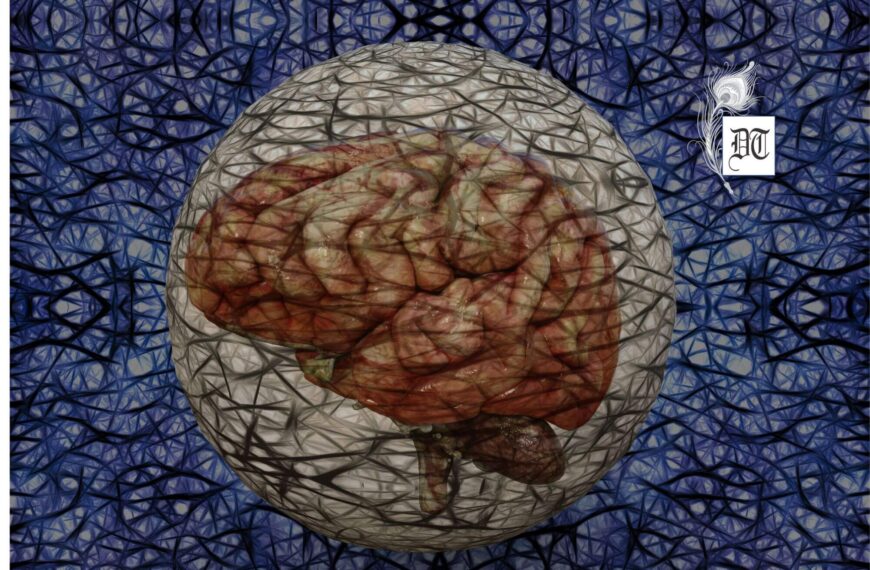
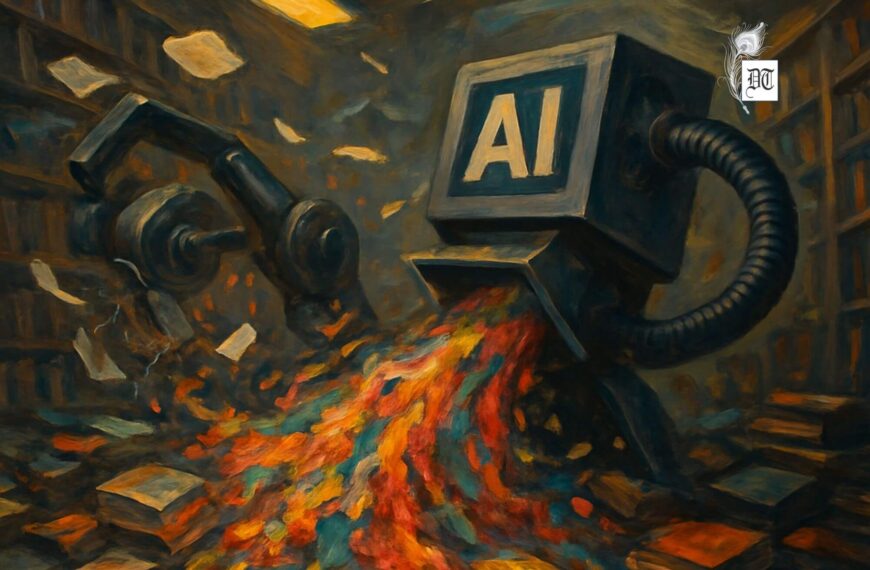
Picture design by AI

Arindam Roy has over four decades of experience in various newsrooms of renowned media houses. He is the Founder, Publishing Director, Editor-in-Chief of Different Truths, and Kavya Kumbh Publishing Consultant (KKPC). He has co-authored ten chapters in six Coffee Table Books (CTBs) of national and international repute and is the sole author of four forthcoming CTBs (Times Group). He has also published four international poetry anthologies as the Publisher and Editor-in-Chief, participated in several poetry and literary festivals, and won awards and accolades. Arindam co-authored the novel Rivers Run Back with an American writer. He stays in Bangalore and Prayagraj.


 By
By
 By
By
“𝘈𝘐 𝘦𝘹𝘤𝘦𝘭𝘴 𝘢𝘵 𝘱𝘢𝘵𝘵𝘦𝘳𝘯 𝘳𝘦𝘤𝘰𝘨𝘯𝘪𝘵𝘪𝘰𝘯 𝘣𝘶𝘵 𝘧𝘢𝘭𝘵𝘦𝘳𝘴 𝘪𝘯 𝘸𝘪𝘴𝘥𝘰𝘮 … 𝘺𝘦𝘵 𝘥𝘪𝘴𝘮𝘪𝘴𝘴𝘪𝘯𝘨 𝘈𝘐 𝘸𝘩𝘰𝘭𝘦𝘴𝘢𝘭𝘦 𝘸𝘰𝘶𝘭𝘥 𝘣𝘦 𝘢𝘯𝘰𝘵𝘩𝘦𝘳 𝘧𝘰𝘭𝘭𝘺… 𝘵𝘩𝘦 𝘳𝘦𝘴𝘰𝘭𝘶𝘵𝘪𝘰𝘯 𝘭𝘪𝘦𝘴 …. 𝘪𝘯 … 𝘷𝘪𝘨𝘪𝘭𝘢𝘯𝘵 𝘱𝘢𝘳𝘵𝘯𝘦𝘳𝘴𝘩𝘪𝘱” — wisely put, like the rest of the fine article!
Thank you so much for your critique. I agree with you, Azam ji.