
Dr Bhaskar critically examines the controversial removal of eggs from Midday Meals in West Bengal on DifferentTruths.com. Explore now.
AI Summary
- Historical Context: India’s Midday Meal (MDM) scheme, evolving since 1925, remains a vital tool for school retention and child nutrition.
- The Bengal Controversy: The recent decision to remove eggs and appoint ISKCON to manage school meals has sparked significant debate.
- Call for Reconsideration: Dr Bhaskar argues for evidence-based nutrition policies that respect local dietary habits over imposed ideological food standards.
It is known in the history of food-cum-education security for children of India that the Midday Meal (MDM) was introduced first in the state of Tamil Nadu in 1925, that is, a century ago. Seventy years later, in 1995, the government of India launched the programme. It took almost half a century for the government of India to recognise the importance of MDM for schoolchildren. A little before that, however, in 1984, the state of Kerala introduced the programme.
To date, people outside the MDM Scheme, or PM-Poshan Shakti Nirman, have not voiced concerns about cost-free food for children from disadvantaged households admitted to schools. One immediate social benefit is expected to be reduced dropout among children and, in parallel, the fulfilment of children’s nutritional needs in education. The MDM introduction won’t necessarily prevent dropouts, as factors like a lack of toilets for girls and child labour for household support may still affect attendance.
Minimum Nutrition-Based Meal for Children
Instead of going into all the issues, let me concentrate on the need for a minimum nutrition-based meal for children in public schools and Anganwadis, along with the privilege of spending years in school to prepare for nation-building. The scheme’s relevance and utility thus need no further explanation.
The cost of the scheme is borne by the centre and the state in a federal system in a 60:40 ratio, the centre providing 60 per cent and the state 40 per cent. The centre-provided funds are intended for food (cereals, vegetables, fruits, eggs, soybeans, etc.), while the state funds logistics and maintenance. The children (termed ‘beneficiaries’ in conventional Economics and state vocabulary) are given no choice about what food they would like. This is typical, as underprivileged households also give children no choice. Of course, there are many differences between a state budget and a household budget – the former moves from expected expenditure to necessary revenue, while the latter moves from actual income earned to possible expenditure.
ISKCON: Responsible for MDM
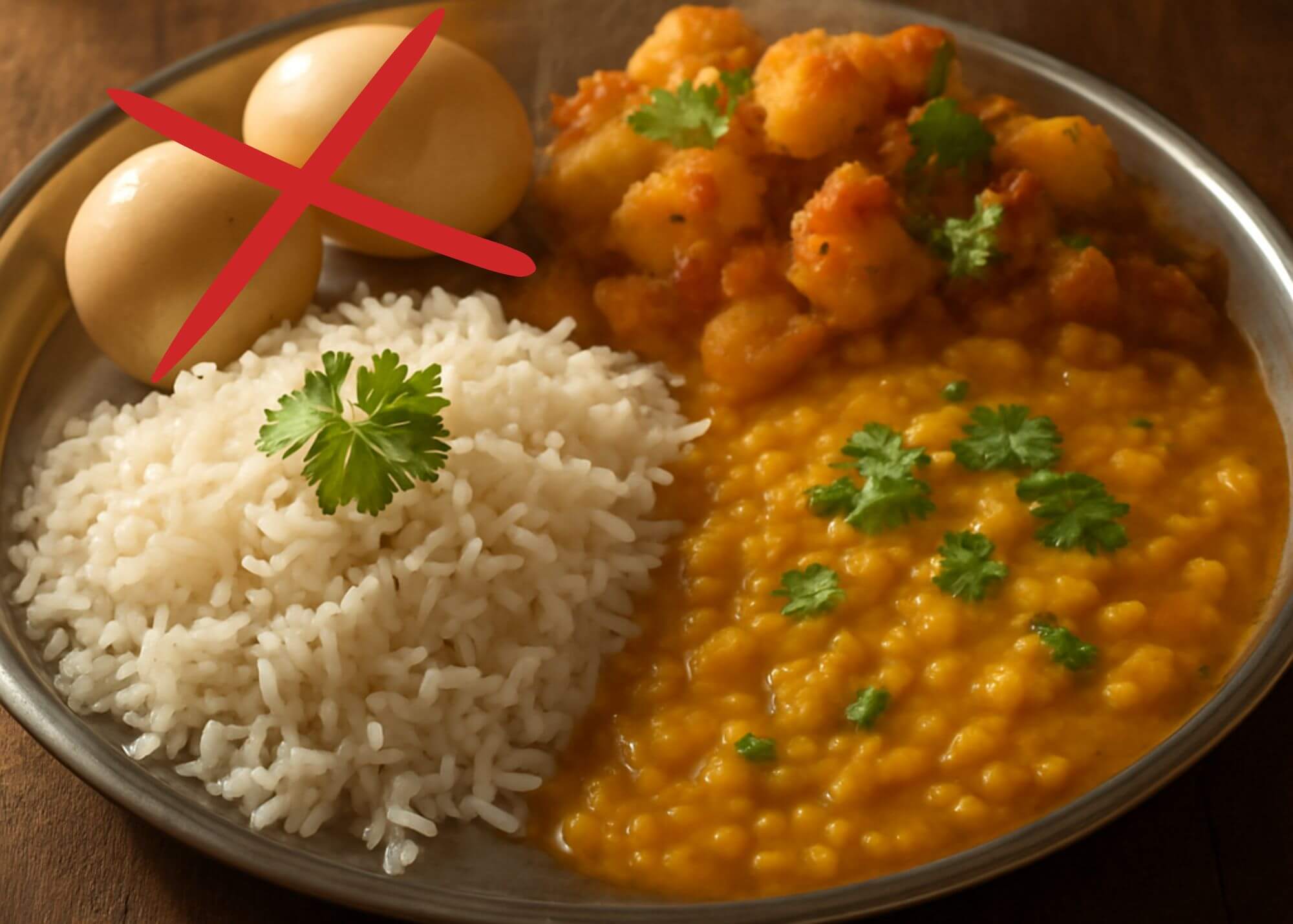
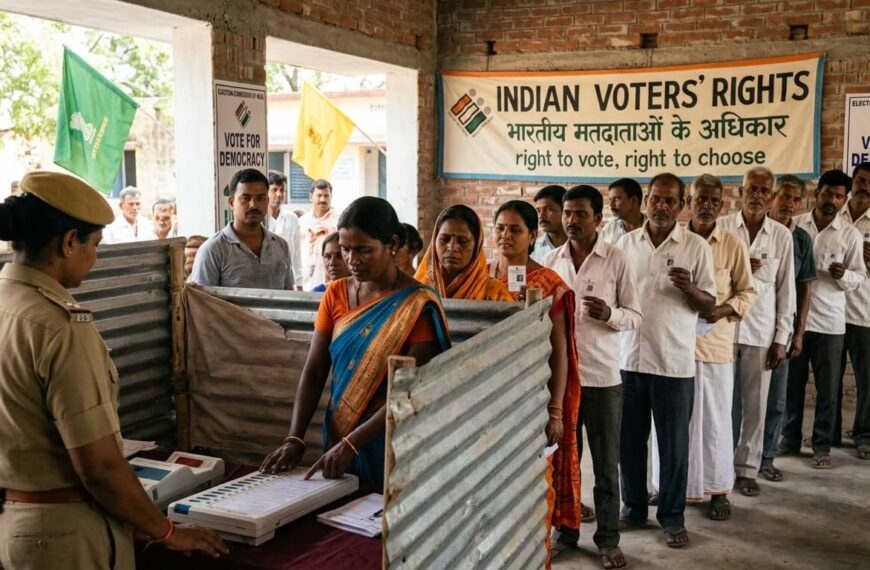
The government’s recent decision to remove eggs from MDM and make the food dish strictly vegetarian has sparked debate in West Bengal following the 2026 election. The new government is doubly strengthened by being a double engine that decided to remove eggs as a food item in MDM and made the food dish ‘pure’ vegetarian. It also assigned responsibility for providing MDM to the religious/spiritual institution ISKCON.
As informed by the premier social science research institutes in Bihar and Uttar Pradesh (BUP), the composition of MDM is purely vegetarian, which includes rice, tawa roti, vegetables, mixed dal (pulses), and occasional fruits – no non-vegetarian items are provided. Cook is engaged in the processes in BUP, depending on the number of students. The arrangement, however, created some trouble depending on which caste the cook belonged to and, hence, on whether children from income-poor high-caste households would take the food cooked and served by the low-caste woman (sic!).
I have strong reasons to believe that the new government in West Bengal did not follow BUP’s lead in removing eggs from children’s plates. It is also not that ISKCON would decline to serve eggs, particularly when a corporation allegedly provides them. My understanding is that eggs are considered ‘impure non-vegetarian’ items and hence removed to keep the dish ‘pure’. Not all students may be of Bengali origin, but most are. Bengali households are fond of fish and eggs, regardless of their nutritional value, as is evident from the fish and egg markets and their kitchens. Whether MDM is need-based or nutrition-based, removing eggs warrants a second thought. It seems redundant to opine that its absence is to be compensated for by items like paneer, capsicum, and mushrooms that constitute the lunch in middle-class Bengali households.
Change is welcome, not continuity, if it resembles Satidaha in undivided Bengal, where ‘once a widow, forever a widow’ was the norm; child marriage persists in many corners of India; and bonded labour, though abolished by the 1976 Bonded Labour Abolition Act, is still found in Uttar Pradesh as of June 2026, alongside the global slave trade that contributed to the Wealth of Nations (read, Britain).
Unwarranted Controversy
However, these are not to be juxtaposed with the removal of eggs from the MDM in West Bengal, which is always entangled in unwarranted controversy. I don’t know if there is any economic logic behind the removal of eggs, which has continued for decades. Hopefully there is no politics or ‘engine’ behind this. Rajma, as a popular pulse in undivided Uttar Pradesh and a household staple, may be a poor substitute for eggs on children’s plates, based on my telephonic conversation with adult members of middle-class Bengali households. Income-poor members in households did not opine on Rajma, though they are pro-soyabean.
I observed at an urban and a suburban fish market in West Bengal at around 12 noon that members of low-income households, both male and female, were buying waste fish residue and oil at the lowest cost to cook a vegetarian dish at home. The idea is clear – Bengali households are both vegetarian and non-vegetarian.
I hope the sane government in West Bengal will rethink before removing eggs and cooks. After all, engaging cooks also ensures social relations and compassion.
Picture design by AI
Prof Bhaskar Majumder superannuated as an Economics professor from GB Pant Social Science Institute, Allahabad. He served as a visiting professor at Central University of Bihar (Patna), Sri Sri University (Cuttack), Banaras Hindu University (BHU), Science College (Calcutta University), and others. He published extensively in 26 reputed journals, authored 11 books, co-edited two, and contributed 38 chapters. He completed 26 research projects funded by the Planning Commission, GoI ministries, ICSSR, the World Bank, NTPC, and Tata Chemicals. An international academic, journal reviewer, and PhD supervisor, he holds degrees from the University of Calcutta. He is our National Editor: Economics and Social Science.


 By
By
Thank you, an importnt issue, very well explained.