
Sohini at DifferentTruths.com critiques modern haute cuisine’s theatrics with wit and satire, calling for substance, warmth, and food that remembers its roots.
AI Summary:
- Modern fine dining favours theatrical techniques—foams, deconstruction, and micro-portions—over flavour, leaving diners nutritionally and emotionally unsatisfied.
- The piece contrasts experimental molecular gastronomy with comforting, lineage-rich dishes: sambar, kosha mangsho, dal, and slow-cooked stews.
- A culinary pushback celebrates provenance, patience, generous portions, and hospitality—restoring depth, warmth, and the simple luxury of enough food.
There was a time when a meal arrived with confidence. A proper roast entered the room like landed gentry. A biryani announced itself three minutes before it appeared. A Bengali kosha mangsho glistened darkly with intent, unconcerned with cholesterol charts or Instagram angles. Food had heft, aroma, and lineage. It did not require a thesis statement from a waiter named Kai.
Today, however, one is increasingly served what appears to be an edible chemistry experiment assembled during a nervous breakdown.
Somewhere along the line, chefs stopped cooking and began auditioning for CERN.
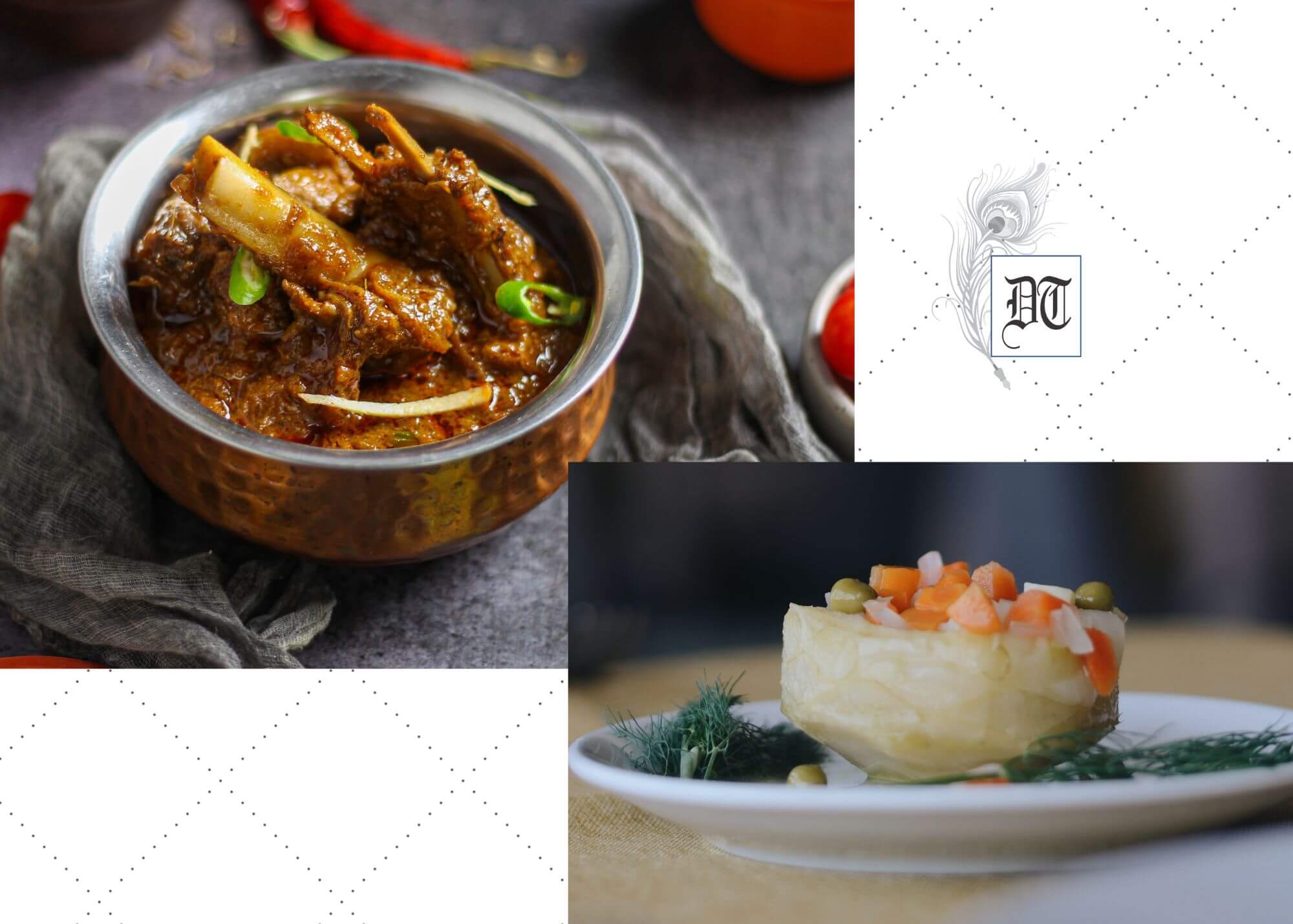
The modern tasting menu now arrives in twelve instalments, each approximately the size of a regret. A man solemnly places before you “deconstructed rogan josh with cardamom air and yoghurt dust”. Roganjosh, once the glorious monarch of Kashmiri comfort, has now become three apologetic cubes of lamb hiding beneath beetroot foam like witnesses in a protection programme.
The waiter leans in reverentially.
“The chef is exploring memory.”
I should hope so. Because no actual meal appears to be involved.
Molecular gastronomy — the movement that gave us foams, vapours, gels, emulsions, edible soil, smoke under glass domes, and liquids disguised as solids having existential crises — was once amusing in moderation. Ferran Adrià at El Bulli could perhaps be forgiven for turning olives into spheres because he was, at least, inventing a language. Heston Blumenthal serving bacon-and-egg ice cream at The Fat Duck had a sort of deranged British brilliance.
But as with all avant-garde ideas, civilisation mistook occasional innovation for a permanent way of life.
Now every ambitious restaurant behaves as though the diner has arrived not for dinner but for a hostage negotiation with texture.
The other evening, someone proudly served me “sambar espuma”.
‘Espuma’, for those fortunate enough to still possess grandparents and sanity, means ‘foam’.
Sambar, meanwhile, is one of the great achievements of South Indian civilisation—warm, spiced, restorative, and deeply companionable. It belongs beside rice, dosa, conversation, family disputes, and second helpings.
It does not belong emerging from a syphon gun like shaving cream.
And what precisely is this obsession with “deconstruction”? Nobody ever deconstructs bad food. One never sees “deconstructed airline chicken”. No. They always attack beloved classics. Deconstructed tiramisu. Deconstructed shepherd’s pie. Deconstructed rasmalai.
At this point, one longs to deconstruct the chef.
There is also the modern plague of portions so microscopic they should legally qualify as rumours. A £140 tasting menu often leaves the diner in the peculiar position of requiring a kebab on the journey home. You spend three and a half hours being narrated to, only to end the evening spiritually and nutritionally identical to a disappointed heron.
Meanwhile, the waiter describes every ingredient with the intensity of a UN briefing.
“The carrot has been compressed.”
Why? Was it under emotional strain?
“The jus is clarified.”
Excellent. My congratulations to the jus on achieving inner peace.
“The lamb was cooked for thirty-six hours.”
At that point, the lamb has essentially completed a postgraduate degree.
The tragedy is not experimentation itself. Innovation has always existed. Indian food evolved through Persian influences; tomatoes arrived in Italy from the Americas; even the humble potato travelled continents before becoming indispensable. Cuisine changes. It should.
But good food understands something modern performative dining often forgets: eating is not merely intellectual. It is emotional, communal, sensual, and ancestral. Nobody remembers the transcendent foam of 2017. They remember their grandmother’s dal. The street-side chaat in monsoon rain. The dangerous generosity of an aunt insisting on another puri.
Nobody has ever wept nostalgically over beetroot vapour.
Across the world, there is, thankfully, a quiet rebellion brewing. People are returning to sourdoughs that taste of actual bread, long-simmered stews, regional recipes, unapologetic butter, proper stocks, handmade noodles, grandmother kitchens, and neighbourhood cafés. Restaurants once again boast about provenance and patience rather than centrifuges.
Even fine dining is slowly rediscovering substance. The smartest chefs now realise that the true luxury is not theatrical smoke trapped beneath a cloche. It is the depth of flavour. Warmth. Hospitality. The profound civilisational achievement known as enough food.
Bring back the reassuring weight of a real curry bowl. Bring back sauces that cling rather than evaporate. Bring back desserts that do not resemble Scandinavian architecture.
And above all, bring back the radical idea that dinner should leave one happy instead of confused.
Picture design by Anumita Roy

Sohini Roychowdhury is a renowned Bharatanatyam dancer, choreographer, artistic director, speaker, social activist, and professor of Natyashastra. She founded Sohinimoksha World Dance & Communications in Madrid/Berlin/Kolkata/New York. A visiting professor of dance at 17 universities worldwide, she won several awards, including the “Mahatma Gandhi Pravasi Samman” by The House of Lords, the Priyadarshini Award for Outstanding Achievement in Arts, and the Governor’s Commendation for Distinguished World Artiste. She has also authored several books, including ‘Dancing with the Gods’.



 By
By
 By
By
 By
By
 By
By