Prof Bhaskar critically explores political societies, shifts in state power, and historical revisionism in West Bengal exclusively for DifferentTruths.com.
AI Summary
- Foundational Right vs State Control: Traces humanity’s evolution from social animals to political beings, contrasting inherent survival rights against sovereign state boundaries and forced documentation.
- The Mechanics of Political Society: Examines how power dynamics, public processions, and electronic media manufacture public opinion, contrasting West Bengal’s political culture with Uttar Pradesh’s caste-driven matrix.
- Ideological Remapping of Public Spaces: Details how shifting governance eras systematically redesign public landscapes, statue installations, and historical memory through a changing political lens.
Does one have the right to live beyond the state rekha (boundaries) or beyond policy or official documentation? Yes and no. Man is a political animal, but before that he was a social animal who practised collective living since cave days in hunting and survival. So, historically, yes, man has the inherited right to live beyond official documentation. No, because a man may be captured and pushed back to regions outside the sovereign boundary of the country.
Some people are ‘local political’ because they need to sit roadside to work as vendors; they need to drive commercial vehicles like autorickshaws, etc., for which they need to show their allegiance to the ruling local administration in urban areas. Some gain collective strength by being political, some walk in processions on public roads and so on. All these vary over states and regions, however. West Bengal, for example, reflects more of a political society, while Uttar Pradesh shows more of a caste society. In one, people cast their votes; in the other, people vote their castes.
Political leaders in West Bengal supposedly know much more about the voters – people – than what the people know about themselves. What this implies is ‘determinant and determined’ – the political leader is the determinant and the voters/people are ‘determined’. There is no fixed power relation between the determinant and the determined – often the latter is misused in the public domain, which goes against the determined. The determinant remains safe and projects himself as a nationalist-welfarist through social media and public speech.
The rest are derivatives, like what statues will be installed in public space, what the names of roads, parks, and stadiums will be, etc. The ruling political party decides these like statues of mahatma Gandhi everywhere in India during the Congress rule under the leadership of Nehru and Indira; statues of Marx and Lenin in West Bengal under the Jyoti Basu-led Left Front government; statues of Rabindra Nath Tagore, Netaji Subhas Bose and Vivekanand under the Trinamul Congress regime in West Bengal; and post-2026 statues of Shyama Prasad Mukherjee and Gopal Mukherjee in West Bengal etc. In Uttar Pradesh, more than a decade ago, under Mayawati rule, the statues were of Kashiram. In Gujarat, the statue is of Sardar Ballav Bhai Patel. Mostly, urban India was encompassed in manufacturing these statues, the purposes of which are both clear and blurred. In one situation, it is internationalism, and in other situations, it is nationalism. Common people do not readily understand the implications that could come if my conversation with them carries any meaning.
Probably Shyama Prasad Mukherjee was ignored in the public-political domain for 75 years; the ‘double engine’ government in West Bengal post-2026 thought it proper to shower respect on him, and hence the birthday of Shyama Prasad was celebrated on July 06, 2026, by the government of West Bengal. The reason, as understood or propagated, was that Shyama Prasad was the catalyst to keep a part of undivided Bengal in India’s territory or sovereignty that others probably did not care for. In the celebration ceremony, as shown on July 06, which is the birthday of Shyama Prasad, new faces of VIPs were seen on electronic media, and there was no presence of anybody from earlier regimes, implying a segmented political society. Political society takes different trajectories depending on ‘power’.
Some people, as potential voters, are arranged to walk in processions on public roads, assemble in public spaces to listen to the political leaders and clap in cases of assurance for job welfare. The electronic media carries all this to manufacture public opinion and faith, sometimes for continuity and sometimes for change.
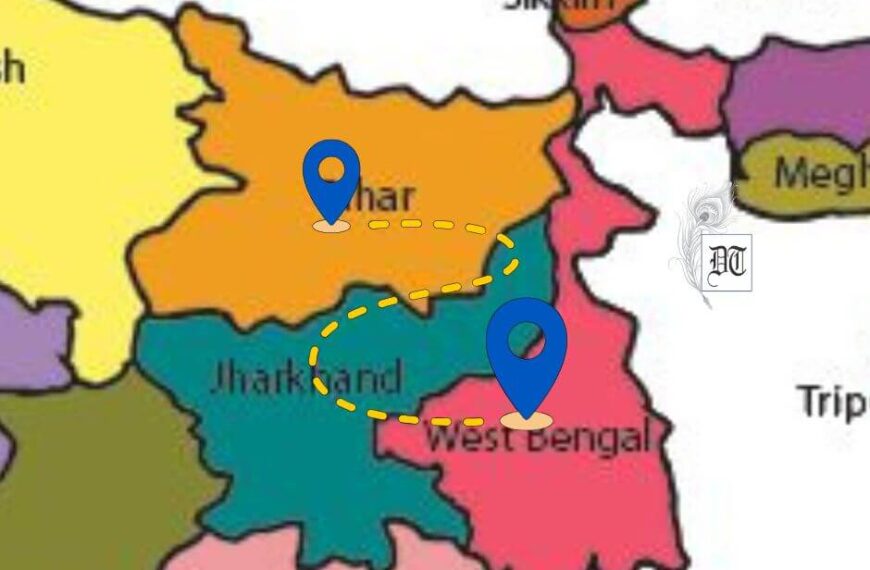
The problem with the concept of ‘political society’ as perceived in West Bengal is the major changes associated with a shift from a ‘single engine’ government to a ‘double engine’ government – the former that functioned for more than 73 years and the latter for two months from May 2026 to date. This does not mean that the ‘political society’ during 73 years had an ‘open agenda’ of ‘inclusive’ people as voters on the opposite sides in the polity. Now the opposition is virtually absent in the Assembly of West Bengal post-2026, which implies a new type of analysis is warranted to expose what led to oppositionlessness in West Bengal governance. Only the nomenclature does not lead anywhere.
The political society tends to create and re-create history by eliminating some and introducing others, the most recent example of which is introducing Shyama Prasad Mukherjee and eliminating Marx-Lenin in the public domain of West Bengal. It is not yet clear if Vidyasagar and Ram Mohan Roy are also on the hit list. Vivekananda and Subhas Bose are still considered politically relevant, keeping in mind the ‘heart’ of the Bengali with a voice.
Political society does not seem to be a one-layer homogenous society – it has both bottom-up and top-down paths; some get Z-category security, some get ordinary police protection, and some live as unprotected workers. Protection provided by the state probably depends on ‘threat perception’ that the VIP may be attacked or assassinated.
What is much discussed in the case of West Bengal is discussed much less in the case of most of the other states in India. One reason may be the early take-off of West Bengal through education, literature, and public participation. While most of the states in India are politically active, the extent of vibrancy differs inter-state. West Bengal is probably ahead of other states in documenting this vibrancy.
Picture design by Anumita Roy
Prof Bhaskar Majumder superannuated as an Economics professor from GB Pant Social Science Institute, Allahabad. He served as a visiting professor at Central University of Bihar (Patna), Sri Sri University (Cuttack), Banaras Hindu University (BHU), Science College (Calcutta University), and others. He published extensively in 26 reputed journals, authored 11 books, co-edited two, and contributed 38 chapters. He completed 26 research projects funded by the Planning Commission, GoI ministries, ICSSR, the World Bank, NTPC, and Tata Chemicals. An international academic, journal reviewer, and PhD supervisor, he holds degrees from the University of Calcutta. He is our National Editor: Economics and Social Science.

 By
By
 By
By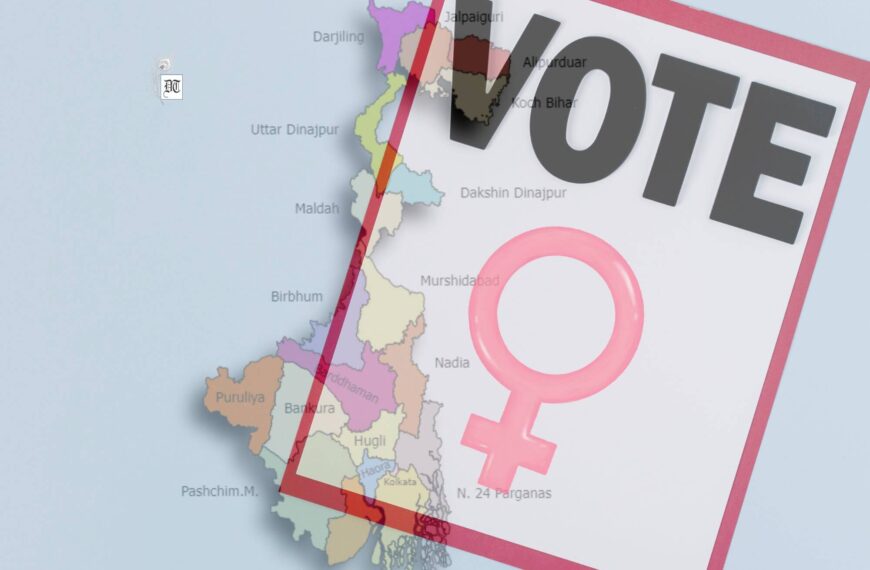
 By
By