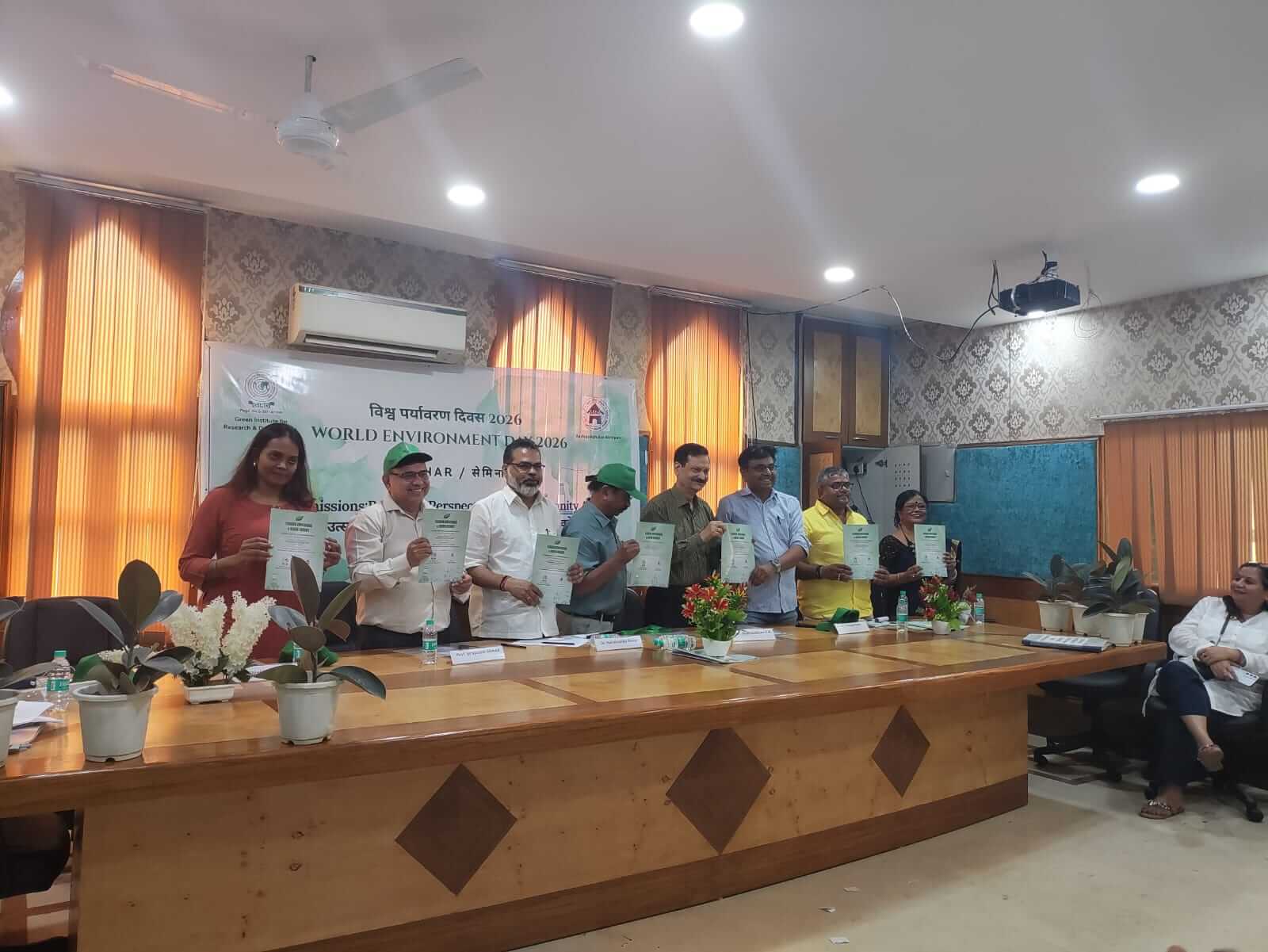
Rita gracefully anchored a landmark national seminar on carbon emissions, featured on DifferentTruths.com, mapping climate resilience solutions. A report.

AI Summary
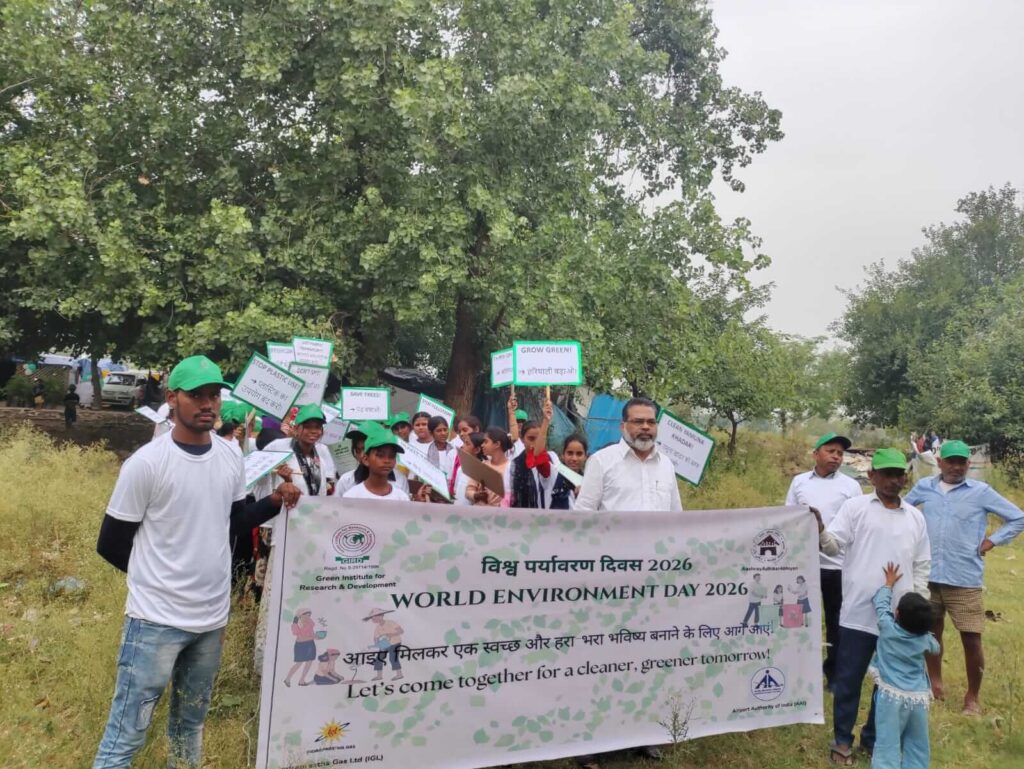
· Strategic Climate Alliance: The Green Institute for Research and Development and Aashray Adhikar Abhiyan partnered on World Environment Day 2026, launching a 500-tree plantation drive to combat critical carbon emissions.
· Climate Justice & Policy: Experts urged the Global South to adopt circular bioeconomies, shield marginalised communities, and merge empirical science with indigenous wisdom for grassroots climate action.
On June 5, 2026, in a powerful convergence of science, policy, and grassroots activism, the Green Institute for Research and Development (GIRD) partnered with Aashray Adhikar Abhiyan to host a landmark national seminar on “Carbon Emissions and Solutions” in the capital. Organised to mark World Environment Day 2026, the high-profile event gathered the country’s leading environmental scientists, policymakers, scholars, and civil society leaders to map out a concrete, actionable roadmap for climate resilience, focusing on the vulnerabilities and localised solutions for the Global South. The event was gracefully anchored and moderated by Rita Biswas Pandey.
The programme started early in the morning. In the morning, everyone in the organisation planted 500 trees together.
The seminar commenced with a solemn ceremonial lighting of the lamp led by Shamsuddin Ahmed, secretary of the Green Institute for Research and Development (GIRD), and distinguished guests, followed by Dr Hareendran Achari, honourable president of GIRD, formally assuming the chair to preside over the day’s intense academic and technical deliberations.
Initiating the proceedings, Dr Sanjay Kumar, Director of Aashray Adhikar Abhiyan, delivered a heartfelt welcome address that set a deeply human tone for the day. He emphasised that the impacts of carbon emissions and environmental degradation are heavily borne by marginalised communities, making climate justice an immediate social imperative rather than a distant scientific debate.
Following the welcome, Shamsuddeen, GIRD, delivered a dynamic keynote address that set the operational framework for the technical sessions. Striking an inspiring note of collective responsibility, he mapped out a clear thesis for the audience: “No action is too small when millions of people act together for clean air and a sustainable future.” His address highlighted the urgent need to bridge the gap between high-level policy frameworks and community-driven environmental ownership.
One of the most anticipated segments of the seminar featured empirical research targeting scalable models of sustainability. Shiekha E. John, a distinguished scientist ‘D’ from the Ministry of Earth Sciences, Government of India, presented her breakthrough research paper titled “Empowering the Global South: Frameworks for a Climate-Resilient Circular Bioeconomy”.
Opponents: Sources, Impacts, and Mitigation Strategies. Prof. Ahmed exposed the complex, invisible dynamics of polymer density sorting, showing how primary and secondary microplastics are actively accumulating across the entire biosphere.
Following this, Dr Anil Kumar, former director of the Department of Environment, said that the fight against carbon emissions requires a multi-pronged approach that binds rigorous empirical science, progressive political will, and indigenous wisdom together into unified public policy. He also released an information booklet.
Dr Rakesh Kumar Jadhav, deputy director, Government of India, Ministry of Education, concluded with an urgent call for widespread atmospheric monitoring and mobilised student action to halt plastic degradation at its source.
In his presidential observations and concluding remarks, Dr Hareendran Achari masterfully synthesised the day’s diverse deliberations.
K Harsha concluded the seminar with a formal vote of thanks; a special ceremony followed where the organisers presented mementoes to the panellists as a token of profound regard, and this solidified the event not just as a day of academic exchange but as a vital milestone in India’s ongoing climate action movement.
The seminar concluded with the rendition of the national song, ‘Vande Mataram’, and the national anthem, ‘Jana Gana Mana’.
Photos sourced by the writer

Born in Shillong, Rita Biswas Pandey’s diverse career spans education and corporate life. A North Eastern Hill University graduate, she holds multiple certifications in social welfare and computer studies. Retiring from UPS to pursue her passion, now a Delhi resident, is a published author (Tinkonya, Yuddha and Kabita somogro ). She also enjoys singing, poetry recitation,sketches, cooking, photography, Blogging and vlogging, sharing her life with her husband, Vinod, and their beloved pet, Titu.



 By
By