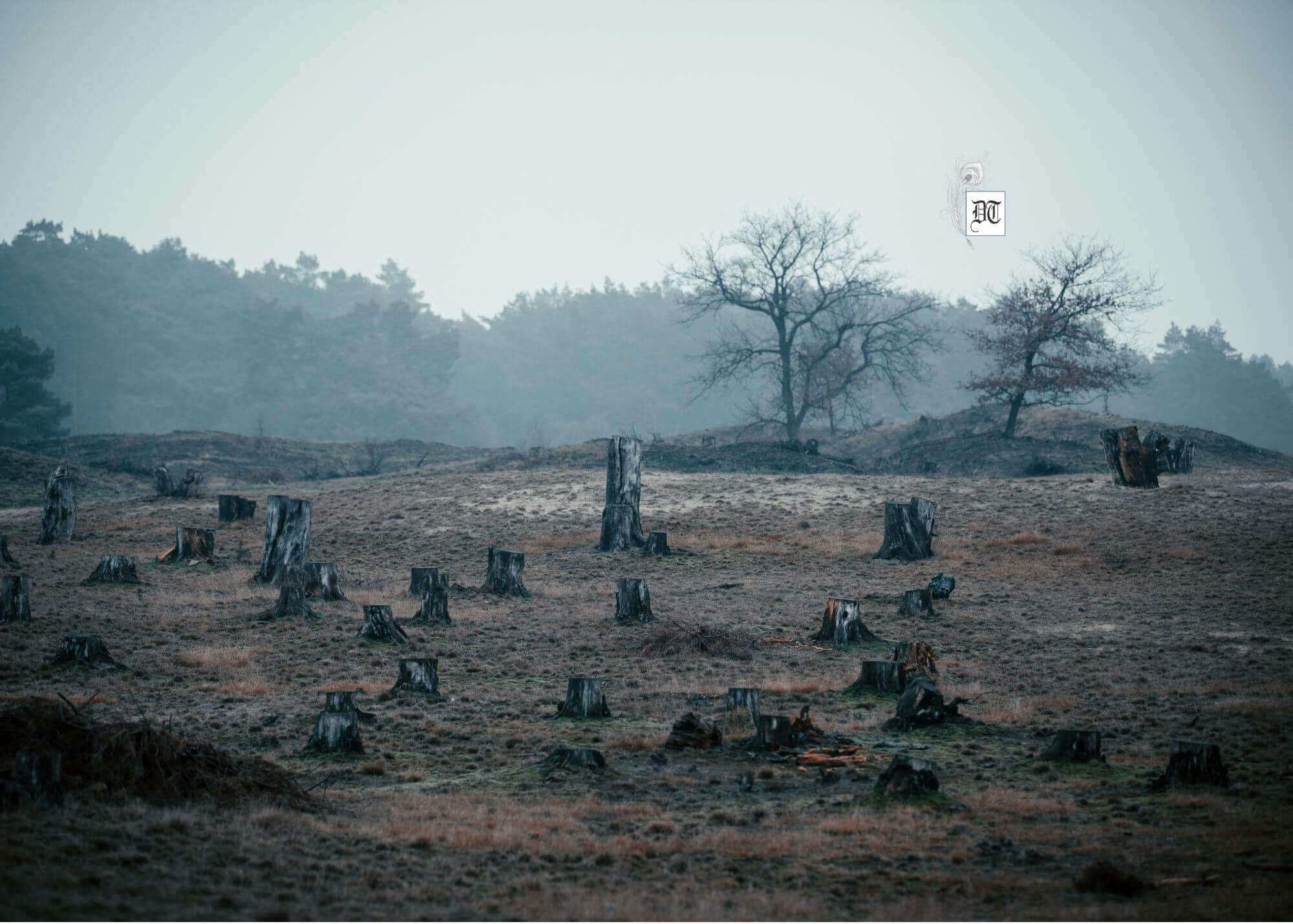
Prof Bhaskar, writing for DifferentTruths.com, critically challenges the non-negotiable narrative of development, highlighting its profound and lasting environmental consequences.
AI Summary
- Urban-Biased Development: The steady conversion of natural environments into urban capitals brings educational and healthcare infrastructure but triggers heavy local ecological depletion.
- Man-Made Disasters: Concrete expansion, deforestation, and aggressive mountain demolition in regions like the Indian Himalayan Region directly engineer catastrophic “natural” landslides.
- The Call to Pause: Economists must evaluate nature’s “existence value” and consider non-development to ensure sustainable, long-term survival for future generations.
Two terms have hysterically encompassed academia in general and economists in particular—development and globalisation—for the past few decades. In the case of globalisation, the phrase is ‘there is no alternative’ (TINA). In contrast, in the case of ‘development,’ it is not specified because development is non-negotiable. My understanding is that non-development is included in development, and one needs to ponder over how and why.
It is known to almost all that development is a steady conversion of nature, considered natural resources by human labour, that distances itself from cave-jungle life to agrarian life and ultimately industrial-urban life. The natural consequences of these processes are clear—they change demography in favour of dense urbanisation, called towns and cities, and they change land-based living to capital-based living.
The Benefits
The benefits of this are well documented, such as improved formal educational institutions, better health facilities through hospitals, entertainment through films, the establishment of hotels and restaurants, and the benefits of computerisation, etc., due to better electricity and all that. I am not sure whether the adult population in rural India feels deprived because of the absence of many of these urban benefits.
What I feel more concerned about is the social costs of such a development with an urban bias that fills in water bodies to set up concrete buildings; cuts trees that earlier stored and maintained groundwater; shrinks space that leads to unmanageable waterlogging in towns, particularly in metropolitan cities like Mumbai, Kolkata, and Delhi; and causes air pollution, as in Delhi and so on.
The Human Hand in Disasters
The additional costs are disasters like landslides in the hill region that are really artificial and seen as a ‘natural disaster.’ My observations in North Bengal, especially in Darjeeling, Uttarakhand, and the Indian Himalayan Region, confirm that road construction and widening have likely caused these artificial disasters. The most recent example is the demolition of hills below 100 meters in height for unclear purposes.
What is missing from these processes is the monetisation of nature to make India a trillion-dollar economy or raise India’s Gross Domestic Product (GDP) ranking.
I suggest we pause and review what people got and what they missed in this ‘development.’ I would draw the state’s attention to the ‘existence value’ that economists generally do not bother with. Delaying development now may ensure better, more sustainable development for future generations.
Picture design by Anumita Roy

Prof Bhaskar Majumder superannuated as an Economics professor from GB Pant Social Science Institute, Allahabad. He served as a visiting professor at Central University of Bihar (Patna), Sri Sri University (Cuttack), Banaras Hindu University (BHU), Science College (Calcutta University), and others. He published extensively in 26 reputed journals, authored 11 books, co-edited two, and contributed 38 chapters. He completed 26 research projects funded by the Planning Commission, GoI ministries, ICSSR, the World Bank, NTPC, and Tata Chemicals. An international academic, journal reviewer, and PhD supervisor, he holds degrees from the University of Calcutta. He is our National Editor: Economics and Social Science.



 By
By