
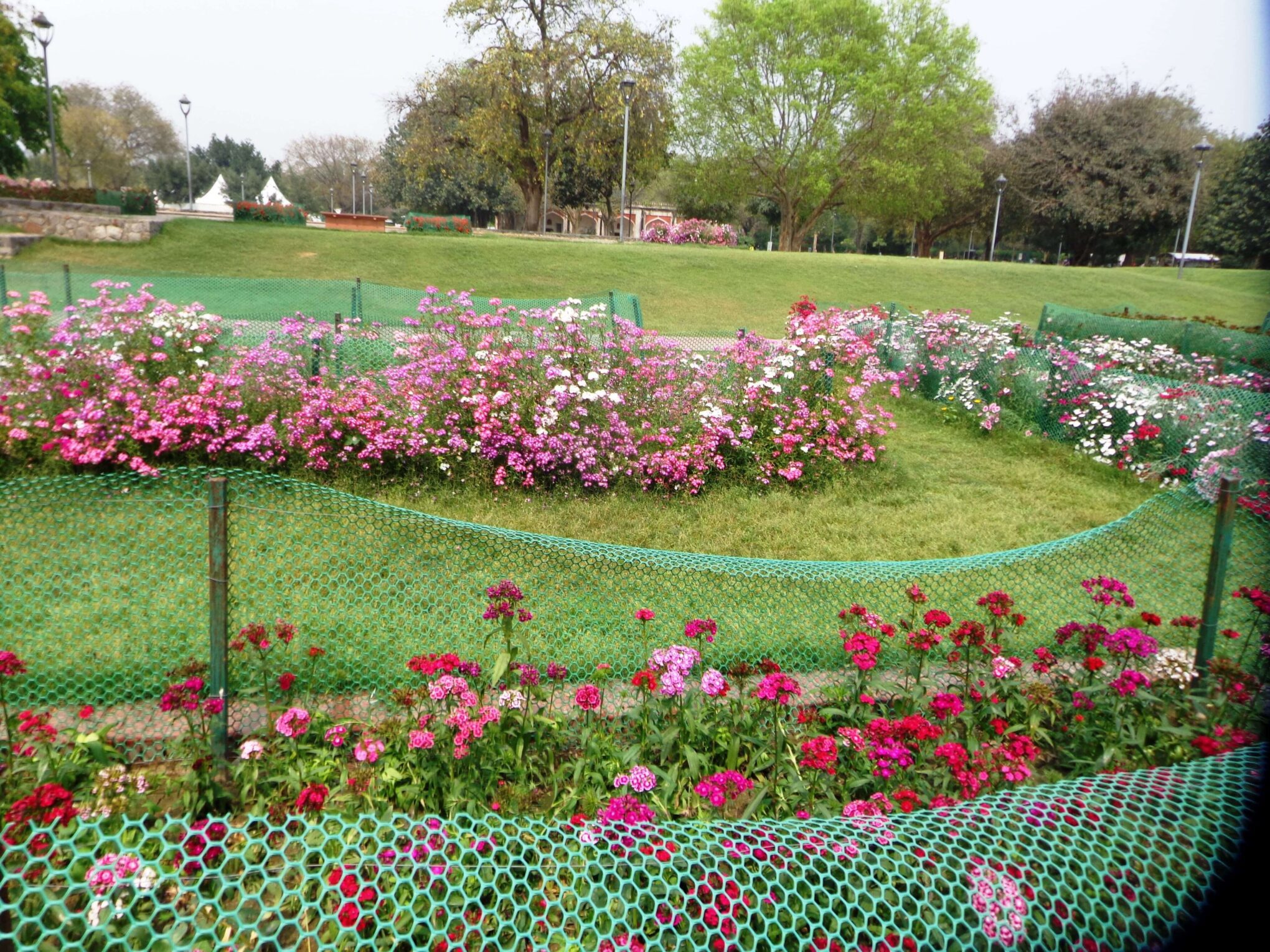

The National Capital is colourful, with Palash and Semul trees in bloom, decorating the streets, parks, and thoroughfares with vibrant shades and fallen blossoms, reports Ruchira – exclusively for Different Truths.
After the IMD announced that a more-than-usual torrid summer is expected this year, the Dilli Wallas have vigorously geared up to celebrate (read enjoy) the fleeting Spring season. Refreshingly, Mother Nature also seems unusually bountiful compared to the earlier years. Right now, the National Capital is a vast canvas gaily painted in a medley of shades and hues owing to the explosive blooming of Palash (flame of the forest) and Semul trees. The metropolis’s major roads, avenues and parks lie draped in colourful fallen blossoms intermingled with dried dead leaves. It is a beautiful picture!
Over many Spring seasons, I had been mulling a visit to one of the Capital’s most outstanding tourist attractions: Sunder Nursery, designated as a UNESCO Heritage site. But with so many upheavals and turmoil, which the city is notorious for, somehow or the other, it never happened. Fortunately, last weekend we finally landed up in the vicinity. Far from the madding crowd and insulated from the din and bustle of the city, the nursery is a veritable oasis of serenity and profuse greenery. The place is a microcosm, vibrating and pulsating with life.
Known as Azim Bagh … this garden complex, dating back to the 16th century, is conveniently located between two historical landmarks…
Known as Azim Bagh (dignified/distinguished/exotic garden) or Bagh-e-Azeem, this garden complex, dating back to the 16th century, is conveniently located between two historical landmarks, i.e., Dargah (mausoleum) of the legendary 13th-century Sufi saint Hazrat Nizamuddin Auliya and Humayun’s tomb, the final resting place of the second Mughal Emperor. Within its precincts lie scattered several ruined structures — pavilions, tombs, grave and mosque platforms, wells — each bearing silent testimony to the resplendent Mughal era.
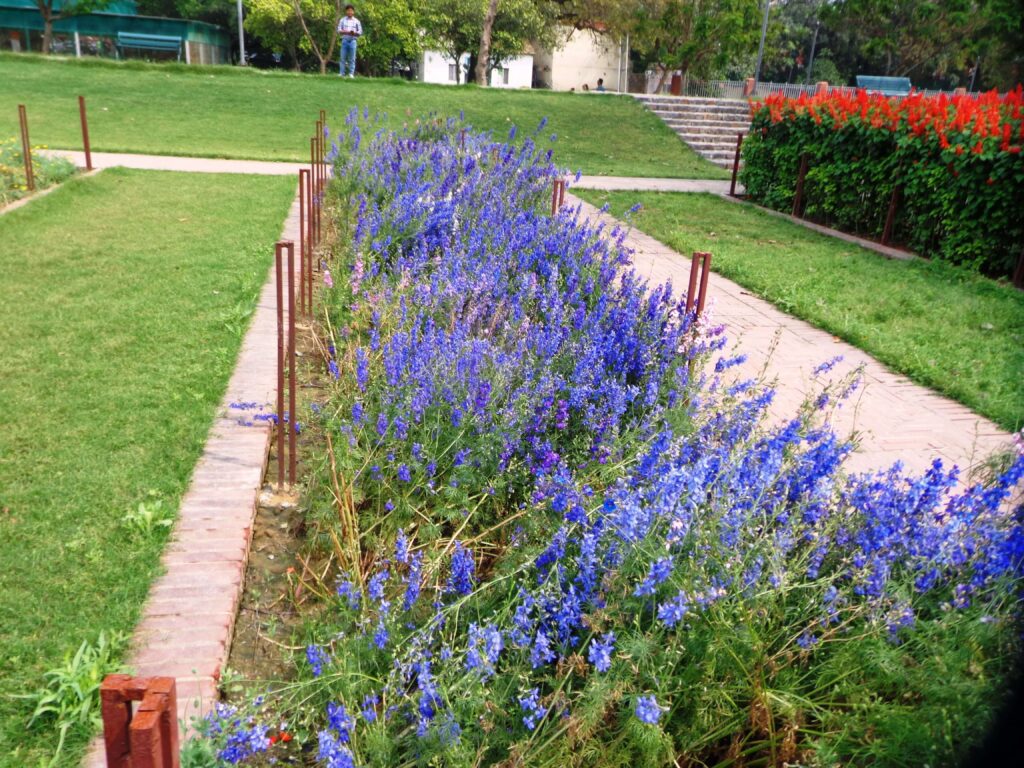
This breathtakingly beautiful garden is interpolated in Modern Indian history too. After establishing a new Capital in Delhi, it was used to nurture trees and myriad flora to embellish the nascent Capital. The collection encompassed species acquired from other parts of the Subcontinent and overseas, the yardstick being their ability to withstand the vagaries of the local weather conditions. The original nursery, which still flourishes, boasts an exciting array of saplings, including some exotic and rare species. The sprawling landscaped area is studded with water gardens and a placid lake, whose dark waters reflect the verdant ambience.
As a ‘biodiversity park’, Sunder Nursery is a veritable wonderland…
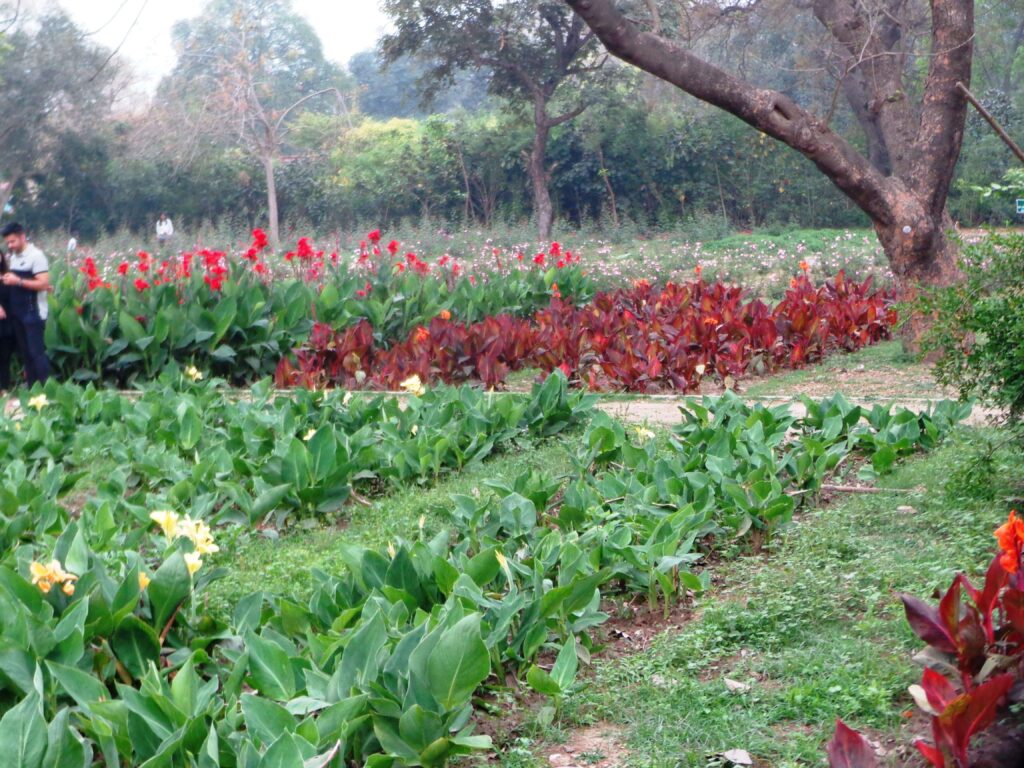
As a ‘biodiversity park’, Sunder Nursery is a veritable wonderland for lay visitors, Botany teachers and nature lovers. There are areas earmarked for bees to pollinate flowers, plumed winged creatures to nestle on trees and foliage, and chirp to their hearts’ content. It was exhilarating to hear intermittent raucous cries of peacocks calling from their hideouts. There are woody glades and shaded walking trails galore, holding out promises to refresh and rejuvenate you!
Sunder Nursery is famous for innumerable public activities, functions, and shows. During the weekend we were there, an exhibition of natural perfumes, essences, and votives was underway. There were models and demos of the basic distillation process via which leaves and blossoms get transmogrified into enchanting fragrances.
Overall, it was a pleasant experience —the scents wafting from the ware on display mingled and blended gently with those of live blossoms everywhere. It filled one’s heart with strange emotions and a whiff of nostalgia!
Photos by the author

Ruchira Adhikari Ghosh brings a liberal, wide-ranging outlook shaped by extensive travel across India and abroad. Educated at Holy Child School, New Delhi, Sacred Heart Convent, Ludhiana, and Panjab University, Chandigarh, she holds a Master’s in English Literature and a postgraduate diploma in Journalism and Mass Communication. With three decades in media, she writes on travel, books, music, performing arts, women’s issues, and especially food, drawing inspiration from rich life experiences. She is our Features Editor.



 By
By
 By
By
 By
By
 By
By