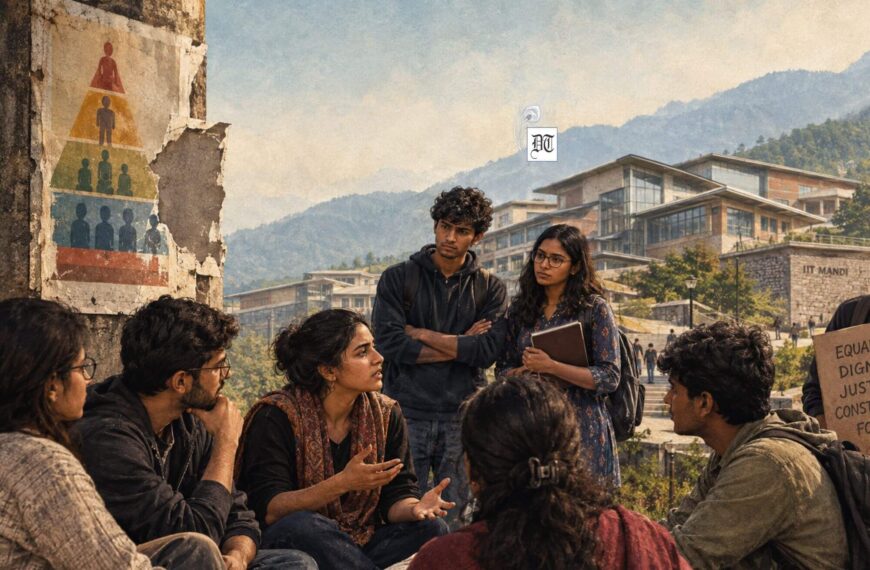
Madhumita explores India’s journey from Section 377 toward dignity, equality, and LGBTQIA+ rights on DifferentTruths.com
AI Summary:
- Section 377, a colonial-era law, criminalised consensual same-sex relations, enabling discrimination, police harassment, and social exclusion of LGBTQIA+ people.
- Legal challenges and activism reframed sexual orientation as intrinsic to dignity and constitutional rights, culminating in judicial recognition and partial decriminalisation.
- Law reform must be matched by social change: legal equality needs cultural acceptance, stronger child-protection laws, and dignity-based public policies.
Indian society is known for its diversity, where differences in language, religion, culture, and ways of life coexist. Among these diversities lies another important aspect of human existence — sexual identity and personal orientation. For a long time, homosexuality in India was viewed as a social crime, a moral deviation, and a legal offence. This perception was strongly reinforced by Section 377 of the Indian Penal Code, a colonial-era law imposed by the British in 1870. The law reflected the mindset of colonial morality and criminalised natural variations in human sexuality.
Under Section 377, “unnatural sexual acts” were considered criminal offences, punishable with imprisonment that could extend to ten years or even life imprisonment. The major problem with this law was that it did not distinguish between consensual and non-consensual relationships. Even consensual same-sex relationships between adults were treated as criminal acts. As a result, countless innocent individuals from the LGBTQIA+ community faced social humiliation, police harassment, discrimination, and psychological trauma.
The most severe impact of Section 377 was on LGBTQIA+ individuals who were simply seeking the right to love and live with dignity. Instead of recognising their identities, the law itself declared their existence unlawful. They were often mistreated in public spaces, threatened by law enforcement authorities, and socially excluded for being “different”. The ambiguity of the law blurred the distinction between consent and abuse. Many consensual same-sex couples were criminalised, while victims of forced same-sex abuse often hesitated to report crimes because they feared social stigma and legal consequences against themselves.
Section 377 was frequently associated with child sexual abuse and rape laws. The government repeatedly argued that the law was necessary to prosecute offenders involved in child abuse. However, the petitions filed against Section 377 never intended to weaken protections against children or non-consensual sexual acts. The demand was only to decriminalise consensual same-sex relationships between adults. Despite this, the issue was deliberately kept confused, and child rights were often presented as being in opposition to LGBTQIA+ rights.
This situation became even more unfortunate because activists, women’s organisations, and child rights groups had long demanded a separate and stronger law to deal specifically with child sexual abuse. Yet these demands were ignored for years. This clearly indicated that Section 377 was not merely about protecting children but also about maintaining a rigid moral and social order that refused to accept sexual diversity.
Section 377 violated several Fundamental Rights guaranteed by the Constitution of India. Article 14 guarantees the Right to Equality before the law. However, this law denied equal treatment to homosexual individuals by criminalising their identity and relationships. Article 19 guarantees freedom of expression, movement, and the right to live according to one’s choices, but Section 377 restricts people from expressing their true identity and living freely. Most importantly, Article 21 guarantees the right to life, personal liberty, privacy, and dignity. Criminalising consensual private relationships directly attacked an individual’s dignity and personal freedom.
Sexual orientation is not a crime; it is a natural aspect of human identity. Every individual should have the freedom to choose whom they love and how they live, as long as the relationship is based on mutual consent. Section 377 attempted to define standards of “acceptable” and “unacceptable” sexuality. It promoted the belief that only heterosexual relationships were natural and valid, while all other identities were abnormal and immoral. Such a viewpoint was not only inhuman but also contradictory to the democratic and constitutional values of equality and freedom.
In 2005, the report “Rights for All” compiled by Voices Against 377 became an important intervention in this debate. The report documented the experiences and statements of various organisations, activists, and affected individuals. It highlighted how Section 377 had become not just a legal provision, but also a tool of social discrimination, fear, and oppression.
Over time, Indian society witnessed growing awareness regarding human rights and individual freedoms. The judiciary eventually recognised that sexual orientation and identity are intrinsic parts of a person’s dignity and constitutional rights. This recognition marked not only a legal transformation but also a historic step toward justice, equality, and human dignity.
However, changing the law alone is not enough. Society must also transform its mindset. Members of the LGBTQIA+ community are equal citizens and deserve respect, safety, and equal opportunities. The true strength of a democratic society lies in how it treats its marginalised and vulnerable communities. Love, freedom, dignity, and identity are not privileges reserved for a few; they are universal human rights that belong to every individual equally.
Picture design by Anumita Roy

Dr Madhumita Ojha, a Hindi literature scholar, specialises in folk literature, cultural studies, gender, and marginalised narratives. She earned an MA and PhD in Hindi from Presidency University, plus a BEd from Mahatma Gandhi International Hindi University, Wardha. Author of Folk Literature and Culture, she has published extensively on Kinnar narratives, LGBTQ representation, women’s studies, and Dalit literature. She serves as a guest lecturer at the Hindi University, Howrah, Kolkata.


 By
By
 By
By
 By
By