
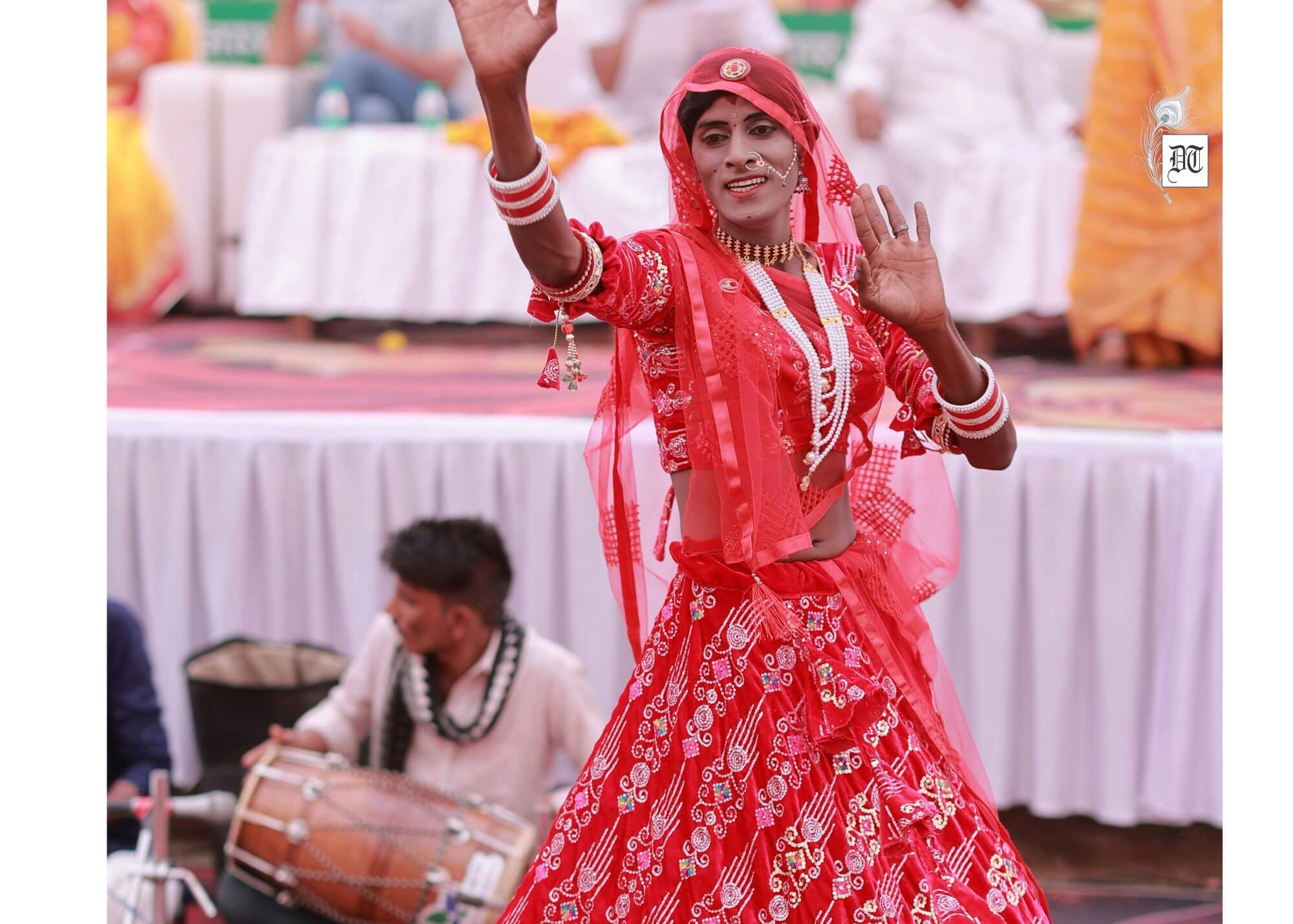

Shivangi explores how “orchestra” culture replaces folk traditions in UP and Bihar, exposing a cycle of exploitation for DifferentTruths.com.
AI Summary
- Cultural Shift: Traditional folk arts like Nautanki and Birha are being eclipsed by commercial, spectacle-driven “orchestra” shows.
- Socio-Legal Crisis: The unregulated industry often hides a darker reality of human trafficking, female exploitation, and child labour.
- Need for Reform: Beyond law enforcement, reviving local culture requires systemic investment in folk artists and community-based platforms.
In the villages and small towns of Uttar Pradesh and Bihar, the word “orchestra” no longer means music in the classical sense. It has become an umbrella term for a travelling, night-long stage show, loudspeakers, flashing lights, film songs, and dance performances. And it has quietly replaced much of the region’s older folk performance culture.
Once, community entertainment in this region was built around Nautanki, Birha, Bidesiya, Kajri, Sohar, Chaiti, and seasonal folk traditions. These forms were rooted in storytelling, social satire, devotion, and shared cultural memory. Today, in many places, they have been pushed to the margins by commercial “orchestra” troupes that promise instant spectacle and quick crowds.
This transformation did not happen overnight. With the spread of cheap sound systems, mobile DJs, and the growing influence of cinema and Bhojpuri pop music, local entertainment gradually shifted from narrative and music-based performances to visually driven shows. The “orchestra” became the centre piece of weddings, political events, fairs, and village celebrations.
What the ‘Orchestra’ Has Become
In today’s UP and Bihar, an orchestra show usually means a troupe that travels from village to village, performing popular film and regional songs with dancers on a temporary stage. The focus is not on music but on spectacle. The performances often continue till late at night and draw large crowds, mostly male. For many villagers, these shows are simply a form of affordable entertainment. They provide an escape from difficult daily lives, and for event organisers, they have become a symbol of status; the bigger and louder the show, the more “successful” the event is considered.
But behind this normalisation lies a far more troubling reality.
The Darker Side: Exploitation and Vulnerability
Over the past few years, repeated reports from Bihar and eastern UP have revealed a disturbing pattern: many orchestra troupes operate in a grey zone where exploitation is common, and regulation is weak.
There have been multiple cases in which minor girls and economically vulnerable women were found working in these groups under coercive or deceptive conditions. Some were trafficked with promises of respectable work; others were pushed into performing due to poverty, debt, or family pressure.
The problem is not the idea of dance or performance itself; it is the unregulated, opaque system in which many of these troupes function. Contracts are informal, payments are irregular, and safety is nonexistent. Once a performer enters this circuit, leaving it can be extremely difficult.
Law enforcement agencies periodically conduct rescue operations, and courts have intervened, especially in Bihar. But these actions treat the symptoms, not the disease.
How Did We Get Here?
The decline of folk theatre and music created a cultural vacuum. Traditional performers found fewer patrons, fewer stages, and less institutional support. At the same time, commercial entertainment offered quick profits and mass appeal.
The orchestra system thrives because:
· It is cheap and easy to organise
· It requires no cultural training or long preparation
· It attracts large crowds quickly
· It operates in areas where cultural institutions are weak or absent
What was once a community cultural activity has slowly turned into a market-driven spectacle industry.
The Cultural Cost
This shift has had a serious impact on the region’s cultural ecology. Young people are growing up without exposure to their own folk traditions. Local artists are abandoning music and theatre because they cannot survive on them. Entire performance lineages of storytellers, folk singers, and instrumentalists are disappearing.
At the same time, entertainment is increasingly reduced to a single narrow idea of visual attraction, stripping it of social, moral, and artistic depth.
Regulation Is Not Enough: Cultural Investment Is Needed
Banning orchestra shows or conducting raids will not solve the problem. As long as there is:
- Poverty,
- Lack of employment,
- Absence of cultural platforms,
- And no support for traditional artists.
This system will keep reproducing itself in new forms.
What is needed is:
- Serious investment in folk arts and local theatre
- District and block-level cultural stages
- Grants and regular work for traditional performers
- Strict enforcement of child protection and labour laws
- Transparent registration and monitoring of performance troupes
Most importantly, society must ask: What kind of culture do we want to pass on to the next generation?
A Question of Direction
The issue of orchestra culture in UP and Bihar is not just about morality or law and order. It is about the direction in which our popular culture is moving. A society that abandons its stories, its music, and its collective memory for instant spectacle does not just lose art; it loses part of its soul. The choice is not between entertainment and tradition. The real choice is between a culture that builds dignity and meaning and one that survives only on noise and neglect.
Picture design by Anumita Roy

Shivangi Khare is a Silver Medallist in Public Administration and a dedicated researcher at the intersection of governance and social impact. With legislative experience in the Office of a Member of Parliament and a leadership background in institutional reform, she has authored recognised research in public management. Currently, Shivangi leads social welfare initiatives focused on women and child development, blending academic rigour with a profound commitment to creating measurable change in India’s developmental landscape.

 By
By
 By
By
 By
By
Thank you for adressing this situation and bringing it to the notice of your readers. France has a Seasonal Workers’ law under which interim artists and others like those in the hospitality industry, beachworkers in winter and ski auxiliaries in summer when there’s no snow etc. Perhaps the Indian Embassy could do a study, adapt the law to Indian needs and present it to the Indian government?