
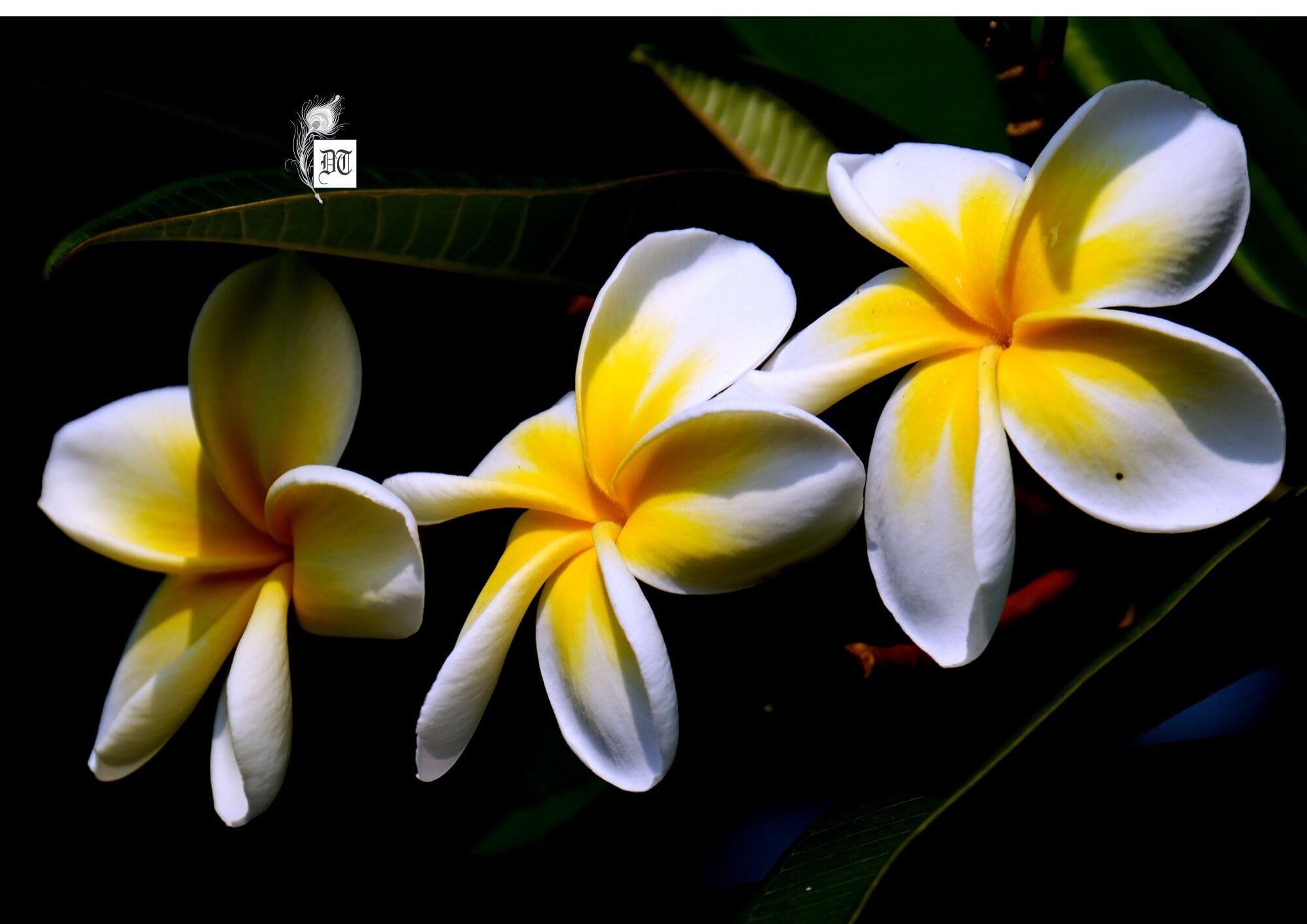
Saeed reflects on a resilient plumeria blooming through urban pollution, exclusively on DifferentTruths.com.
It was a dull, sunless morning as I stepped out onto our balcony to read the morning newspaper, as was my wont. Apart from the overhanging clouds, a heavy pall of haze hung in the air, and the view outside looked blurry. My eyes began to water, and a sudden fit of coughing overcame me. The poor air quality, driven by rising levels of road and construction dust in the city, was doubtless being felt more acutely in the early hours of the morning.
As I shut the door and retreated hastily into the interior to escape from this depressing scenario, my eyes settled on a beautiful sight through the glass doors of the balcony. Through the gloom, I saw the colourful brightness of our plumeria plant. The flower’s dewy freshness and blush of pink, mingling with the white and yellow background, were uplifting and reassuring. Despite the odds, this beautiful and fragrant flower (also known as frangipani or champa) was blooming steadfastly amidst all the pollution and dust and the overpowering presence of concrete and mortar.
Was it trying to convey a message to me? Or give the lie, in a sense, to an oft-quoted verse:
For many a flower is born to blush unseen,
And waste its sweetness on the desert air.
(With apologies to Thomas Grey, English poet, 1716-1771)
Picture design Anumita Roy

Bangalore-based writer, Saeed Ibrahim, is the author of two books – “Twin Tales from Kutcch,” a family saga set in Colonial India, and “The Missing Tile and Other Stories.” Saeed was educated at St. Mary’s High School and St. Xavier’s College in Mumbai and, later, at the University of the Sorbonne in Paris. His other writings include newspaper articles, travel essays, several book reviews and two essays for the Museum of Material Memory.



 By
By
 By
By

 By
By