
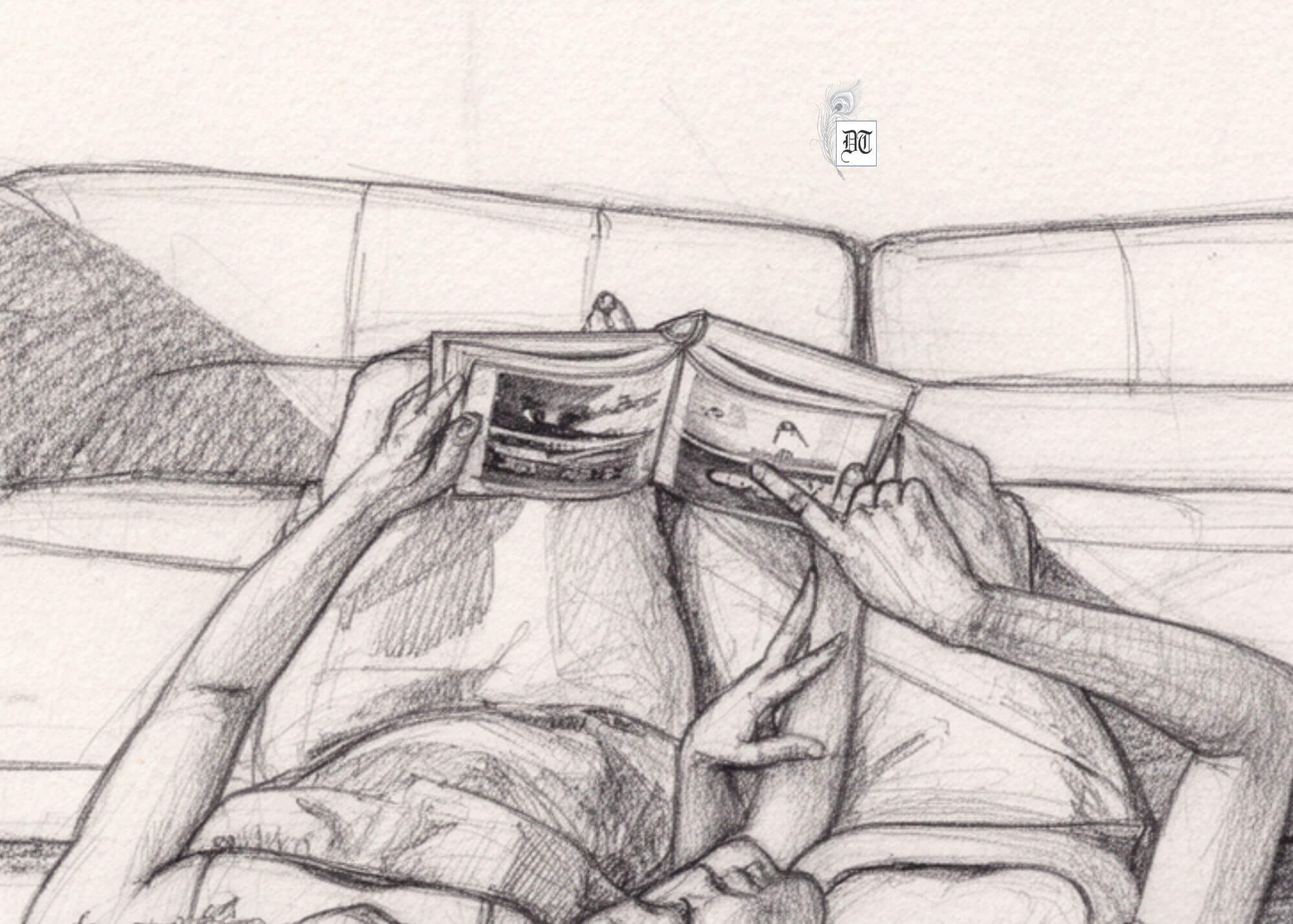
Madhumita presents a thoughtful take on Shubha Verma’s ‘Anam Rishton Ke Naam’ in DifferentTruths.com – essential reading on queer Indian literature.
AI Summary:
- Shubha Verma’s 1985 novel courageously foregrounds female same-sex love, portraying Sabrina and Paula with emotional depth, dignity, and realism.
- It challenges social taboos, exposing hypocrisy, childhood gender policing, and the psychological cost of enforced conformity.
- The book’s resilient plea for recognition and empathy remains timely, reframing queer relationships as human, not pathological, across decades.
Literature has always served as a mirror to society, reflecting not only its beauty and harmony but also its prejudices, silences, and exclusions. In Indian literature, discussions around gender and sexuality have often remained confined within socially accepted boundaries. Against this backdrop, Shubha Verma’s novel Anam Rishton Ke Naam (1985) emerges as a bold and groundbreaking work that explores the emotional and psychological realities of female homosexuality, or lesbian relationships, with honesty, sensitivity, and courage. At a time when same-sex love was considered taboo and even labelled as a mental disorder, the novel dared to give voice to emotions that society preferred to suppress.
The novel is not merely a story of two women in love; it is a profound exploration of identity, acceptance, fear, and resistance. Through the characters of Sabrina and Paula, Shubha Verma presents the emotional depth and authenticity of same-sex relationships. The writer treats love not as a moral issue but as a deeply human experience that transcends social categories such as religion, caste, gender, race, or sexuality. Love, in the novel, speaks only one language — the language of emotion, intimacy, and belonging.
One of the most striking aspects of the novel is its understanding of human diversity. Just as the seven colours of a rainbow differ from one another yet together create beauty, human desires and emotional attractions are also diverse. The novel challenges the rigid assumption that attraction can exist only between a man and a woman. It suggests that individuals may naturally feel drawn toward people of different genders and sexual identities, and such emotions cannot simply be controlled or erased by societal expectations. This idea was revolutionary, especially in the social atmosphere of the 1980s, when discussions on homosexuality were almost non-existent in mainstream Indian society.
Sabrina’s longing for Paula is portrayed with tenderness and emotional intensity. Her thoughts, memories, and desires revolve entirely around Paula, making love appear not as rebellion but as an inseparable part of her existence. Sabrina is not ashamed of her identity. Instead, she becomes a symbol of courage and self-acceptance. She encourages Paula to walk the path she has chosen and, through her, sends a message to all those individuals who continue to fight lonely battles for their identity and dignity. Sabrina’s struggle is not limited to her personal happiness; it becomes representative of all those people who wish to live freely and naturally despite being marginalised by society.
The novel sharply exposes the hypocrisy of social norms and moral structures. Society often claims its rules to be “natural” and uses those rules to exclude anyone who dares to challenge conventional boundaries. Through the conversations between Sabrina and Rosie Bhabhi, the writer brilliantly captures this conflict between individuality and societal morality. Rosie Bhabhi appears to represent society’s double standards – a social order that demands conformity while denying people the right to be themselves. Sabrina, however, refuses to surrender. Her determination and refusal to deny her identity become acts of resistance against a deeply prejudiced social structure.
The pain of social rejection echoes throughout the novel. Often, people try to understand others only within the limits of their own experiences and beliefs. Anyone who exists outside those boundaries is labelled “strange”, “abnormal”, or “unnatural”. Sabrina understands this deeply and realises that her life will remain incomplete until she receives recognition and equal rights as a human being. Her struggle, therefore, is not merely emotional but also political and existential.
The novel also raises an important psychological and social issue regarding gender identity and behaviour in childhood. Whenever a child behaves differently from socially accepted masculine or feminine norms, society immediately makes the child feel “wrong” or “abnormal”. This constant judgement creates fear, confusion, and insecurity within the individual. Many people grow up feeling alienated not only from society but also from their own families. Shubha Verma sensitively highlights how such repression can obstruct a person’s emotional and psychological development.
Paula’s character reflects another dimension of queer existence — the fear of social rejection. Although she deeply loves Sabrina, she struggles to express her feelings openly because of societal pressure and fear. This fear repeatedly haunts both women. Yet Sabrina carries within herself a ray of hope and confidence. She believes that one day the darkness of prejudice will fade and people like them will also have the right to live openly and fearlessly. This hope gives the novel emotional strength and transforms it from a tragic love story into a narrative of resilience and survival.
Reading Anam Rishton Ke Naam today, in the twenty-first century, one realises how courageous the novel truly was. Even today, many societies hesitate to fully accept homosexuality with openness and sensitivity. Acceptance often remains superficial and conditional. In such a context, imagining the social atmosphere of 1985 makes the significance of this work even more remarkable. At that time, homosexuality was widely misunderstood and frequently associated with mental illness, immorality, or emotional immaturity. The novel captures this atmosphere through dialogues filled with fear, silence, and emotional tension.
What makes Shubha Verma’s writing exceptional is her ability to portray lesbian relationships not as sensational or immoral but as deeply human and emotionally genuine. The love between Sabrina and Paula does not emerge from circumstance, experimentation, or mere “choice”. It is natural, spontaneous, and deeply rooted in emotional truth. Through their relationship, the author challenges the belief that heterosexuality is the only acceptable or authentic form of love.
At its core, the novel is about the struggle for recognition — the recognition of truth, identity, and humanity itself. Sabrina continues her fight despite emotional betrayals, loneliness, and social hostility. Her journey symbolises the broader struggle of countless LGBTQ individuals who continue to demand dignity, equality, and acceptance from society.
Anam Rishton Ke Naam remains an important literary work because it not only narrates a story of love but also questions the foundations of social prejudice. It urges readers to rethink rigid ideas about gender and sexuality and to embrace empathy over judgement. More than three decades after its publication, the novel continues to resonate as a courageous call for compassion, freedom, and the right to exist authentically. In giving voice to unnamed relationships, Shubha Verma gave recognition to countless unheard lives.
Picture design by Anumita Roy

Dr Madhumita Ojha, a Hindi literature scholar, specialises in folk literature, cultural studies, gender, and marginalised narratives. She earned an MA and PhD in Hindi from Presidency University, plus a BEd from Mahatma Gandhi International Hindi University, Wardha. Author of Folk Literature and Culture, she has published extensively on Kinnar narratives, LGBTQ representation, women’s studies, and Dalit literature. She serves as a guest lecturer at the Hindi University, Howrah, Kolkata.
 By
By
 By
By
 By
By
 By
By