
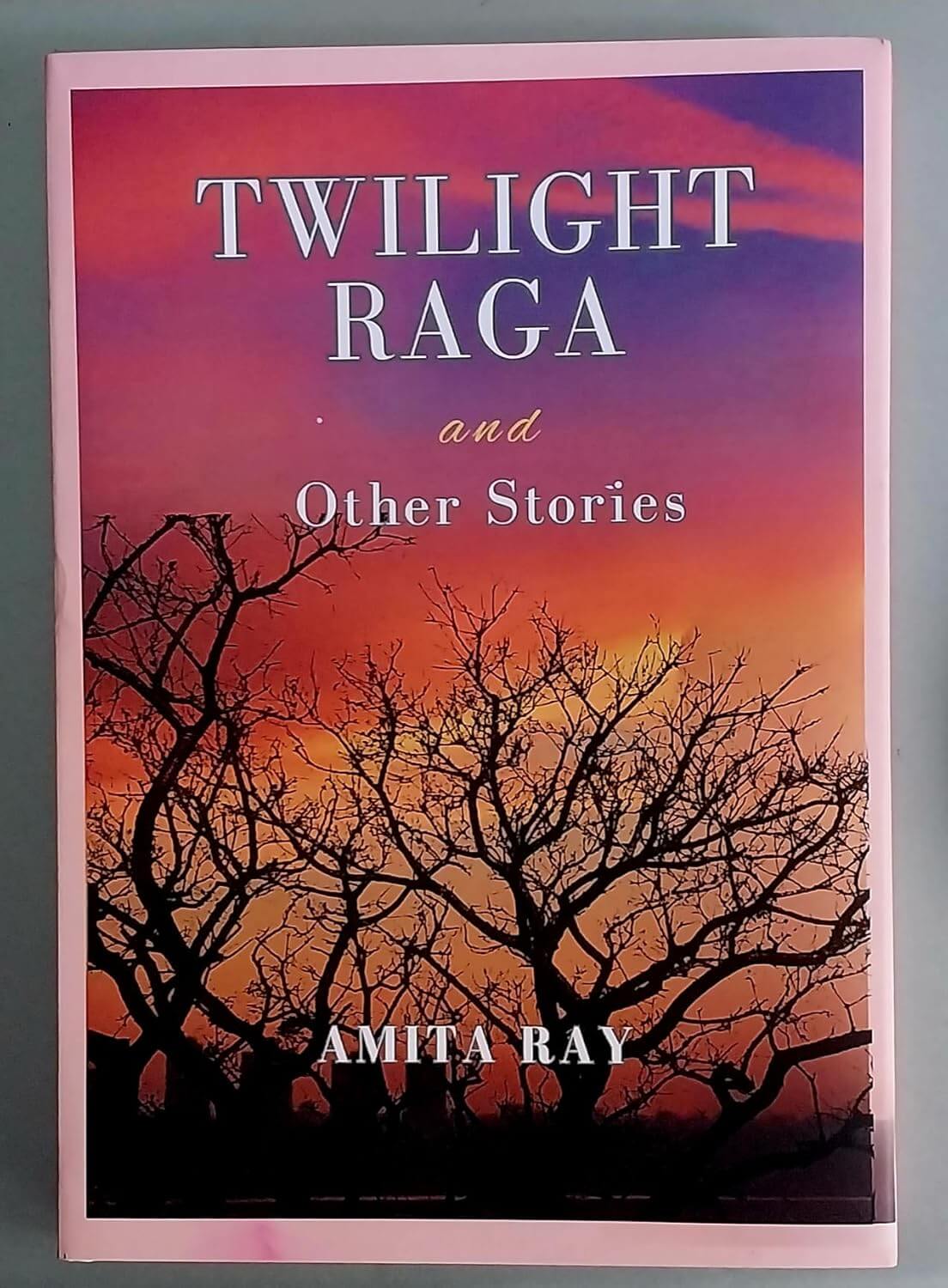
For DifferentTruths.com, Farah introduces Amita Ray’s Twilight Raga, a short story collection exploring female resilience, marginalisation, and societal rebellion.

AI Summary
· Empowering Female Resistance: The collection highlights courageous women defying patriarchal constraints through bold self-affirmation, personal rebellion, and resilient determination.
· Amplifying Marginalised Voices: Ray masterfully humanises the oppressed, challenging economic, caste, and social biases by revealing the deep empathy of unsung characters.
· Challenging Anthropocentric Views: Shifting focus from human centrality, the narratives beautifully portray animal consciousness, advocating for ecological harmony and compassionate co-existence.
Neil Gaiman writes, ‘Short stories are tiny windows into other worlds and other minds and dreams.’ Amita Ray, an acclaimed translator, short story writer, and poet, presents in her short story collection Twilight Raga and Other Stories 17 such windows, illuminating stories of love, hope, and resistance. She unfolds each tale with grace and beatitude, as each story tells of poignancy, ardour, sincerity, and depth, crafted with techniques such as flashbacks, reversals of fate, and surprise endings.
The readers are mesmerised as they are taken to interwoven tales of dynamic relationships—we meet them: the distraught beggar woman, the star-crossed lovers, the hard-working mother, the mentally challenged kid, and even our four-legged friend.
Amita has dedicated her book to all women, as the struggles of women are foremost in many of her stories. Caught up in the contradictions of the patriarchal society are many of the characters. In the face of coercive patriarchal society, it is not easy to rebel, or else you are laden with the fate of the mythological figure Icarus, doomed to downfall; however, all courageous women agree that stealing the fire like the mythological figure Prometheus is their prerogative, and sooner or later, the flicker of light does emanate its warmth of hope, imbuing their lives with the spirit of resilience and determination.
In Amita’s short stories, she presents a realistic portrayal of individual revolt against the male-dominated society with her characters who are not only enduring but also an active force of resistance. In the story Tale of Tresses, Shalini’s long and beautiful hair was snipped capriciously in the overcrowded train compartment. Henceforth, she made the resolution of never having to grow her hair back. She resists the wrong done to her with self-affirmation and bravery.
In the story English Medium, the mother struggles with two jobs to ensure a better education and a secure future for her son. Not only did she have to face economic hardship, but she also suffered from social foiling by her husband and in-laws. She leaves no stone unturned with her sheer self-determination. It is her story of resilience and determination, which she will achieve someday.
In the story, Solo Sojourn, Deepa, raised in a conservative household, was never allowed to undertake any solo trip. Even after a vehement effort to convince her family, when she was allowed to undertake her journey to Delhi after her marriage to present an academic paper in Delhi, she was pestered with repeated calls by her in-laws and suffered from many hardships on her way alone. Amita shows the gap between what the characters strive to be, which Bakhtin called the “authoritative word” and the “internally persuasive word”. In the stories, the individual characters are compelled to act against the dictates of the patriarchal society, and it does not always end in the fairy tale version of idealised harmony but rather explores the tensions and contradictions that the characters resiliently face.
Amita, through her stories, champions the voice of the voiceless and marginalised. In the story Dhanteras, economic constraints leave Kartik dejected, confused, and disheartened. Even the poor have a chance of happiness when, with passionate triumphs, on the occasion of Dhanteras, he surprises his wife with a gift of a silver chain. Similarly, Amita’s many stories mirror the society that still works toward their dreams in spite of the limitations. Her dramatic engagement with the character’s struggles provides insight and illuminates the stark realities of society that are woven into her tales with compassion and endurance.
Often, people are judged based on their economic status. They are perceived as unfeeling and uncouth. This view is challenged in the story, The Revelation; the repulsed and distraught beggar woman is revealed to be a compassionate woman who, with the little money she gets from begging, not only cooks for herself but also feeds the orphan girl and the dogs of her locality. The witnesses confess, ‘A sense of guilt filled us when we contemplated how mean we were to be judgmental about this woman.’ With the surprise reversal of events, she challenges her reader with an alternative vision.
In the story “Parcel of Atonement”, caste discrimination is critically explored and questioned. Likewise, in her short story Winter Mist, those who are derided by society—weak, mentally challenged—are seen in an alternative perspective of looking beyond superficial differences and adopting a more empathetic and humane outlook on justice and dignity.
The story for all, the representation of many voices, is a uniquely interesting note in her short stories. Anthropocentrism is the view that humans form the centre while other beings are the means to an end, leading to diverse ecological crises. Amita challenges this view in her short story A Farewell, which is about Bhulu and his mother, a tale of our four-legged friends from the first-person perspective. It is surprisingly honest in its portrayal of care, compassion, and consciousness that these animals are capable of.
In the story “A Day with Vasuki”, harmony and co-existence between humans and animals are represented. Her story, “The Curtain Falls”, provides a glimpse of the portrayal of nature versus humans, which is very interesting to delve into.
Amita’s stories are stories of passion, sincerity, emotion, and strength of feelings. As the title indicates, ‘twilight’ is the time of sojourn from dusk to dark, and ‘raga’ alludes to the classical melody that transfigures the stories with the charm of profound change and longing. Amity’s short stories “Twilight Raga”, “Namesake”, and “All for the Gift” sing the music of star-crossed lovers and the chaos of loveless marriages.
Marrying based on wealth and status and not based on mutual desire leads to devastating consequences. Marriage is not an institution of societal demand but the manifestation of the unity of accordant thoughts and feelings. Star-crossed lovers ostracised and ghosted by society, nonetheless, do not fail to remain loyal to their love; despite the antagonistic conservative society’s rules and conventions, they nonetheless choose to remain true to themselves and to the feeling they harbour. Often, when society imposes laws from above with the institutions of loveless marriages, it leads to irreversible consequences, and Amita Ray has very beautifully portrayed them in her stories, singing them as a melodious reflection of society.
Cover photo sourced by the reviewer

Born and raised in the cultural heart of Kolkata, Farah Imam is a dynamic literary voice and multifaceted creator. Armed with an MA in English Literature from the prestigious Presidency University, she excels as an avid reader, passionate creative writer, poet, and insightful literary critic. Her widely recognised works span multiple respected publications. Beyond the written word, Farah actively champions visual storytelling and digital communications, seamlessly blending classic literary analysis with modern multimedia narratives.

 By
By
 By
By
 By
By
 By
By