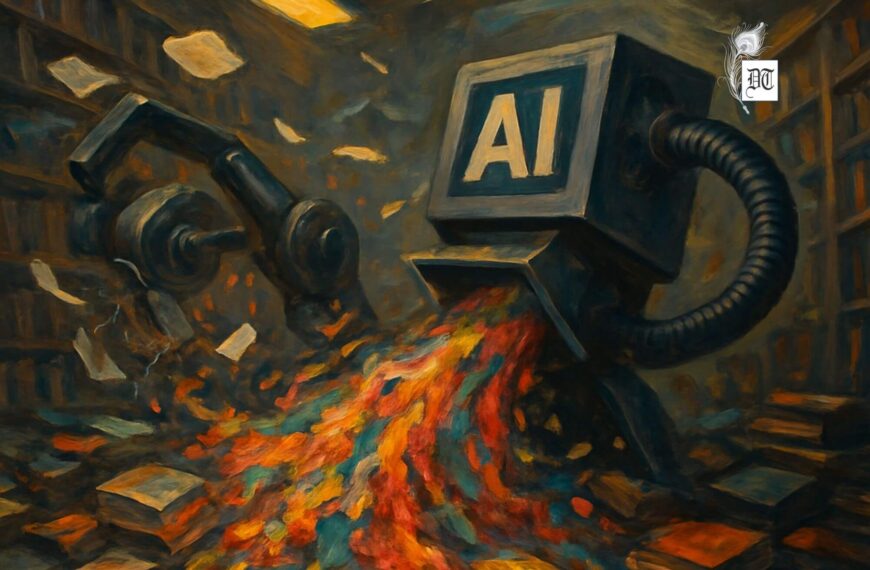
Aditya explores how agentic AI on DifferentTruths.com is evolving from chatbots to autonomous systems, revolutionising our future.
AI Summary:
- Agentic AI shifts from passive LLMs to independent agents handling multi-step workflows, like GPT-5.5 and Claude Opus 4.7 in 2026.
- It adapts via feedback loops, manages resources autonomously, but lacks human consciousness, emotions, or free will.
- Emerging biological AI with neurons and DNA promises breakthroughs, raising ethics and control concerns.
Evolutionary forces are always active in every aspect of life, and this universe is highly potential. What was out of mind yesterday is a reality today. In the field of technology, it is Artificial Intelligence that has revolutionised our lives, and it is evolving dynamically. The time is not far away when AI will be autonomous and so intelligent that it will plan things itself and get its own energy without depending on its human owners. As of 2026, Artificial Intelligence has already shifted from being a passive model to an autonomous agentic system. It has gone beyond responding to prompts. It is changing its role from a simple chatbot to an agentic system that plans and does multi-step workflows with multi-modal AI. Tim Mucci writes,
Agentic AI refers to systems composed of specialised agents that operate independently, each handling specific tasks. These agents interact with data, systems and people to complete multistep workflows, enabling businesses to automate complex processes such as customer support or network diagnostics. Unlike monolithic large language models (LLMs), agentic AI adapts to real-time environments, using simpler decision-making algorithms and feedback loops to learn and improve. (https://www.ibm.com/think/insights/artificial-intelligence-future).
In 2026, GPT-5.5 & Claude Opus 4.7 were launched to plan and execute tasks independently. These are large language models by OpenAI and Anthropic. These are based on Agentic Artificial Intelligence and designed not only to answer questions but also to perform multi-step tasks independently, like breaking down a big goal into actionable sub-tasks, using tools, browsing the web and interacting with APIs to complete the tasks and identifying their own mistakes and re-routing their approach without human intervention.
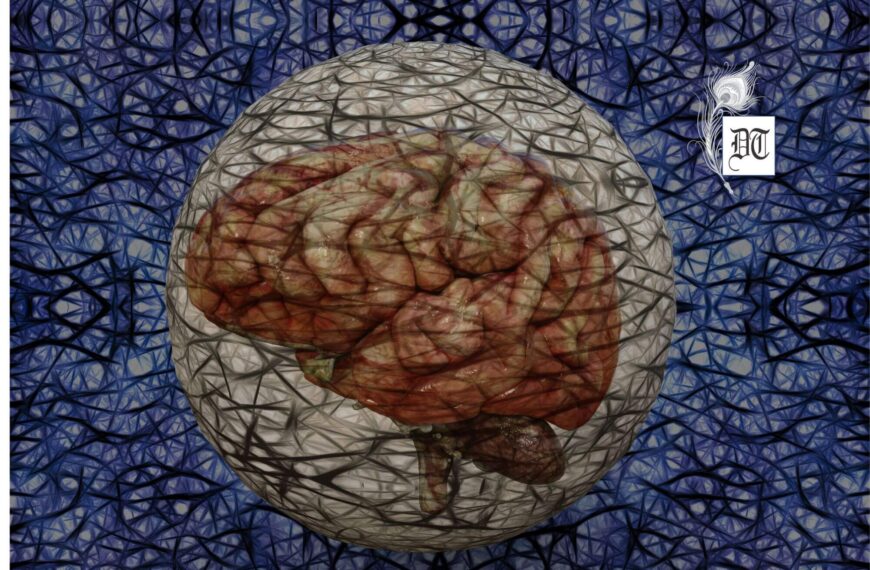
With such an agentic system, AI is closer to being self-sufficient, or one can say that in the future, AI may manage its own resource requirements. A main feature of agentic AI is adaptability. It learns itself, adjusts strategies and is capable of managing dynamic situations. But this move to agentic AI allows greater autonomy, which raises concerns regarding control and ethical decision-making. However, it has already fully acquired the cognitive abilities for performing tasks; there has been no research or any scientific finding that can prove AI can have a human mind, as it can’t have the three main distinctive features of the human mind: consciousness, emotion & freewill and creativity. If scientists can discover the origin and development of consciousness in the human body or if they can solve the hard problem of consciousness, then we can think of instilling the same in AI. These days, research is also going on for Biological AI that uses biological substances like living neurons, brain organoids or DNA, together forming a new concept called ‘wetware’. It is in the research phase, and there will be another revolutionary breakthrough soon.
References
1. Kitishian, Dany. (2025). State of Agentic AI in the Enterprise. Klover.ai. Accessed online: https://www.klover.ai/state-of-agentic-ai-in-the-enterprise/
2. Mucci, Tim. “The Future of AI: Trends Shaping the Next 10 Years.” IBM, www.ibm.com/think/insights/artificial-intelligence-future. Accessed 1 May 2026.
3. Athanassios S Fokas, Can artificial intelligence reach human thought?, PNAS Nexus, Volume 2, Issue 12, December 2023, pgad409, https://doi.org/10.1093/pnasnexus/pgad409
4. O’Regan, J. K. (2012). How to build a robot that is conscious and feels. Mind. March. 22, 117–136. doi: 10.1007/s11023-012-9279-x
5. Yampolskiy, R. V. (2018). Artificial consciousness: an illusionary solution to the hard problem. Reti Saperi Linguag.2, 287–318. doi: 10.12832/92302
Picture design by Anumita Roy

Aditya Kumar Panda is working at the National Translation Mission, Central Institute of Indian Languages, Mysore. He has expertise in Applied Linguistics and Translation Studies. Many of his papers and books have been published in national and international journals and publications. Please visit his publications here: Aditya Kumar Panda – Central Institute of Indian Languages (CIIL)


 By
By