
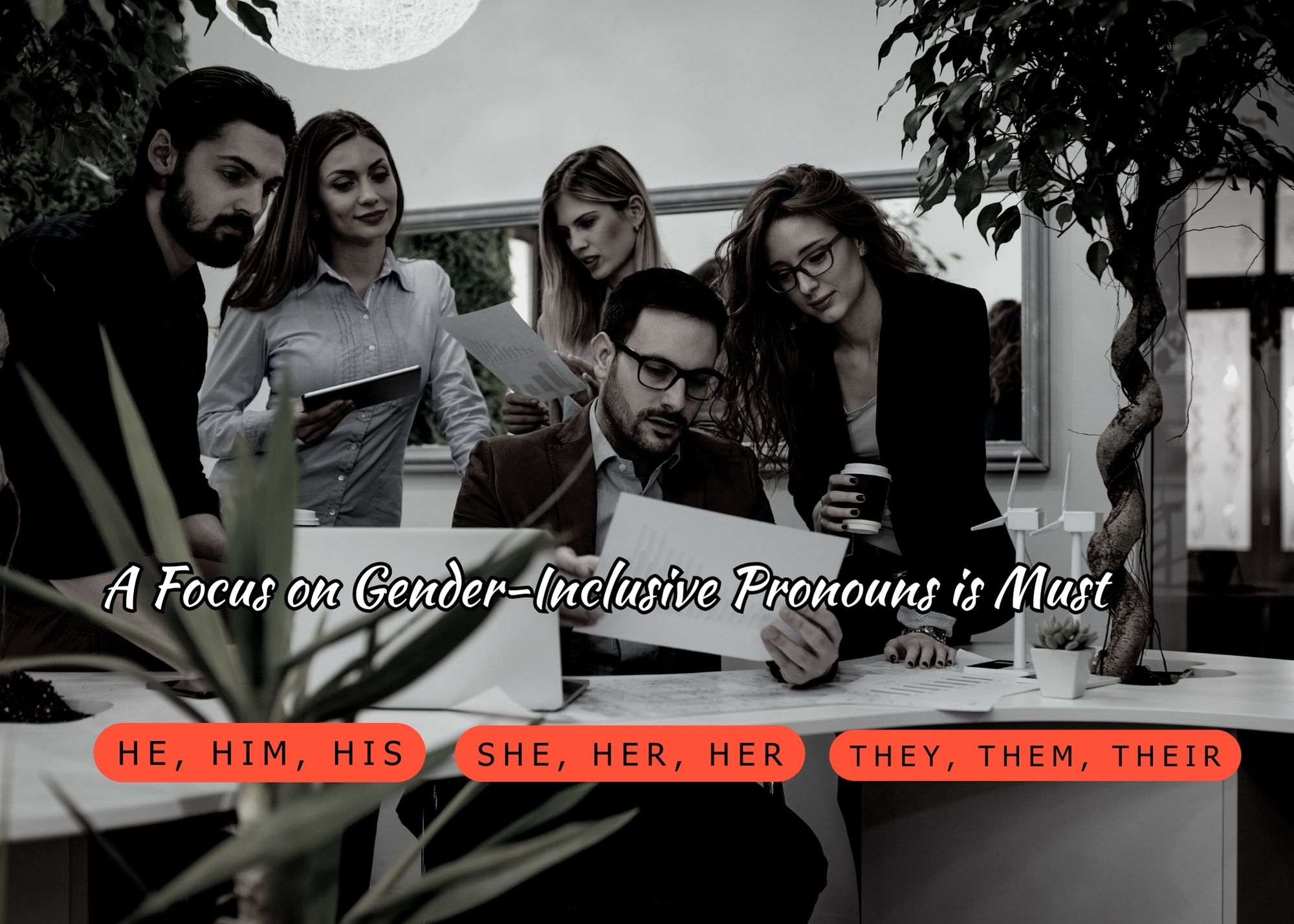

Shaivya’s article advocates for gender-inclusive pronouns in primary education, emphasising their impact on mental well-being and creating safe spaces, exclusively for Different Truths.
The concepts of ‘gender’ and ‘identity’ have broadened beyond the conventional binary classifications in today’s rapidly evolving society. Gender had always been viewed as a binary concept, with two categories: ‘he’ and ‘she’. However, this perspective has broadened and has started to recognise that gender exists on a spectrum; it is not strictly binary. Despite the advancement, many educational primary resources often overlook and lack acknowledgement of the spectrum of gender diversity.
A gender-inclusive pronoun is one such key element of this inclusivity. The void of neopronouns and mention of only binary pronouns ‘he’ and ‘she’ in the educational content not only continues to uphold antiquated norms but also fails to affirm the identities of all learners. The integration of gender-inclusive pronouns in education is of utmost importance. It provides an option for the ‘individuals’ to reflect their identity who do not identify themselves in the binary gender framework. The inclusivity of primary educational materials may be a stepping stone towards shaping an accepting society respectful of all genders.
The article highlights the void and underscores the significance of integrating gender-neutral pronouns into primary educational materials…
The article highlights the void and underscores the significance of integrating gender-neutral pronouns into primary educational materials, reflecting the diverse identities of the learners. It will foster an inclusive environment in the classroom and lead to an accepting society.
The use of gender-inclusive language shows respect for the individual’s self-identified gender, as everyone deserves to be respected and acknowledged for who they are. It sends a message to the ‘invisible’ individual that we not only see and acknowledge them for their identities but also accept them for who they are.
Traditional gender binary norms have been restrictive, exclusionary, and limiting. Gender bias and stereotypes have prevented individuals from fully expressing themselves and reaching their potential. Gender-inclusive pronouns, especially in primary education, may help break down these biases and stereotypes, fostering a more equitable society with an understanding of the existence of beyond-binary concepts for young learners. It can lead to effective and meaningful interaction that is inclusive and accessible to everyone, regardless of their gender identity.
Gender-inclusive language in education can create a welcoming and inclusive environment. It can prepare the students for a diverse, accepting, and inclusive world. It can equip them with the existence, understanding, and respect for diversity essential in today’s global society.
…it is very important to respect the choice of the pronoun when referring to any individual.
Pronouns play a very important role in affirming gender identity; they are more than a grammatical tool. It is a fundamental way we recognise and respect people’s identities. Hence, it is very important to respect the choice of the pronoun when referring to any individual. The choice of pronouns to refer to an individual goes beyond respect and courtesy. It is a conscious effort that may have a significant impact on their mental well-being. Using a correct pronoun for any gender affirms their identity and sends a message that their identity is respected and recognised.
The use of ‘they’ and ‘them’ as a singular pronoun is used effectively to refer to the gender beyond the circumference of ‘he’ and ‘she’. It often sounds like slang for ‘them’ when they are referred to. The incorporation of neopronouns like Xe/Xem/Xyrs or ze/zem/zir in the primary educational material may be a small change but will be a huge step to help young learners identify beyond ‘he’ and ‘she’ and avoid making assumptions about gender and identity. It is very important for ‘them’ who have struggled and are struggling to be misgendered.
Using a person’s chosen pronoun can help alleviate the distress associated with gender dysphoria. It signifies acceptance and understanding for ‘them’, reducing the feeling of invalidation and alienation, and is a powerful counter to the invalidation that ‘they’ face. It can contribute to creating a safe and inclusive space where ‘they’ feel valued and accepted.
It is particularly important for places like schools, where young minds are nurtured and gain different perspectives on the spectrum of life. It helps promote inclusivity, respect, and acknowledgement of all genders, contributing to a more equitable and affirming societal discourse. Gender-inclusive language in primary education is not about being politically correct or trendy. It is about inclusivity, equality, acceptance, and respect.
This small change in the educational materials can contribute significantly to creating and reflecting the diverse identities and experiences of the individuals beyond ‘he’ and ‘she’, and that is something we can all strive for. The goal of using inclusive pronouns for ‘them’ is not just about avoiding assumptions about ‘them’ but about affirming ‘their’ identity.
Picture design by Anumita Roy

Dr. Shaivya Singh, a Ph.D. graduate from IIT Patna, is working as an Assistant Professor at Noida Institute of Engineering and Technology, Greater Noida. Her interest lies in language and linguistics. She has a specialisation in sociolinguistics and Applied linguistics. She has published many articles on language and linguistics. Her work delves into the dynamics between language, culture, and society. As an educator, she fosters intellectual
curiosity, employing engaging methodologies to impart knowledge.


 By
By
 By
By
 By
By
 By
By