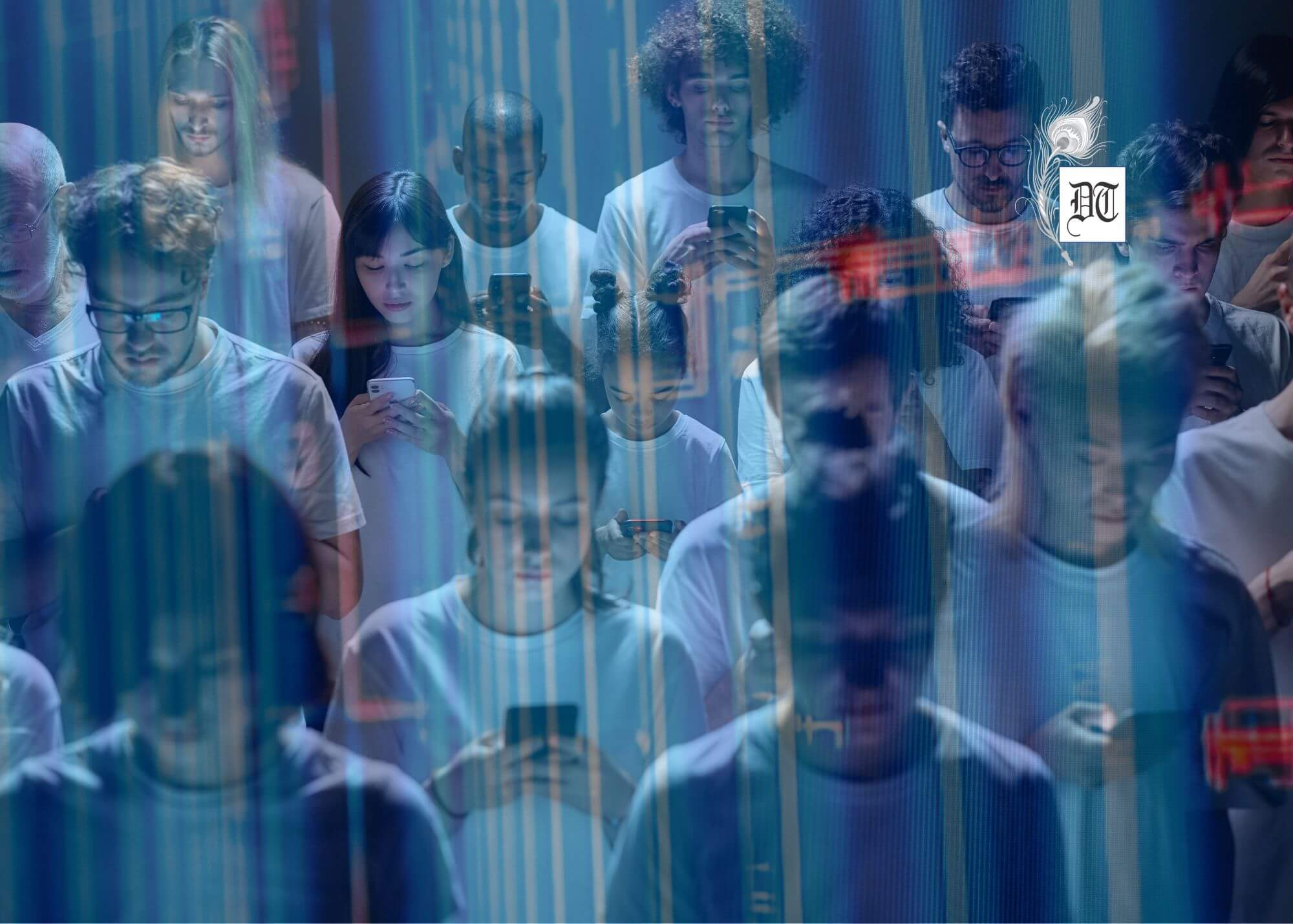
Mowmita explores social media culture’s pulse at DifferentTruths.com, unpacking trends, satire, and AI’s role in shaping public life.
AI Summary:
- Social media evolved from connection tools into a global culture that shapes identity, politics, commerce, and entertainment through rapid trends.
- Short-form video, influencer economies, niche communities, and AI-driven personalisation have redefined attention, authenticity, and social commerce.
- Risks include misinformation, surveillance, burnout, and regulatory friction—yet platforms enable activism, satire (e.g., Cockroach Janta Party), and new forms of collective imagination.
Social media has become the defining cultural force of the twenty-first century. What began as a simple way to connect with friends has evolved into a global ecosystem that shapes politics, entertainment, commerce, and identity. By 2026, social media is not just a tool—it is a culture in itself, a living organism that grows, mutates, and influences nearly every aspect of human life. To understand social media culture today is to understand how billions of people interact, express themselves, and consume information in real time.
The story of social media culture begins with its roots in connection. Early platforms like Friendster, MySpace, and Facebook were designed to replicate the social networks people already had offline. They were digital mirrors of friendships, family ties, and school communities. But as these platforms grew, they began to shape culture rather than simply reflect it. The introduction of the “like” button, the rise of photo-sharing, and the ability to broadcast thoughts instantly created new forms of validation and self-expression. Social media became not just about who you knew, but about how you presented yourself to the world.
Rise of Influencer Culture
This shift gave rise to influencer culture. Ordinary users discovered that they could build audiences by curating their lives online, and brands quickly realised the marketing potential of these digital personalities. Instagram models, YouTube vloggers, and TikTok creators became cultural icons, often rivalling traditional celebrities in influence. Social media culture began to revolve around trends—viral dances, memes, and challenges—that spread across borders in seconds. A teenager in Brazil could participate in the same TikTok trend as someone in Japan, creating a shared cultural language that transcended geography.
By the mid-2020s, short-form video had become the dominant medium. TikTok pioneered the format, but Instagram Reels and YouTube Shorts quickly followed. These platforms cater to shrinking attention spans, delivering entertainment, information, and advertising in bite-sized clips. Social media culture adapted accordingly: humour became faster, storytelling became more condensed, and trends cycled at dizzying speeds. A meme could rise and fall within days, replaced by the next viral sensation. This constant churn created a culture of immediacy, where relevance was measured in hours rather than months.
At the same time, authenticity became a prized value. Users grew weary of overly polished influencer content and began to gravitate toward raw, unfiltered storytelling. The rise of “de-influencing” reflected this shift, as creators encouraged audiences to resist consumerism and question the endless cycle of product promotion. Social media culture began to celebrate vulnerability—sharing mental health struggles, personal failures, and everyday realities. This authenticity resonated especially with younger generations, who sought connection over perfection.
Social Media Transformed Commerce
Social media also transformed commerce. Platforms evolved into marketplaces where users could discover, review, and purchase products without leaving the app. Social commerce blurred the line between entertainment and shopping, turning scrolling into a form of consumer engagement. A viral TikTok could sell out a product overnight, while livestream shopping events replicated the excitement of television infomercials for a digital audience. Brands adapted by investing in user-generated content, recognising that consumers trusted authentic reviews more than traditional advertising. Social media culture became inseparable from consumer culture, with trends often driven by what people were buying and sharing.
Politics, too, became deeply entwined with social media. Activism found new life online, with hashtags mobilising millions and livestreams bringing global visibility to local struggles. Movements like Black Lives Matter and climate activism demonstrated the power of digital platforms to amplify voices and pressure institutions. Yet social media also became a battleground for misinformation, polarisation, and manipulation. The same tools that empowered activists were exploited by those spreading falsehoods or sowing division. Social media culture thus reflected the dual nature of technology: a force for empowerment and a tool for exploitation.
The rise of private communities marked another cultural shift. As public platforms became saturated and sometimes toxic, users sought refuge in smaller, more intimate spaces. Discord servers, Reddit communities, and niche Facebook groups offered safer environments for connection and discussion. These micro-communities fostered deeper engagement and gave rise to cultural micro-trends that might never go viral but still shaped the identities of their members. Social media culture became layered, with global trends dominating headlines while niche communities cultivated their own unique subcultures.
AI’s Dimension
Artificial intelligence added yet another dimension. AI-powered tools now assist creators in generating captions, editing videos, and even producing entire pieces of content. Algorithms personalise feeds with uncanny precision, shaping what users see and, by extension, what they believe. AI-driven personalisation has made social media culture more fragmented, as individuals inhabit algorithmically tailored realities. At the same time, AI has democratised content creation, allowing anyone to produce professional-quality media with minimal effort. Social media culture is increasingly shaped by this interplay between human creativity and machine intelligence.
The cultural impact of social media is profound. It has disrupted traditional entertainment, with creators rivalling studios in influence. It has reshaped journalism, as news spreads faster through Twitter threads and TikTok explainers than through newspapers. It has redefined identity, as people experiment with avatars, filters, and digital personas. For Gen Z, social media is not just a tool but a way of life, a primary source of information, entertainment, and community. They spend more time on social platforms than on television or movies, driving cultural shifts that ripple across generations.
Yet social media culture is not without risks. The speed of trends can create pressure to constantly perform, leading to burnout among creators and anxiety among users. The spread of misinformation challenges societies to balance free speech with responsible moderation. Surveillance and privacy concerns grow as platforms collect vast amounts of data to fuel personalisation. These challenges remind us that social media culture is not static—it is contested, shaped by the push and pull between users, corporations, and governments.
Case Study — Cockroach Janta Party: Viral Satire and State Response
Cockroach Janta Party (CJP) isn’t an actual political party but a satirical nickname that has found its way into conversations, especially among young people online. It’s often used to mock or criticise certain political behaviours, and its popularity shows how humour has become a powerful entry point into political discourse. For the youth, this kind of language makes politics feel less intimidating and more relatable, turning heavy debates into something they can engage with through memes, slang, and digital culture. At the same time, it risks flattening complex realities into catchy insults, which can limit deeper understanding.
Satire has become a defining feature of youth politics. Political satire is a genre of satire focused on mocking government, politicians, and political ideologies. It blends comedy with critique, often exaggerating incompetence or hypocrisy to make a point. It works like a double-edged sword: on one side, it shields young people from the heaviness of political conflict by wrapping it in humour; on the other, it weaponises wit to challenge authority and expose hypocrisy. In the age of social media, satire spreads faster than traditional political messaging, shaping perceptions and sparking conversations that might otherwise never happen.
Social media culture amplifies nicknames like Cockroach Janta Party into something much larger than just a joke. What begins as satire or casual slang quickly spreads through memes, reels, and hashtags, turning into a recognisable label that influences how people talk about politics. Because young audiences consume most of their political content online, these nicknames gain traction rapidly, sometimes even becoming shorthand for entire movements or ideologies. A catchy phrase can travel faster than official messaging, and in many cases, it becomes a symbol of resistance, critique, or identity — showing how digital culture can transform satire into a collective voice.
Meanwhile, the Twitter handle of Cockroach Janta Party was blocked in India after authorities flagged its content as inflammatory and potentially harmful to public order. The government acted under Section 69(A) of the IT Act, following inputs from intelligence agencies that the account’s posts were gaining rapid traction among young people. At the time, the handle had tens of thousands of followers and was growing quickly, which amplified concerns.
The move highlights how satire and digital activism can spread fast on social media, sometimes turning nicknames or jokes into powerful symbols of resistance. While the account was withheld in India, it remained accessible outside the country, and new handles soon emerged to continue the movement.
This case shows how social media culture can transform satire into influence while also drawing the attention of regulators who see viral content as a potential risk.
In essence, ‘Cockroach Janta Party’ as a phrase is less about a party itself and more about how satire and digital culture shape youth engagement. It energises participation, fuels debate, and keeps politics alive in everyday conversations, while also highlighting the fine line between humour that enlightens and humour that divides.
Social Media Culture and Hybridity
Looking ahead, the future of social media culture will likely be defined by hybridity.
Platforms will continue to blend entertainment, commerce, and community, creating ecosystems where users can watch, shop, and connect seamlessly. AI will deepen personalisation, but trust will hinge on transparency and ethical use of data. Global solidarity will become more important, as interconnected struggles demand collective responses. Social media culture will not be confined to national boundaries but will increasingly reflect the global nature of challenges like climate change, inequality, and human rights.
At its core, social media culture is about imagination and connection. It is the belief that stories matter, that voices deserve to be heard, and that trends can unite people across continents. It is messy, fast-paced, and sometimes overwhelming, but it is also vibrant, creative, and deeply human. From viral dances to political movements, from influencer marketing to grassroots activism, social media culture is the pulse of our time. It is not just shaping the world—it is the world.
Picture design by Anumita Roy

Mowmita Sur is an educationist, author, poet, and content writer. She has received many accolades for her writings at both the national and international levels. She was awarded as one of the best 50 poets of India. Many of her published book gets effusive praise and good reviews. Her books are captivating, incredibly well-researched and evoke strong emotions. She writes witty fiction, non-fiction, horror and mysteries. Her characters are clever and fearless like her.

 By
By
 By
By
 By
By