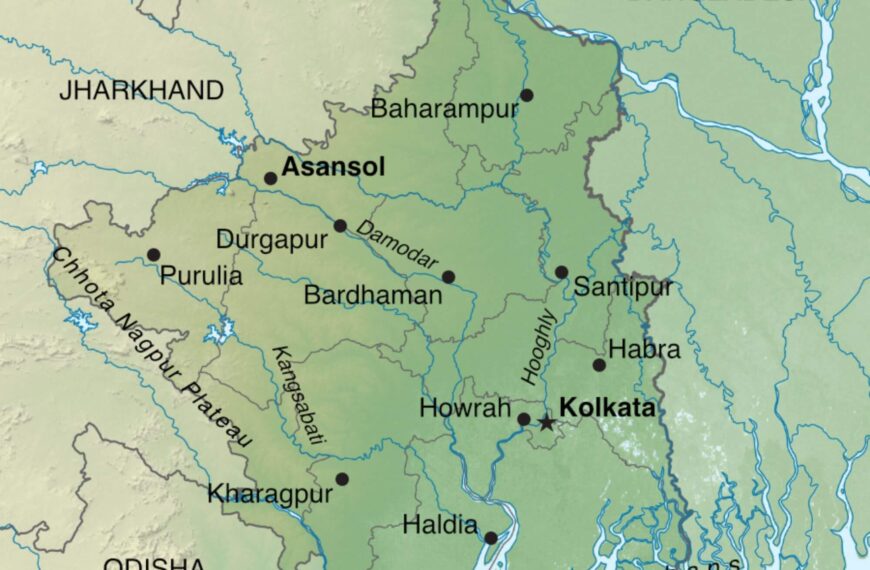
Prof Bhaskar unpacks the fragile reality of Indian democracy on Different Truths.com, exposing systemic disillusionment and voter helplessness.
Key Takeaways
- Electoral Illusion vs Survival: Rural and marginalised citizens struggle for basic survival (“roji, roti”), viewing local leaders as supreme authority while remaining alienated from true democratic intricacies.
- Fear-Driven Politics: Middle-level electoral dynamics rely on coercion, corruption, and party-switching, leaving common voters powerless against entrenched political elites.
- Faith over Administration: Centuries of cultural conditioning prioritise religious devotion and faith over political accountability, masking deep-seated societal inequalities.
Hopefully, no one questions the relevance or necessity of democracy in a parliamentary democracy where elections for the selection of the legislature at the centre and the states are held once every five years in India, and common people know it as their ultimate right or duty to vote. Post-Panchayati Raj, they also participate in the processes if allowed. The electoral democracy, thus, is perceived to exist in India at central and decentralised levels. The issues are more than this and different from it.
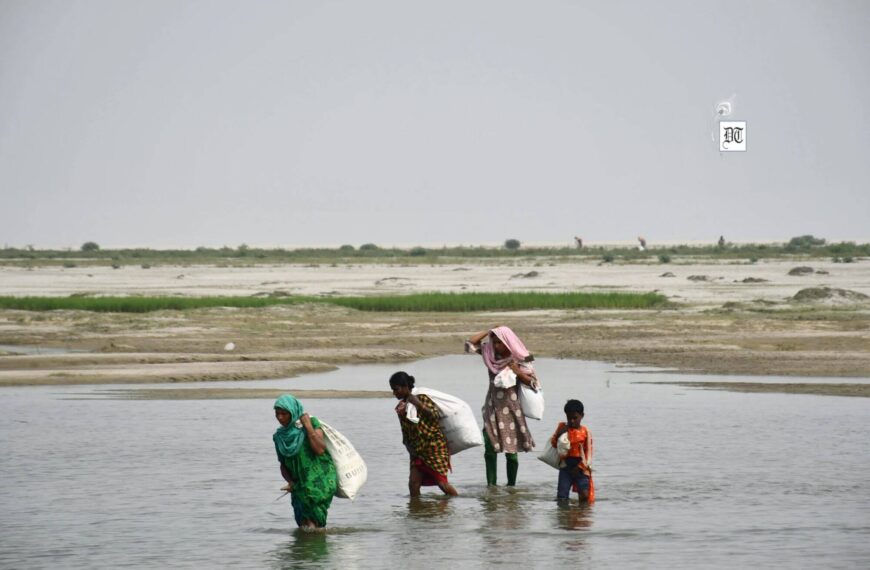
Common people understand that they form the government. At the same time, the fact remains that even the eligibility to be a voter depends on their exclusion by Special Intensive Review (SIR) or otherwise or their ability to participate consciously in the electoral processes. At the Panchayati Raj Institutions (PRI) level, like in Gram Sabha meetings, most of the local wage labourers and tenants do not have any voice to express themselves because of their drudgery-based survival through being employed on landlords’ land for one season or migrating under distress (Source: Primary survey).
The implication is that most of the common people who live in rural India do not understand the intricacies of electoral democracy – many of them see the Gram Pradhan as ‘Sarkar‘. The Sarkar is made at a monetary cost. At the regional-national level, alliance purchase of MLAs and MPs belies the expectations of the voters, though voters are a minority in the whole adult population. It is surely not known what the whole population desires other than partially revealing their basic needs for biological survival.
Often, when questioned, the common people as respondents revealed ignorance-indifference – ‘malum nehi, pata nehi’ (don’t know, no idea), etc. – from my primary surveys in the Hindi heartland during two decades since 2001 on social sector issues. When the only issue was access to ‘roji, roti’, the questions of conscious political participation seemed redundant. If, immediately post-election, voters find their elected representatives changed sides – that is, political parties – they do not oppose it because, by that time, the voters have lost the ground to nullify their elected representatives, and this questions the greed-led electoral processes.
The question, among many, remains whether common people got the breathing space to perceive democracy. Probably not, because of their self-engagement in economic life. What, at most, they understand is to seek guidance to cast votes or vote for their castes once every five years in the system of electoral democracy and think they are determining governance – ‘Shashan’. The intricacies of public administration are beyond them. This may be one reason why they do not expect ethics in politics, or they understand wrong actions by the administration as right. One glaring example is justifying the ‘encounter death’ of the accused, justifying public lynching, or justifying mobocracy in West Bengal post-May 2026 and elsewhere. The reason that remains concealed is helplessness in the system that evolved within it, which is less understood by them, or a system that is against them, or where they remain the consequences.
The highest ambition of most of the people in India is to live in safety – safety is hardly attainable because of their lack of access to proper health care facilities, admission of their children to dependable educational institutions and the scope to have ‘roji-roti’. In these situations, articulating democracy is a far cry for them, though they constitute the largest number of voters in electoral politics.
Common people understand power in electoral democracy as the power or authority of the Gram Pradhan or local councillor – the precise reason is that they are locally confined unless forced to migrate short-term, short-distance or long-distance. My conversations and participatory and disguised observations with adult people in the Hindi heartland and West Bengal over the past few decades may provide evidence of this local living and electoral innocence.
At the middle level of this democracy, electoral politics is fear-based and involves blackmail, hence changing political parties even after election results are declared. For example, people might have cast votes in support of Party A that is opposed to Party B, and post-election some of the MLAs are drawn to Party B for fear of being arrested on charges of corruption by Party B that formed the government. The case is in the post-2026 political domain of West Bengal. Common people do not rule – they are ruled in the political society. The society constituted by the power elite is beyond this analysis. The allies from the middle section of society form a tiny circle for the power elite: ‘Satta ke saath rahana chahiye’ (One has to be an ally of power).
Manufacturing Public Faith
It seems there exists an unbridgeable gap between the voters in particular and the representatives that they elected. The data is not known on what percentage of the population visited the ‘functioning Parliament’ or ‘functioning Assembly’ once in a lifetime. Perhaps most of the common people never thought about it – they voted for their political masters, or they voted as they were guided.
In general, over centuries, people in India have lived in faith. Since the time of hypothetical Rama, ‘Jai Syaram’ and ‘Joy Bajrangbali’ have been some of the slogans that people shout in public, particularly in the Hindi heartland, a response to which of late has been discovered in West Bengal as ‘Jay Bangla’. Religious practices across communities are very much performed, including Hindus, Muslims, Christians, Sikhs, Jains… with full devotion. Priests are respected much more than the teachers – dharma gurus above shikshaya gurus. Nobody has seen so far dharma gurus latched or kicked by police in the public domain; that was not rare in the case of teachers – teachers protesting on public roads, however.
Not much manufacturing of ‘public faith’ by the elite or determinants is needed in a system that evolved through patriarchy and Brahminical order – a system that kept the common people seen as Dalits, women, and Adivasis at the bottom or at the back over centuries – fear persisted and was prolonged.
In lieu of a conclusion. Common people protest on public roads, or they destroy physical infrastructure that belongs to the nation/people – an expression of both anger and helplessness. This may show less strength of democracy if a ‘functioning democracy’ exists.
Picture design: Anumita Roy
Prof Bhaskar Majumder superannuated as an Economics professor from GB Pant Social Science Institute, Allahabad. He served as a visiting professor at Central University of Bihar (Patna), Sri Sri University (Cuttack), Banaras Hindu University (BHU), Science College (Calcutta University), and others. He published extensively in 26 reputed journals, authored 11 books, co-edited two, and contributed 38 chapters. He completed 26 research projects funded by the Planning Commission, GoI ministries, ICSSR, the World Bank, NTPC, and Tata Chemicals. An international academic, journal reviewer, and PhD supervisor, he holds degrees from the University of Calcutta. He is our National Editor: Economics and Social Science.


 By