
Arindam, our Editor-in-Chief, investigates a massive counterfeit medicine racket uncovered at a Karnataka farmhouse that exploited desperate ICU patients, exclusively on DifferentTruths.com.
Key Takeaways
- The Bidadi Raid: Karnataka FDA busted an unlicensed farmhouse in Bidadi repackaging cheap interstate stock into fake, high-end life-saving vials worth crores.
- National Systemic Crisis: This operation mirrors broader nationwide scandals, from fake cancer drugs in Delhi to toxic cough syrups causing fatal paediatric poisonings.
- Regulatory Vulnerabilities: Chronic inspectorate vacancies, porous pharmaceutical supply chains, and hyper-inflated drug prices continue to endanger vulnerable patients across India.
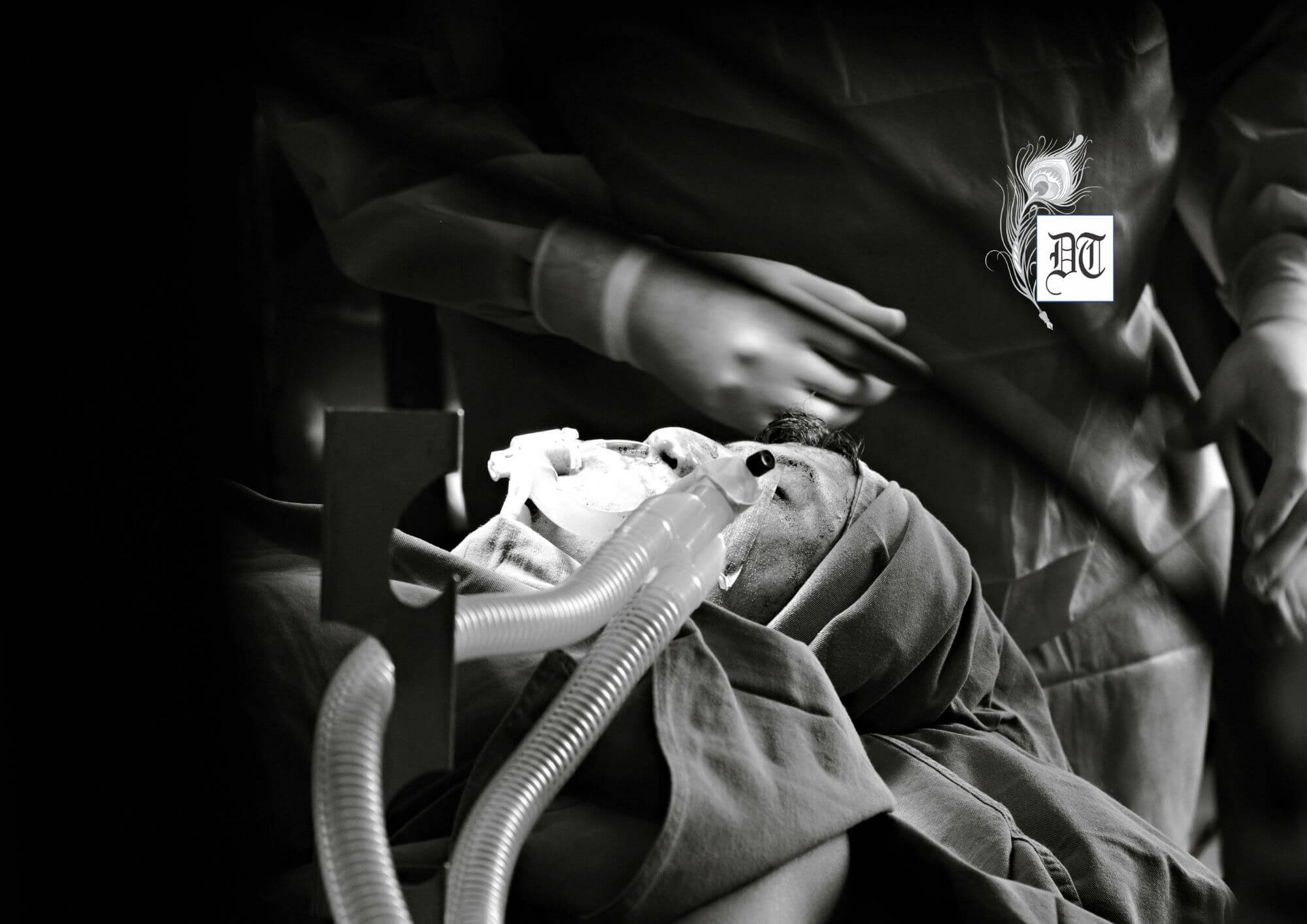
A lonely, stifling silence hangs over this country’s intensive care units. It’s a sterile purgatory, with only the rhythm of an IV drip and the erratic beep of a monitor. In that room, when a doctor writes a life-saving antibiotic or a high-potency vial, a distraught family doesn’t check the label for typographical flaws. They don’t scan the barcode under an electron microscope. They beg, they borrow, they pawn the family gold, and they hurry with trembling hands to the pharmacy.
They pay 7,000 or 8,000 rupees for a single vial of hope.
What they don’t know — what this republic remains too slow to tell them — is that some of these vials were filled, according to Karnataka’s own Food Safety and Drugs Administration, in an unlicensed farmhouse on the outskirts of Bengaluru: cheap stock from other states poured into new glass, then dressed in the clothes of multinational brands.
I have tracked crime, corporate greed, and systemic decay for decades. The August raid at Kurubara Karenahalli did not crack open a village fraud—it exposed an industrial-scale chemical theft of the dying.
The Bidadi Farmhouse
Step outside the glass towers of the city’s tech belt. Drive past Bidadi toll gate toward Kurubarakeranahalli. A shed on land belonging to one Siddaiah, leased to an ex-medical rep, did not look like an annexe of Big Pharma. The Drug Enforcement Wing of Karnataka FDA, with Ramanagara police, made its move on 18 August 2026.
They found a factory that relabelled—filling machines, injection. Stamped and forged labels, QR codes that looked official but did nothing when scanned. Thirty boxes of old stock. And thousands of vials, if you believed the labels, for patients already gasping for breath.
The department later recorded the seizure list to include:
• 5,640 vials of Cefiavigent 2.5 worth around Rs 3.38 crore
• 1,531 vials with the Hizlam label worth Rs 52.24 lakh
• 470 vials of Xavitaz valued at about ₹27.49 lakh.
• 264 vials of Emblaveo with the Pfizer name worth ₹20.59 lakh
• 165 vials of Zavicefta, plus smaller lots labelled Tigynt, Tigvnet, Aztreo and Trezam
• Expired medicines worth around ₹35 lakh
Inventory was initially pegged at Rs 4.91 crore. Official figures rose to about ₹5.05 crore with machinery and printing stock.
The early finding was simple and ugly, said FDA Commissioner Srinivas K. Low-cost medicines bought from neighbouring states were being filled into new vials. They renamed them as expensive life-saving brands, including products carrying the Pfizer name. The QR codes on those counterfeit labels weren’t working. The department warned that the seized products “could contain no active medicinal ingredients, wrong ingredients or even toxic substances.” Samples were sent to government laboratories for composition, sterility and potency tests. Those results have not been released to the public as of this writing. That gap is important. Assay is not an accusation. But the method is no longer challenged.
The arithmetic is the oldest in the counterfeit trade, as first reported following the raid. Officials told The Times of India that operators bought the stock for as little as ₹600-700 a vial and sold the relabelled product for ₹6,000-8,000. Other reports said the same products were going to hospitals and pharmacies at about half the market rate, cheap enough to turn a procurement desk’s head, expensive enough to look like a “brand”. Either way, the margin is paid for in other people’s blood.
The racket didn’t pass on to satellites or a national intelligence grid. Labourers working a field at CK Tandya village, near Dodderi in Ramanagara district, stumbled upon a heap of discarded vials, tubes and packets of stinking powder. One of them ratted on the cops. Shivaraj went in plain clothes, lifted samples and took the stink to his bosses. That was the tip-off, Superintendent of Police R. Srinivas Gowda later said. Deputy Superintendent P. Ravi’s team traced it to the farmhouse. A republic, this one, saved by a man who would not walk past a dump, that cannot police its own injectables.
Case & Location, Method Used, and Tragic Result
Review the case dockets of the last ten years:
Trans-Yamuna Oncology Ring (Delhi, 2024): Ordered empty real vials of life-saving cancer medicines (Keytruda, Opdyta) from hospital peons for ₹5,000, refilled with antifungal drops and resold for ₹2.5 lakh per vial. Fake oncology drugs worth more than ₹40 crore were administered directly to terminally ill cancer patients.
Baddi Industrial Corridor Racket (Himachal Pradesh, 2022–2023): Unlicensed Himachal Pradesh manufacturing units released starch and paracetamol dust into strips bearing the forged markings of leading Indian pharma brands. Hundreds of thousands of fake cardiac and diabetic pills flooded retail counters across North India.
The Agrochemical Glycol Poisonings (J&K & Global Exports, 2020–2022): Industrial-grade Diethylene Glycol (DEG)—a cheap solvent used in antifreeze and brake fluids—used as a substitute for pharmaceutical-grade propylene glycol in paediatric cough syrups. Catastrophic acute kidney injury that has killed dozens of infants both domestically and abroad.
Uttar Pradesh, 2021) Agra Counterfeit Hub: A syndicate operating out of busy wholesale markets bought large quantities of unformulated chalk tablets, polished them and printed fake expiry dates to distribute near-expired consignments. Tonight, somewhere in this country, a family is paying for a vial they cannot test. The labourer at CK Tandya did more, in one afternoon, than a decade of vacant inspectorates. The rest of us do not have his excuse. We know the address now. We know the names on the cancelled licences. We know the man the SIT wants back from Azerbaijan. What remains is whether the republic will treat a forged ICU antibiotic as a crime against a ledger—or as a crime against a pulse. Millions of fake antibiotics were circulating through unregulated regional retail chains.
Dubai Chamrajpet, Azerbaijan
And who runs a machine like that? Not street thugs with country pistols—men who know the supply chain backwards.
The premises were leased by Prashanth (also spelt Prashant), 36, a former medical rep who worked the Bengaluru and Telangana circuits before moving to Dubai. The police said he leased the land for about Rs 10 lakh a year. It is alleged that his relative Tejas managed the shed. Initial police reports identify Venkatesh, a chemist and owner of Bangalore Special Life in Chamrajpet, as the man who helped procure the stock from Himachal Pradesh and Telangana. The first sweep was carried out by workers Prabhudeva Gowda and Naveen Kumar. Four people were arrested in August; later, five, according to the SIT. “The operation is interstate and maybe international,” said Health Minister UT Khader.
By mid-September, investigators said, Prashanth had left India for Azerbaijan, where immigration authorities had seized his passport. The state then started talking about a CBI handover. On 11 September, the SIT, along with the Drugs Control Department, raided Krupa Healthcare near Minerva Circle. The SIT arrested Veeresh Kumar Jain, Prashanth’s owner and erstwhile business partner. The raid was part of simultaneous searches in Karnataka, Haryana, Himachal Pradesh, Tamil Nadu and Maharashtra. The farmhouse was not an island; it was a node.
Then came the licences. On 20 September, the FDA revoked sixteen wholesale and retail licences and suspended eight others. Some of the cancelled names published in the press are Avesco Healthcare, Bangalore Speciality Pharma, Patel Medi Trade, Rajarajeshwari Pharma, N.S. Pharma, Surya Speciality Pharma, SWS Pharma, Krupa Healthcare, St. Philomena Hospital Drug Centre, Sagar Pharma, Zymus Pharma, Fortune Medical Solutions, Excelcare Pharma, and Patel Medicals. The carrying and forwarding point of M/s Pfizer C&F Depot at Survey No. 66/3 B2, Kempalinganahalli, Nelamangala, and not the innovator’s factory, was suspended for non-cooperation with the SIT, officials said. Karnataka FDA blocks batch numbers of seized drugs on its portal. The last detail is the quiet one that counts: somewhere, this glass had already been sold by someone.
Khader put the fear in one sentence. If fake stock worth almost five crore rupees can be lifted in a day, what is already in the state’s bloodstream? Some of the mislabelled medicines may have been used in ICUs, he told reporters. The Hindustan Times later reported that investigators suspect the supply to as many as ninety hospitals and clinics. That figure is still an investigative allegation.” It is also the one sentence no family in an ICU wants to hear.
When a patient dies of septic shock because the broad-spectrum antibiotic on the label was never what it claimed to be, the certificate is often “cardiorespiratory failure due to refractory sepsis”. No one routinely autopsies the drip. The hospital sends the bill. The family is free of debt. This death is not fraud, but it is disease.
The National Pattern: Not an Aberration
To dismiss Bidadi as an isolated event is wilful blindness. India manufactures a large share of the world’s generic medicines. In the home, the pipeline from factory to vein remains a Wild West with a licence on the door.
In August 2026, as Karnataka counted vials in Bidadi, the Delhi Police Crime Branch announced the busting of an interstate syndicate dealing in counterfeit and diverted anti-cancer medicines. Seventeen people have been arrested. Among the recovered items were 588 filled vials, empty boxes, over 3,000 other units, cash worth around ₹50 lakh and medicines and material worth around ₹9 crore. The names on the glass were the ones families kill themselves to buy: Keytruda, Opdyta, Darzalex, Imfinzi, Erbitux, Gazyva, Bavencio, and Adcetris. The network worked in three channels, the police said: counterfeits from unauthorised sources; theft and diversion from private hospitals; and government-supplied stock lifted from institutions and warehouses, including trails toward CGHS supplies in other states. Some were sterilised water in fake vials sold at a discount to the desperate, officers told The Indian Express. Among those arrested were hospital personnel. The map spanned Delhi-NCR, Mumbai, Hyderabad, Haryana and Uttar Pradesh.
That’s the oncology twin of the Bidadi model: high MRP, terrified demand, and a discount that looks like mercy.
The story of the solvent is an older, bloodier tale. The deaths of children in Ramnagar, Udhampur, were linked to the consumption of Coldbest-PC cough syrup, manufactured by Digital Vision of Kala Amb, Himachal Pradesh, between December 2019 and January 2020. The government analysis found the cheap, sweet, industrial cousin of a pharmaceutical solvent, diethylene glycol, at levels above 34 per cent. Later, Reuters, working from charge sheets and regulator files, put the toll at at least twelve dead and others disabled. The forensic chain was PGIMER Chandigarh and the regional testing laboratory. Eventually, a charge sheet named the company’s proprietors. Justice has moved as fast as such cases usually move.
Then the map went abroad. In 2022, the World Health Organisation issued alerts on Indian-made paediatric syrups containing unacceptable levels of diethylene glycol and ethylene glycol, after a spate of child deaths in The Gambia. Warnings followed for products identified in Uzbekistan and elsewhere. In October 2025, following child deaths in India, CDSCO reported the presence of DEG in certain batches of Coldrif, Respifresh TR and ReLife. WHO Medical Product Alert N°5/2025: WHO testers said Coldrif had DEG levels that would make a chemist’s hands shake. This is not “regulatory non-compliance”. It is poison in a bottle sold for a child’s cough.
Baddi and the Himachal industrial belt have long been a geography of small units and big temptation in CDSCO and state alerts. Karnataka’s own brief after Bidadi had indicated Himachal and Telangana as the source states for the cheap stock that landed at the farmhouse. The pattern does not change. Bulk from the shadow edge of the licensed industry. Repackaging in a farm, a basement, or a warehouse. Forged multinational dress. A distributor who does not ask why the QR code is dead.
The Unholy Three
Why can a country that can thread a probe to the Moon not ensure that a vial in an infant’s drip is medicine, not bath?
First of all, the inspectorate. India has about 10,500 drug manufacturing units. The Mashelkar Committee demanded one inspector for every fifty manufacturing units and one for every two hundred sales outlets. Parliamentary committees have gone through the arithmetic for twenty years. In December 2023, a Lok Sabha reply showed CDSCO itself was running with hundreds of inspector posts empty – 303 vacant against 504 sanctioned – and, even after later hiring, Live Mint reported 181 of 419 still unfilled in 2025. States are worse. Raids are done on tip-offs. Randomised batch surveillance at the scale the industry requires is a wish, not a system. A labourer smelt a dump, and Bidadi was located. That is not a regulatory model. It’s luck with a conscience.
Secondly, there is a difference between the law on the books and the law in action. Section 17B of the Drugs and Cosmetics Act, 1940, defines a spurious drug. Section 27 provides for rigorous imprisonment ranging from ten years to life and a fine for manufacturing, selling or stocking such drugs. The Bidadi case in Karnataka invoked this statute. Conviction remains rare across the country. Samples deteriorate. The witnesses forget. Twelve years on, the queue has shifted to another state, another shed. Khader himself said the penalties appear too light. If the prime accused is in Baku and the vials are already in a ward, a section of a 1940 Act is no deterrent. It’s a footnote.
And the third is the price. The criminal doesn’t have to invent demand when an authentic critical-care or oncology injection retails at tens of thousands — or one or two lakhs — rupees a vial. The family is already at the counter. The mafia has to offer a discount that looks like kindness or a “brand” that looks like safety. ” Hyper-inflated MRPs and porous verification are not two problems. They are one market.
The verdict we do not yet accept
Let’s ignore the sanitised language of “spurious medications” and “regulatory non-compliance”.
A man walks into an ICU, carrying an unlicensed firearm, and shoots five patients. He is tried for murder. And the file remains open as a drugs case. When a syndicate fills new vials in a Bidadi farmhouse, dresses them up as Pfizer or as a critical-care antibiotic and sells them into pharmacies and hospitals, those patients who may have already received those vials will not show up as homicide counts. If they ever do emerge, they will do so as adverse outcomes.
They’re not businessmen who take shortcuts. They are men who monetised trust in the final hour of a stranger’s life.
Only when the courts see the knowing manufacture and supply of fake life-saving medicine as premeditated killing; only when a hospital that sources unverified injectables gets more than a polite notice; only when the inspector posts are filled and the QR code on a vial actually leads somewhere will the shed at Kurubara Karenahalli be the end of the story.
There will be an interval.
Somewhere in this country tonight, a family is paying for a vial they cannot test. In one afternoon, a labourer at CK Tandya did what a decade of empty inspectorates couldn’t. The rest of us don’t have his excuse. Now we have the address. We know the names of the cancelled licences. We know the man the SIT wants back from Azerbaijan. Now the question is whether the republic will see a forged ICU antibiotic as a crime against a ledger or a crime against a pulse.
References and Sources
Bidadi / Ramanagara raid and follow-up (August–September 2026)
- The Hindu, “Fake drug racket busted near Bidadi; medicines worth ₹5 crore seized,” 19 August 2026.
- The Hindu, “SIT to probe inter-state network behind spurious drug racket: Khader,” 19 August 2026.
- The Hindu, “Large stock of counterfeit medicines seized from private facility in Bengaluru” (Krupa Healthcare / multi-state raids), 13 September 2026.
- The Times of India, “Rs 5cr fake drugs with MNC labels seized near Bidadi,” 18–19 August 2026; “Fake drugs worth Rs 5cr seized in Bidadi,” 20 August 2026; “Fake medicines in ICUs? Relabelled drugs supplied to Karnataka hospitals,” 20 August 2026; “Spurious drug racket busted at Bidadi farmhouse, Rs 5 crore stock seized,” 20 September 2026.
- The Indian Express, “Fake ICU medicines among Rs 4.9-cr spurious drugs seized in Bengaluru raid,” 19 August 2026; “Fake-drug racket suspect holed up in Azerbaijan, Karnataka mulls CBI probe,” 16 September 2026.
- The News Minute, “Fake medicines worth Rs 5 crore seized near Bidadi; 4 arrested, SIT probe likely,” 20 August 2026.
- Deccan Chronicle / Deccan Herald, seizure and SIT reports, 19 August 2026.
- Hindustan Times, “A labourer’s tip, a field full of medicine waste…” 16 September 2026; “FDA cancels 16, suspends eight drug licences in Karnataka,” 20–21 September 2026.
- India Today, News18, ETV Bharat, Livemint, NDTV Profit, The South First, Mathrubhumi — licence cancellations, Pfizer C&F depot suspension, seizure breakdowns, 20–21 September 2026.
- Karnataka FDA / Commissioner Srinivas K public statements as quoted in the above: Drugs and Cosmetics Act, 1940, Sections 17B and 27.
Delhi anti-cancer syndicate (2026)
- The Hindu, “17 held for interstate racket in counterfeit, diverted anti-cancer drugs,” 21 August 2026.
- The Indian Express, “How Keytruda was stolen from private hospitals and sold to desperate cancer patients,” 21 August 2026.
- India Today, NDTV, The Times of India, The Tribune, India TV — recoveries of Keytruda, Opdyta, Darzalex and others; 17 arrested; ~₹9 crore, August 2026.
Toxic solvents / paediatric syrups
- The Indian Express and Hindustan Times, Coldbest-PC / Udhampur infant deaths, 2020; charge-sheet coverage, 2022.
- Reuters Special Report, “Cough syrup killed scores of children. Why no one has been held,” 13 September 2023.
- BBC News, “Jammu: Long wait for justice after India cough syrup deaths,” 4 September 2023.
- WHO Medical Product Alerts on contaminated oral liquids identified in The Gambia (2022) and subsequent alerts; WHO Medical Product Alert N°5/2025 on Coldrif, Respifresh TR and ReLife (October 2025).
- Indian Express / Business Standard reporting on the 2025 domestic DEG cluster and CDSCO–WHO exchange.
Regulatory capacity
- Mashelkar Committee (2003) inspector norms; 59th Parliamentary Standing Committee (2012).
- Lok Sabha / Rajya Sabha replies on CDSCO vacancies (including December 2023: 303 vacant of 504 inspector posts).
- India Today, Livemint, and Financial Express on inspector shortages versus ~10,500 manufacturing units (2024–2025).
Picture design by Anumita Roy

Arindam Roy has over four decades of experience in various newsrooms of renowned media houses. He is the Founder, Publishing Director, Editor-in-Chief of Different Truths, and Kavya Kumbh Publishing Consultant (KKPC). He has co-authored ten chapters in six Coffee Table Books (CTBs) of national and international repute and is the sole author of four forthcoming CTBs (Times Group). He has also published four international poetry anthologies as the Publisher and Editor-in-Chief, participated in several poetry and literary festivals, and won awards and accolades. Arindam co-authored the novel Rivers Run Back with an American writer. He stays in Bangalore and Prayagraj.

 By
By