
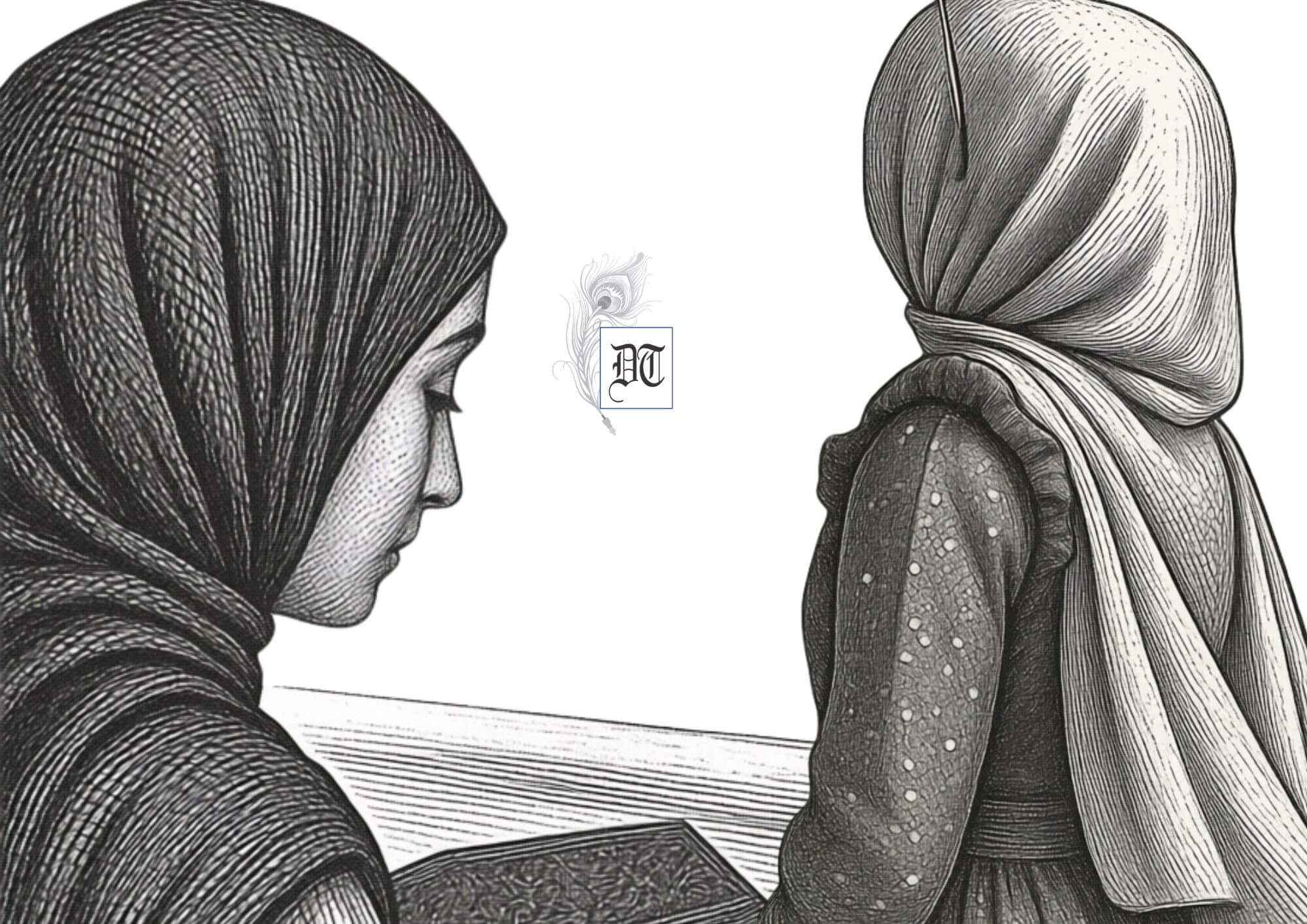
Prof Bhaskar analyses India’s powerful student protests and state reactions on DifferentTruths.com.
Key Takeaways
- Student Uprising: July 2026 nationwide student protests over educational corruption forced the central education minister to resign, challenging state authority.
- State Tactics: The government and political establishment vacillated between intimidation, legal threats, and co-optation to control the resilient youth movement.
- Systemic Impact: Armed with education and honesty, youth aged 18 to 30 exposed deep-rooted governance flaws across diverse regional landscapes.
Let there be no doubt that the students of India have posed a challenge to the political authority in India at the centre and the satellite authorities on the circumference, as manifested in July 2026, first in Delhi and then percolated to other areas, the immediate offshoot of which was the forced resignation of the education minister at the centre. The government felt defeated – as an idea, miserable, of course, for there is no enmity between the students and the political masters – because of its assumed omnipotence and started manipulating games to ‘daman’ (control) the students in ‘guardian mode’. The agitating students were united and adamant, however.
What were the alternatives for the political authority? One was to forgive the students, as the Prime Minister (PM) did. The students, however, did not ask for any such forgiveness. Second, to invite the students for discourse and guidance, as RSS chief Mohan Bhagwat did, in a limited way, of course, in Mumbai. Third, to continue intimidating the students, one high-profile senior lawyer in Delhi, who happened to be a BJP national spokesperson, also filed a high-cost court case against the CJP, asking for Rs. Two crores in damages from the Cockroach Janata Party (CJP). It was not understood how the money cost would be collected and paid/saved – not in the personal pocket of the advocate, however. Fourth, an Executive Magistrate in Greater Noida issued a notice to a second-year student based on inputs from Noida police, contrary to the Apex Court’s directive. Fifth, the Apex Court asked how the magistrate dared to do it after the court asked for the withdrawal of all criminal cases against the agitating students. The magistrate may have been excited or overenthusiastic, assuming he was above the ‘stupidity line’. So, the path was not a single, unique one. Over time, it varied, and the time span was short – from July 20, 2026, to early September 2026; that is, a little more than a month.
The number or composition of stakeholders is not readily visible. The major stakeholder is the state, including the legislature and the executive. The other is the judiciary. The corporates are outside this. Some households, or students’ parents and guardians, are affected and thus become stakeholders directly or indirectly. One agitating student’s father was murdered allegedly by the anti-protestors in the Bankura district of West Bengal, which was visited by the CJP representatives immediately; the outcome of which is unknown.
It seems the core state is yet to understand how to deal with the unemployed, vested-interest-delinked, corruption-free students who are above 18 and below 30 as of 2026. The Census is yet to be completed, so accurate demographic data is still pending. This section may also be large by demographic-political parameters, constituting a large vote bank. Both the government and the opposition will have a high propensity to grab this section to appropriate votes – so, a dilemma and different paths or tactics. The veteran politicians are their parents’ and grandparents’ age, with experience in direct proportion, and hence advantaged. But the advantage that the students have has bypassed the ghagh (crook) politicians – that is, education and honesty.
One way to control is to intimidate or blackmail, and a prelude to that is getting protesting students trapped in some offences as per the Indian Penal Code or Nyaya Sanhita. One way is to find out who did what in the distant past that may trap the students, particularly the leaders of CJP. If the students still cannot be arrested and jailed, then swallow them in the political net. One alternative could be to form a group of students who may be engaged against the protesting students to confuse the public. Another way could be to brand the agitating students as ‘dimagi naxal’. The core state knows this very well. We must ensure the students are controlled, lest they form a new political party or join the opposition.
The biggest problem is that the students went against corruption in education. They started their agitation in Jantar Mantar, Delhi, in July 2026 against a paper leak in NEET. The intense history is known by now: how the students were treated by the core state that used the police and Rapid Action Force (RAF) – power speaks.
People in India understand things differently because they live in diversity. Because of propaganda, students in premier universities like JNU and JU are seen differently from students at some educationally bottom-line universities elsewhere. Students of West Bengal are seen in a light much different from that of Uttar Pradesh and Madhya Pradesh. Perceptions differ greatly between southern states like Kerala, Tamil Nadu, and Karnataka and the Hindi heartland. The same method of ‘daman’ thus may fail.
High-voltage action, however, does not need much time. The political authority first ignored students’ agitation at the centre. Then it became an inescapable national issue, probably because of the indefinite hunger strike of Sonam Wangchuk, the climate activist, in defence of the students. Instead of addressing the corruption questions, many of which were linked to administrative and academic agencies, the political establishment took another route: controlling the students. They bypassed the truth that books and teachers do not make criminals. Instead of looking at agitating students as criminals, the executives, including the police, RAF, and CRPF, could have been guided not to lathi-charge or fire on the students and not to go for projecting criminals-in-jail as part of the crowd that constituted the protesting students.
We get a system as we make it. Students have had this system since 1947, precisely. They were the consequences of the system that older people made. It seems they have also come forward as its cause through participatory means. It remains to be seen where the system goes.
Picture created by AI
Prof Bhaskar Majumder superannuated as an Economics professor from GB Pant Social Science Institute, Allahabad. He served as a visiting professor at Central University of Bihar (Patna), Sri Sri University (Cuttack), Banaras Hindu University (BHU), Science College (Calcutta University), and others. He published extensively in 26 reputed journals, authored 11 books, co-edited two, and contributed 38 chapters. He completed 26 research projects funded by the Planning Commission, GoI ministries, ICSSR, the World Bank, NTPC, and Tata Chemicals. An international academic, journal reviewer, and PhD supervisor, he holds degrees from the University of Calcutta. He is our National Editor: Economics and Social Science.

 By
By
 By
By