
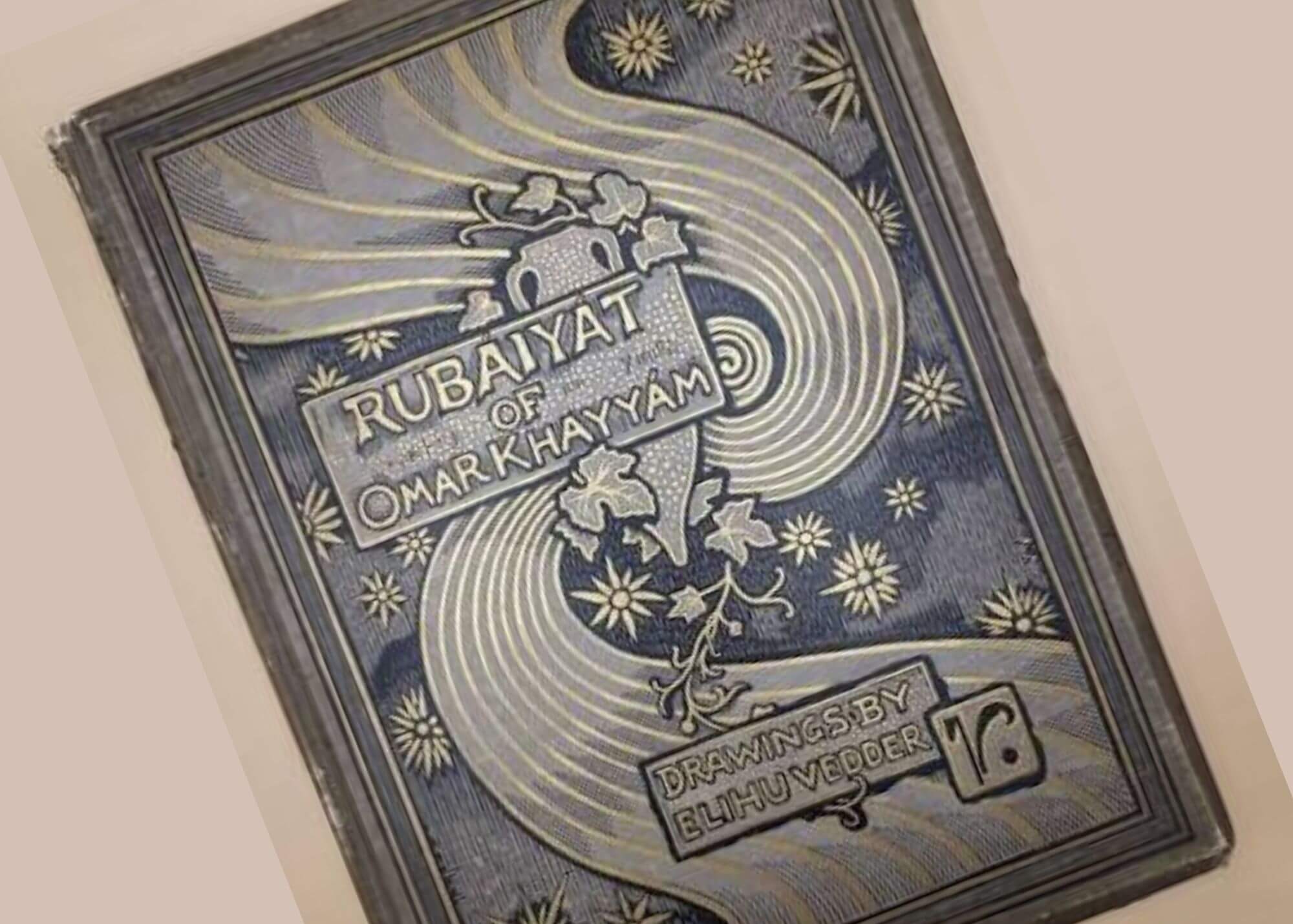

Ruchira revisits and explores Omar Khayyam’s Rubaiyat on DifferentTruths.com, capturing its timeless themes of life, existential doubt, and spiritual mysticism.
AI Summary
· Existential Philosophy: The Rubaiyat focuses on the transience of human life, urging readers to embrace the present moment amid universal uncertainty.
· Dual Metaphors: Wine and the companion (Saki) symbolise both literal Epicurean hedonism and mystical Sufi spiritual awakening and divine love.
· Fate and Cosmic Indifference: Khayyam portrays humans as pawns of destiny, using vivid imagery of chessboards and master potters moulding clay.
I first got acquainted with the iconic Rubaiyat—an anthology of verses composed by the mediaeval Persian poet Omar Khayyam (English translation by Edward Fitzgerald)—many moons ago when I spotted the book on my father’s bookcase back home. As a teenager at that time, I failed to grasp the significance of the volume. Nonetheless, a few years later, having entered college, I discovered its hidden beauty when I heard our English professor elaborate on it.
For the uninitiated, in classical Persian literature, a rubai denotes a highly specific rhythmic pattern, consisting of two lines, split into four distinct hemistiches. Each poem generally has an aaba rhyme scheme.
Owing to its extremely short length, a rubai is an isolated, complete thought usually dedicated to a philosophical idea.
The pivot point of the “Rubaiyat” is the ephemeral quality of human life, the poet frequently highlighting how short-lived human existence is, as are the worldly pleasures which humans love to indulge in. Khyyam’s poetry encourages its readers to embrace the present moment, drink life to the dregs, and seek fulfilment amidst prevailing uncertainty.
The Rubáiyát of Omar Khayyám blends profound existential scepticism with Epicurean hedonism and Sufi mysticism. It encourages individuals to abandon dogmatism, as their destiny is ultimately determined by a silent, mysterious, and inscrutable Creator.
The philosophical framework of the Rubáiyát upholds these concepts:
Transience of Life: As human life is brief and the future is beyond our control, readers are encouraged to “take the cash and let the credit go”, enjoying the beauty of the world before life slips away.
Scepticism and Doubt: Khayyám critically examines traditional religious doctrines, fate, and the limits of human knowledge. He questions the justice of a universe where living beings are punished by a divine entity for flaws inherent to their nature.
Wine and Saki (server): Wine serves as a pervasive metaphor that operates on two levels. Literally, it represents the Epicurean enjoyment of physical pleasures to numb one’s senses, distance oneself from the harsh realities of life, and, in the process, usher in an overall sense of euphoria. Mystically, it symbolises the intoxicating “nectar” of divine ecstasy, spiritual awakening, and connection with the Divine.
For enjoying life, an intimate companion (read a member of the opposite sex) is a sine qua non. Hence, the motif of Saki – a youthful, lissome woman serving wine to those who yearn for wine – abounds in the Rubaiyat as well as the vast panorama of Persian literature.
A Book of Verses underneath the Bough,
A Jug of Wine, a Loaf of Bread—and Thou
Beside me, singing in the Wilderness—
Oh, Wilderness was Paradise now!

Ah! my Beloved, fill the Cup that clears
Today of past Regrets and future fears –
Tomorrow? —Why, tomorrow I may be
I with yesterday's Sev'n Thousand Years.”

“Lo! some we loved, the loveliest and the best
That Time and Fate of all their vintage prestige,
Have drunk their Cup a Round or two before,
And one by one crept silently to rest."
Khayyam’s poetry meditates on an indifferent cosmos where humans are mere pawns manipulated by Fate. It likens the universe to a game of chess, with the Almighty winning by checkmating his opponents. In another vein, God is portrayed as the “Master Potter” who shapes and breaks the clay of human lives at will.
For in the marketplace, one Dusk of Day,
I watched the potter thumping his wet clay:
And with its all-obliterated Tongue
It murmured—"Gently, Brother, gently, pray!"


'Tis all a chequerboard of nights and days.
Where Destiny with Men for Pieces plays:
Hither and thither moves, and mates, and slays
And one by one, back in the closet lies.”
In contrast to Western views, Eastern traditions often interpret the Rubaiyat verses through the eyes of a “Sufi” mendicant who roams free, utterly devoid of earthly bondages. Adherents of this school of thought believe Khayyám employs earthly desires to emphasise the superior nature of the Human soul’s eternal, undying love for the Divine.
It would be appropriate to conclude with some of my favourite ones:
Each Morn a thousand Roses brings, you say:
Yes, but where leaves the Rose of Yesterday?
And this first Summer month that brings the Rose
Shall take Jamshyd and Kaikobad away.

Think, in this battered Caravanserai
Whose Portals are alternate Night and Day,
How Sultan after Sultan with his Pomp
Abode his destined hour and went his way."
A silent reminder that each one of us must be ready for the journey towards a beautiful shore…
Picture design by AI

Ruchira Adhikari Ghosh brings a liberal, wide-ranging outlook shaped by extensive travel across India and abroad. Educated at Holy Child School, New Delhi, Sacred Heart Convent, Ludhiana, and Panjab University, Chandigarh, she holds a Master’s in English Literature and a postgraduate diploma in Journalism and Mass Communication. With three decades in media, she writes on travel, books, music, performing arts, women’s issues, and especially food, drawing inspiration from rich life experiences. She is our Features Editor.


 By
By
 By
By
 By
By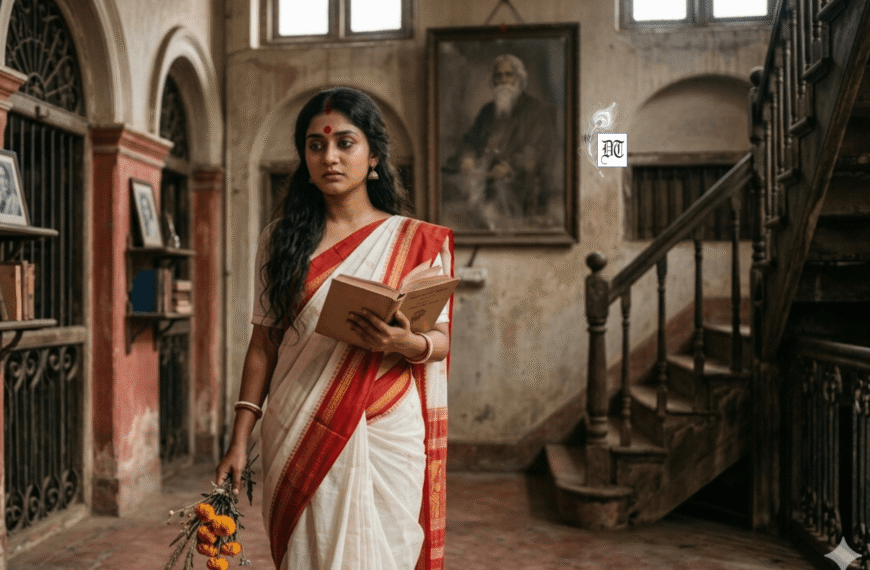
 By
By