
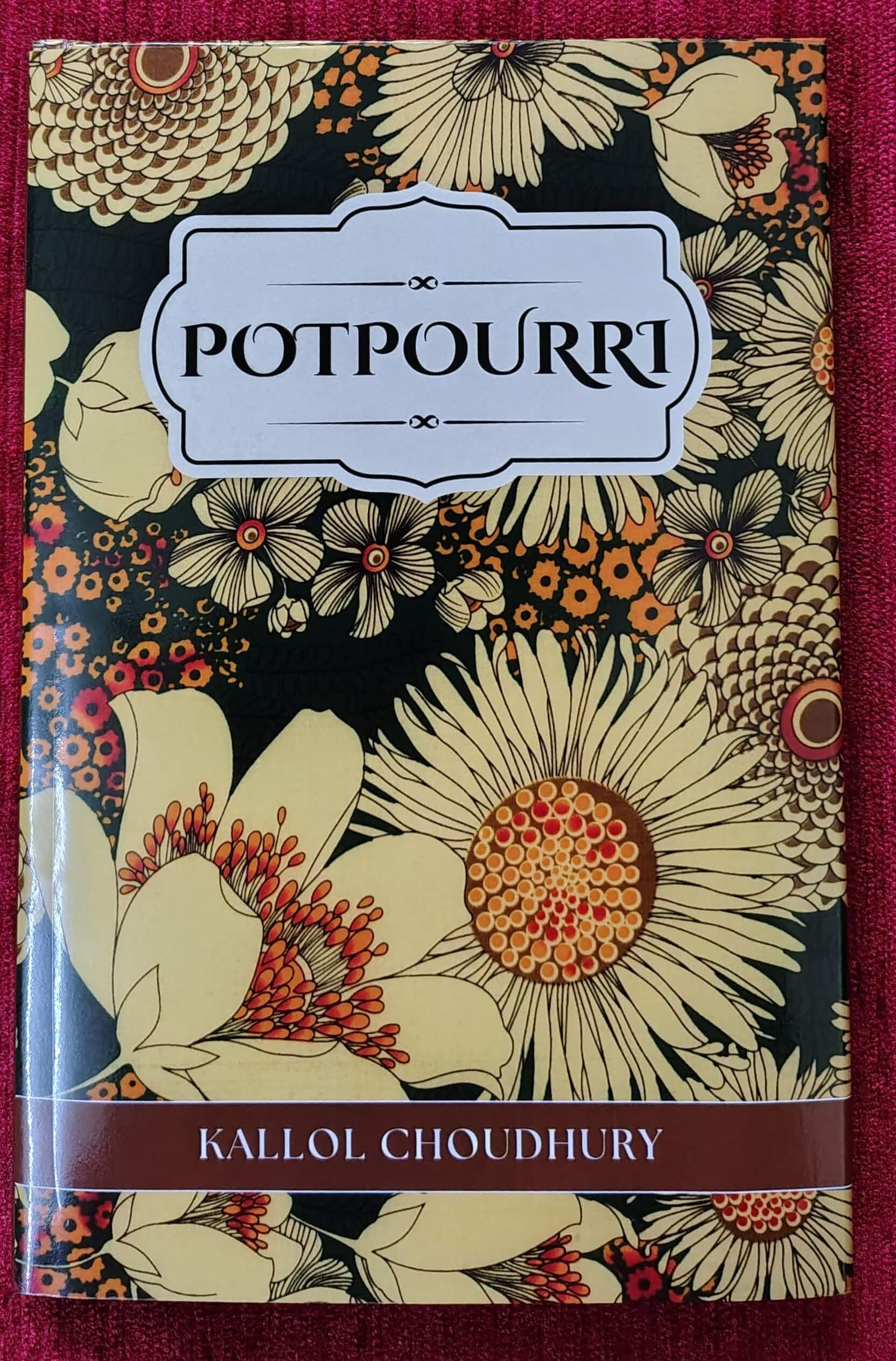

Arindam spotlights Potpourri on DifferentTruths.com, where Kallol Choudhury’s Barak Valley chronicles redefine humane, activist social journalism.

AI Summary:
- Potpourri captures Barak Valley’s neglected realities, where environmental decay and institutional indifference crush basic human dignity.
- Through Sonbeel’s silent suffering, vanishing Gangetic dolphins, and crumbling infrastructure, Choudhury exposes systemic failure and policy apathy.
- His ground-level, poetic journalism becomes a manifesto for rights-based reportage, climate justice, and inclusive progress that refuses to abandon the margins.
As an editor who has long championed the unvarnished truth over literary pretension, I often find myself searching for narratives that look past the polished surface of mainstream reportage. Too much of contemporary writing loses its grip on reality, floating away into an imaginary realm. But now and then, a book comes along that reads less like text and more like a heartbeat. Kallol Choudhury’s Potpourri is exactly that—a fierce, deeply felt chronicle of a region left to fend for itself in the shadow of institutional indifference.
Choudhury, a seasoned bilingual poet and writer deeply embedded in the soil of southern Assam’s Barak Valley, has compiled a striking collection of his journalistic dispatches, interviews, and reviews spanning over a decade of observations. What he delivers isn’t just news; it is a profound testament to human resilience set against a backdrop of systemic neglect. In an era where editorial advocacy must pivot heavily toward the protection of basic human dignity, the preservation of our crumbling environment, and the defence of the vulnerable, this collection serves as a vital blueprint for social journalism.
The book strikes an urgent note right from its early chapters, notably with the Sanbil Diary. Here, Choudhury strips away the romanticism of satellite imagery that showcases Sonbeel (Sanbil) merely as an idyllic, lush wetland. He forces us to look closer, past the sylvan beauty, and into the raw lives of the eighty thousand people inhabiting its surrounding villages. We see a dilapidated primary health centre built fifteen years prior, standing completely hollow without a single doctor posted to it. We see serious patients dying on the tops of handcarts while being wheeled down non-existent roads. By humanising these statistics, Choudhury effectively highlights how environmental decay and political abandonment walk hand in hand—proving that ecological degradation is never just about landscapes but about the human rights of those who rely on them.
The environmental crisis deepens as Choudhury shifts his focus to the waters of the Barak River itself. In his chapter on the endangered Gangetic dolphins, he charts a heartbreaking elegy for a blind, ancient mammalian species navigating a habitat that is rapidly shrinking due to human intrusion, indiscriminate siltation, and the reckless use of banned gill nets. The Cachar forest department’s unfulfilled 2001 proposal for a dolphin sanctuary stands as a stark monument to administrative lethargy. Through this ecological critique, Potpourri underscores a truth that independent, cause-driven journalism must always emphasise: climate change and environmental destruction do not happen in a vacuum; they are accelerated by institutional apathy and a lack of local accountability.
Yet, the structural vulnerabilities of the Barak Valley extend far beyond its channelling waters. Choudhury pieces together the exasperating saga of the Lumding-Silchar railway gauge conversion—a project bogged down for decades by administrative lethargy, vested road-transport lobbies, and the looming threat of insurgency. While national infrastructure triumphs elsewhere are celebrated, the people of the valley are left isolated, paying three to four times the standard rate for essential commodities because land routes remain fractured and vulnerable to annual monsoon landslides.
Perhaps the most poignant chapters are those that deal with the human cost of political identity. Choudhury steps bravely into the fractured landscape of the ‘D’ (doubtful) voter crisis. He documents the raw harassment of daily wage-earners—rickshaw-pullers and thela-walas—who are stripped of their dignity, denied the opportunity to prove their bona fides, and pushed into detention camps alongside hardcore criminals over simple clerical errors in voters’ lists. It is a devastating critique of human rights infractions occurring at the borders of our consciousness.
What makes Potpourri essential reading for our times is Choudhury’s unique lens. He doesn’t look at the Northeast from a detached, high-altitude perspective; he writes with the ground-level empathy of a poet who feels the sting of every unfulfilled infrastructure package and every environmental loss.
For those of us dedicated to using the written word as a tool for justice—advocating fiercely for the environment, documenting the realities of climate change, and defending human rights—this book is an inspiration. Potpourri is a sharp, beautifully focused, and unvarnished portrait of the Barak Valley that demands our attention, reminding us that progress is entirely meaningless if it chooses to leave the margins behind.
Cover photo shared by the author

Arindam Roy has over four decades of experience in various newsrooms of renowned media houses. He is the Founder, Publishing Director, Editor-in-Chief of Different Truths, and Kavya Kumbh Publishing Consultant (KKPC). He has co-authored ten chapters in six Coffee Table Books (CTBs) of national and international repute and is the sole author of four forthcoming CTBs (Times Group). He has also published four international poetry anthologies as the Publisher and Editor-in-Chief, participated in several poetry and literary festivals, and won awards and accolades. Arindam co-authored the novel Rivers Run Back with an American writer. He stays in Bangalore and Prayagraj.

 By
By
 By
By
 By
By
 By
By
A devastatingly clear lens on a neglected land which seems to have had great potential for development. Dolphins! Just to think of a valley that could lose this rare species and so much more.
I agree with you, Neera. Thank you