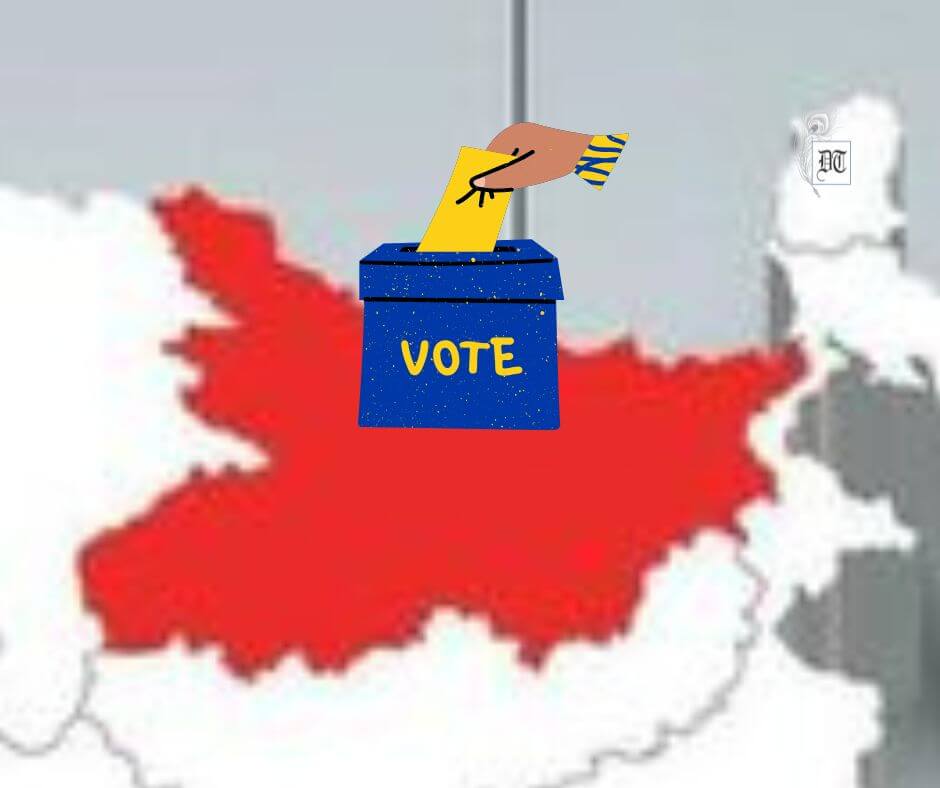
Rita reports, for Different Truths, that Bihar’s political landscape witnessed a historic NDA landslide in 2025, powered by an unstoppable ‘Good Governance’ mandate and women voters, the decisive factor.
The recently concluded Assembly elections in Bihar constitute a critical component of India’s democratic structure, reflecting the nation’s social, economic, and political trends. These state elections not only determine the government but also highlight the influence of alliance strategies, caste equations, and developmental agendas in national politics. The recently concluded 2025 Legislative Assembly Election added a new chapter to Bihar’s political history, with both the ruling and opposition alliances fiercely contesting for relevance. However, the Mahagatbandhan alliance was relegated to the margins, just a lesser character, in the political drama of the state.
It was a landslide victory for the five parties (Pandavas) of the NDA with its tally of 202 seats, reducing the Mahagatbandhan to a meagre 35 seats in the 2025 Bihar Assembly polls. BJP and Janta Dal (United) contested 101 seats each and bagged 89 and 85 seats, respectively.
1. The Recent Election: The 2025 Mandate
The 2025 Bihar Assembly election was a seemingly tough contest between the state’s longest-serving Chief Minister, Nitish Kumar, and the opposition alliance leader, Tejashwi Yadav. However, the final tally surprised one and all. For the Nitish-led NDA, it was a cakewalk.
Alliance Structures:
National Democratic Alliance (NDA): Comprising Janata Dal (United) or JD(U), Bharatiya Janata Party (BJP), and Lok Janshakti Party (Ram Vilas) or LJP(RV), among others.
Mahagathbandhan (MGB)/INDIA Alliance: Including Rashtriya Janata Dal (RJD), Indian National Congress, and Left parties.
Key Electoral Issues: Unemployment, infrastructure development, the caste census, and the narrative of ‘Good Governance’ versus ‘Jungle Raj’ were the primary issues. Reaching out to women voters with government financial schemes and development messages was a key strategy for the NDA. Conversely, the Mahagathbandhan promised jobs and socio-economic change for the youth.
2010 Result: Initial counting trends indicated a historic victory for the NDA, with their massive win in 2010. Notably, the BJP and JD(U)’s seat share had significantly increased, helping the alliance secure a majority by a comfortable margin.
2. Historical Context: A History of Close Contests
Past elections demonstrate how rapidly Bihar’s politics can shift and how fractured the popular mandate can be.
A. 2020 Election: Vote Parity and Seat Disparity
The 2020 election was one of the closest contests in recent history.
Result: The NDA won a majority with 125 seats (out of a total of 243). The Mahagathbandhan secured 110 seats.
Key Analysis: Despite the narrow seat margin, the popular vote percentage was almost identical (NDA: 37.26%, MGB: 37.23%). A difference of just 0.03% in votes led to a 15-seat gap, showing the NDA’s efficiency in translating votes into seats.
Party Performance: The RJD (75 seats) emerged as the single largest party, but the weak performance of its ally, the Congress, hampered the Mahagathbandhan’s chances. The JD(U) weakened with 43 seats, but the BJP’s 74 seats ensured the NDA’s victory.
B. 2015 Election: The Rise of the Grand Alliance
In 2015, the RJD, JD(U), and Congress united to form the Mahagathbandhan to keep the BJP out of power, winning a massive majority with 178 seats. This solidified the importance of alliances in Bihar’s politics. However, in 2017, Nitish Kumar broke away from the RJD and rejoined the NDA.
C. 2010 Election: NDA’s Unilateral Dominance
The 2010 election was a landslide victory for the NDA (JD(U) and BJP), where they secured 206 seats. Nitish Kumar’s narrative of ‘Good Governance’ won overwhelming public support at that time. This result remains one of the best-ever performances by a single alliance in the state.
3. Key Driving Forces in Bihar Elections
Several complex social and political equations determine the electoral outcomes in Bihar:
Alliance Politics: No single party usually wins an outright majority in Bihar. Therefore, the composition of the alliance and the parties’ strike rates are critically important. Shifts in the RJD’s Yadav-Muslim support base versus the JD(U)/BJP’s base of upper castes, Kurmi/Koeri, and Extremely Backward Classes (EBCs) often decide the outcome.
Caste Census and Reservation: The recent caste-based census and the question of reservation became a major political tool in this election. This data-driven politics created a new layer of caste-based polarisation.
Women Voters (The Silent Voter): Recent elections have seen higher participation from women voters than men. Often referred to as silent voters, this demographic has often leaned towards the NDA due to the government’s development schemes, particularly those related to law and order and financial incentives, which can be a game-changer.
Development vs. Change: Voters often weigh Nitish Kumar’s long-term ‘Good Governance’ and stability against unemployment and economic backwardness as a central issue. This conflict is what creates new political alignments in every election.
4. The Path Ahead
The 2025 election will provide a significant direction for Bihar’s politics. It suggests that the NDA’s stability and development agenda under Nitish Kumar has retained the support of the state’s voters, especially women and EBCs. On the other hand, the Mahagathbandhan will need to deeply analyse its alliance’s weaknesses, particularly the disappointing performance of the Congress and issues with vote transfer among allies.
The shifting dynamics of power are a permanent feature of Bihar’s politics. Looking ahead, the rise of new leaders, the continuous realignment of alliances, and new development agendas will keep Bihar’s electoral landscape vibrant and dynamic.
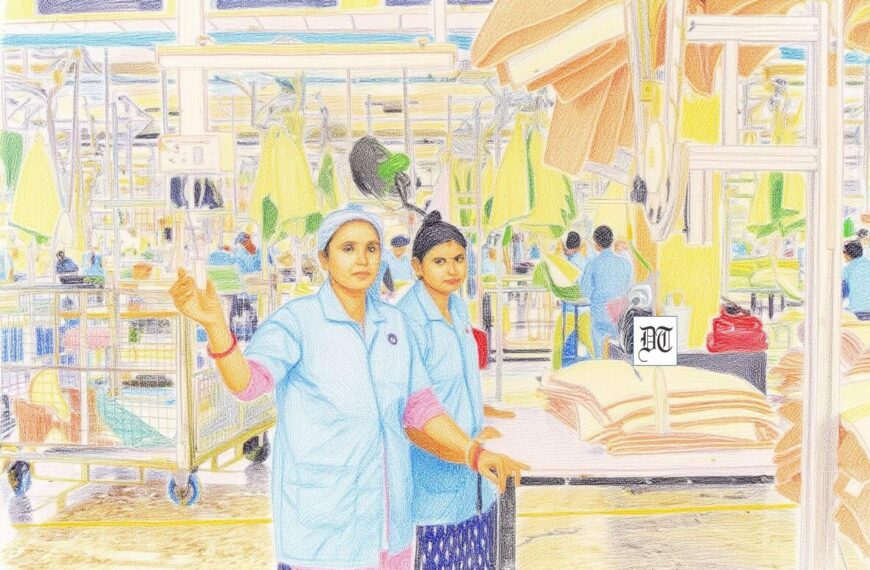
Picture design by Anumita Roy

Born in Shillong, Rita Biswas Pandey’s diverse career spans education and corporate life. A North Eastern Hill University graduate, she holds multiple certifications in social welfare and computer studies. Retiring from UPS to pursue her passion, now a Delhi resident, is a published author (Tinkonya, Yuddha and Kabita somogro ). She also enjoys singing, poetry recitation,sketches, cooking, photography, Blogging and vlogging, sharing her life with her husband, Vinod, and their beloved pet, Titu.


 By
By