
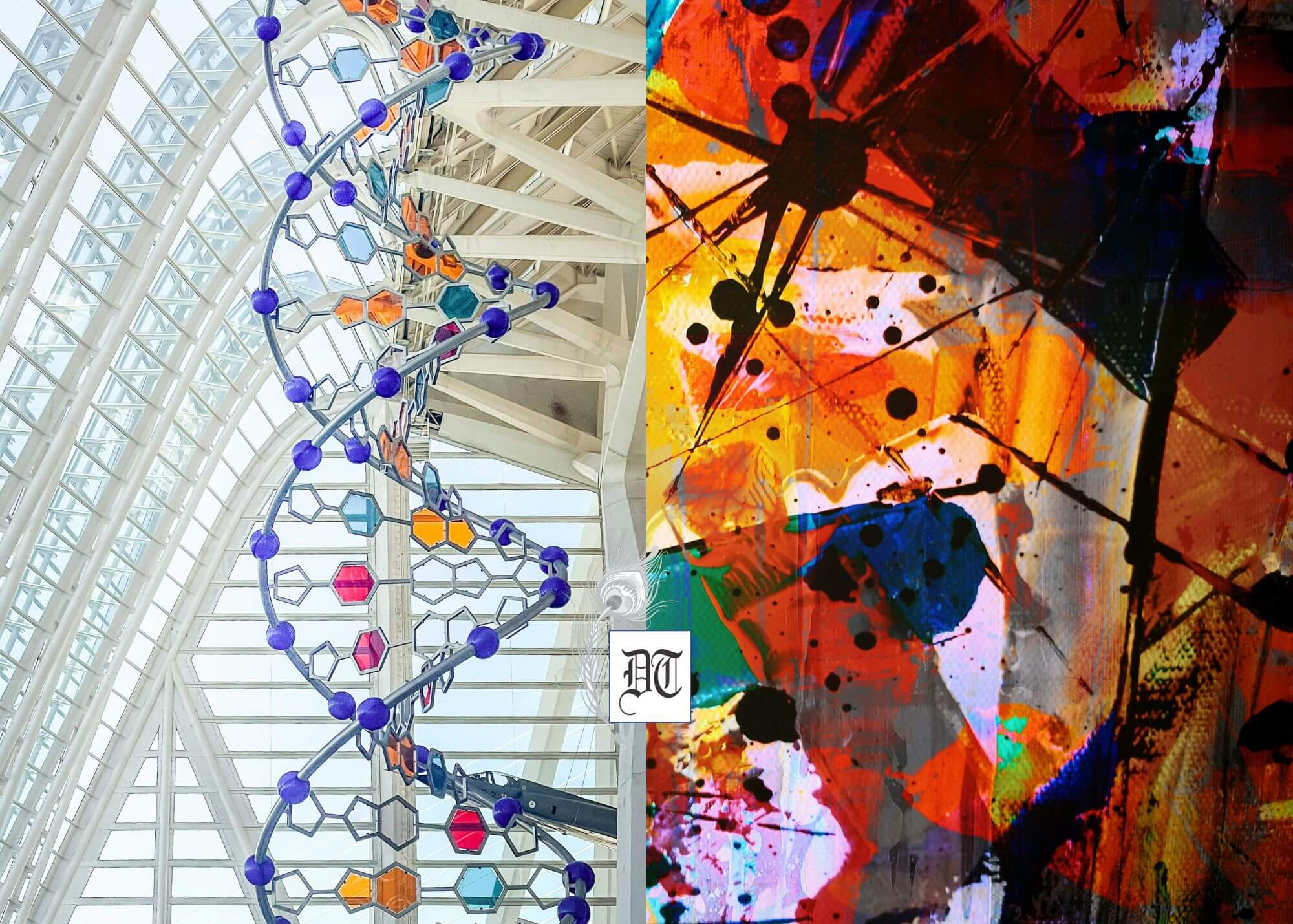
In this special feature, Monika explores the profound connection between science and art, where disciplined inquiry meets intuitive grace for a complete life, exclusively for Different Truths.
Science is the poetry of reality.
~Richard Dawkins
Human understanding rests on twin pillars: one that sharpens the mind and the other that nourishes the soul. Science, with its disciplined rigour, seeks to unveil the workings of the universe, while art, with its intuitive grace, expresses the essence of being. To live fully is to walk with both these truths: head help,d high in inquiry and heart open in wonder.
In ancient Indian thought, there was never a conflict between these realms. The Vedic sages saw no wall separating numbers from notes, or atoms from aesthetics. Knowledge – Vidya was always one river with many streams. Today, as the world attempts to bridge fragmented disciplines, that worldview feels not only wise but urgent.
1. The Guiding Light: Truth in Science
Science is a discipline of curiosity refined by method. It observes, hypothesises, tests, and revises. And yet, even as it maps the stars or splits the atom, its highest purpose lies not just in knowing but in understanding.
Galileo peered through his telescope and saw the moons of Jupiter. But it was not just astronomy he gifted the world; it was a sense of humility. “The book of nature”, he wrote, “is written in the language of mathematics.” What he didn’t say, but knew, was that mathematics, too, has its poetry.
Aryabhata, writing centuries before in Sanskrit verse, calculated planetary orbits and the Earth’s rotation with astonishing precision. Yet his treatise Aryabhatiya reads like a hymn to cosmic rhythm, not a cold ledger of facts. For him, science was sacred.
Sushruta, the ancient Indian surgeon, documented intricate surgical methods and anatomy. But his legacy is not just scalpels and sutures…it’s the spirit of healing grounded in balance. His teacher’s dictum still resonates: “The physician should be a scholar, an artist, and a philosopher.”
Marie Curie, equally, was a scientist of luminous discipline, but it was her courage and compassion that humanised radioactivity, using it to fight cancer and never losing sight of the lives behind the data.
2. The Heart’s Warmth: Truth in Art
Art does not seek to explain… it seeks to reveal. Where science defines the wave, art rides it. It articulates grief when words fail and joy when facts fall short. Van Gogh’s Starry Night isn’t astronomy, and yet it reveals more about our yearning gaze at the heavens than any textbook.
Similarly, Beethoven’s Ninth Symphony, composed in silence, is a universe of sound. It doesn’t tell us how life works, but why it’s worth living. As he conducted its premiere, completely deaf, one can only imagine the convergence of science (acoustics, composition) and soul.
Ancient India saw art not as luxury but as life itself. In the Natya Shastra, Bharata describes dance, music, and drama not merely as performance but as mirrors of cosmic principles. Angles in a dancer’s pose were as precise as geometry. Ragas in music aligned with the hour, season, or emotional state… a science of resonance wrapped in melody.
The murals of Ajanta weren’t just decorative. They were anatomical studies, spiritual meditations, and botanical catalogues all in one. To stand before them is to witness a culture that never carved a line without meaning.
3. The Symbiosis of Science and Art
Where science dissects, art dreams. But in truth, they are not opposing forces… they are co-creators of meaning. When united, they extend the frontier of human experience. In today’s world, where the challenges we face are as complex as climate change, mental health, or artificial intelligence, a siloed approach cannot suffice. We need the precision of science and the empathy of art.
Consider Leonardo da Vinci… not as a rare genius but as a luminous meeting point of inquiry and imagination. His anatomical drawings were not only biologically accurate but also breathtaking in their elegance. For him, the body was both a mechanism and a miracle.
Or take Einstein, who famously said, “The most beautiful experience we can have is the mysterious. It is the fundamental emotion which stands at the cradle of true art and true science.” His theories of relativity didn’t arise in a vacuum of equations. They were stirred by wonder, metaphor, and even music. His violin was as faithful a companion as his chalkboard.
In Indian tradition, the weaving together of scientific rigour and artistic spirit was never seen as exceptional; it was expected. The temple architects who designed structures that aligned with solstices and acoustics were not just artisans. They were astronomers. The craftsmen who built musical instruments considered not only wood and string, but vibration, healing, and the soul of sound.
Today, this integrated thinking returns in surprising ways: AI-generated art, data visualisations as storytelling, therapeutic uses of sound frequencies, and neuroscience unlocking how the brain responds to poetry. The lines blur and rightly so.
4. Towards a Unified Future
The future does not belong to the specialist alone. It belongs to the synthesist. The one who can thread the empirical with the intuitive. Education systems, too long divided into ‘STEM’ and ‘arts,’ are slowly remembering their common root: the human spirit in search of truth.
Let us imagine classrooms where equations are read alongside epics, where design is taught not just as function but as feeling. Let research labs hum with collaboration between scientists and storytellers, engineers and ethicists, painters and physicists.
As Rabindranath Tagore once wrote, “A mind all logic is like a knife all blade; it makes the hand bleed that uses it.” We must temper logic with lyric. And conversely, we must lend structure to vision, lest it dissipate.
Endnote: Living the Dual Truths
To harmonise science and art is not to dilute either but to dignify both. It is to realise that facts without feeling are hollow, and beauty without understanding is fleeting. In walking with both… one in each hand, we walk more fully toward truth.
Let us not ask whether we are artists or scientists. Let us ask: Are we awake? Awake to the rhythm in reason, the shape in sound, the order in chaos, the stillness in discovery.
In the grand design, it is not science or art that completes us… but their harmony that makes us whole.
“Art and science are branches of the same tree… all aspirations are directed toward ennobling man’s life, lifting it from the sphere of mere physical existence and leading the individual toward freedom.”
~ Albert Einstein
Picture design by Anumita Roy

Born in the breathtakingly beautiful vale of Kashmir, Monika had her schooling there. A postgraduate in Business Management, an academician by profession, she is an art history enthusiast, writes poetry, short stories and paints. An avid reader, mostly biographies and autobiographies. Giving wings to her imagination through beautiful colours and words, she sings and has a following on YouTube.
 By
By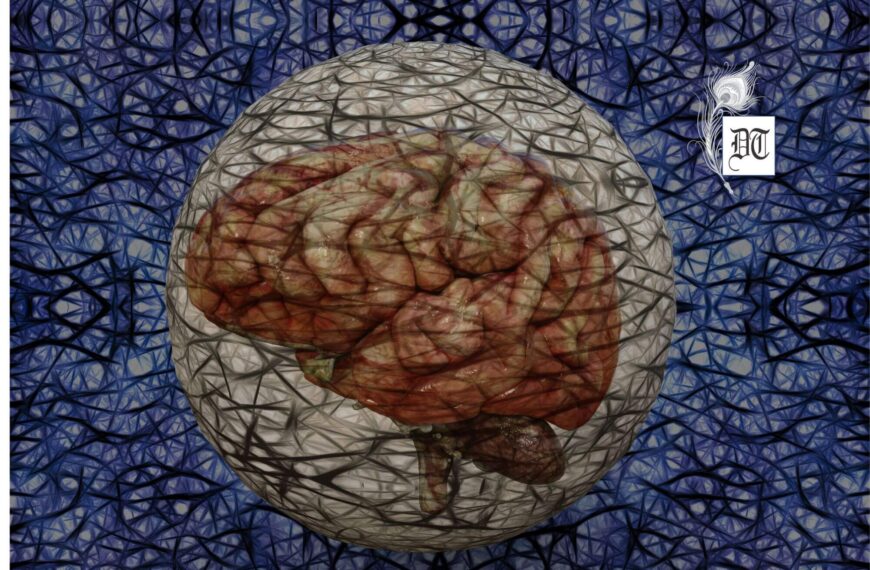
 By
By
 By
By
 By
By