

Tracing the traditions of Yoruba, Swati informs that twins are very important for the Yoruba – exclusively for Different Truths.
Ọgbọ́n ju agbára lọ
“Wisdom is better than strength.” ~ A famous Yoruba proverb.
From an extensive geographical and historical work, Capt. Clapperton (Travels and Discoveries in Northern and Central Africa, 1822—1824) made a copious extract, from which the following is taken: “Yarba (his term for Yoruba land) is an extensive province containing rivers, forests, sands and mountains, as also a great many wonderful and extraordinary things. The talking green bird called babaga (parrot) is found in it. By the side of this province, there is an anchorage or harbour for the ships of the Christians, who used to go there and purchase enslaved people. These slaves were exported from our country and sold to the people of Yarba, who resold them to the Christians.”
The Oyo empire surpassed Ile Ife as the dominant Yoruba military and political power in the 11th century. This Empire, under its oba (Chief), known as the Alaafin of Oyo, was active in the African slave trade during the 18th century. The Yoruba often demanded slaves as a tribute to subject populations, which sometimes made war on other peoples to capture the required slaves. Part of the slaves sold by the Oyo Empire entered the Atlantic slave trade.
Yoruba settlements are often described as primarily one or more of the main social groupings called ‘generations‘.
Yoruba settlements are often described as primarily one or more of the main social groupings called ‘generations’. The ‘first generation’ includes towns and cities known as the original capitals of founding Yoruba kingdoms or states. The ‘second generation’ consists of settlements created by conquest. The ‘third generation’ consists of villages and municipalities that emerged following the internecine wars of the 19th century.

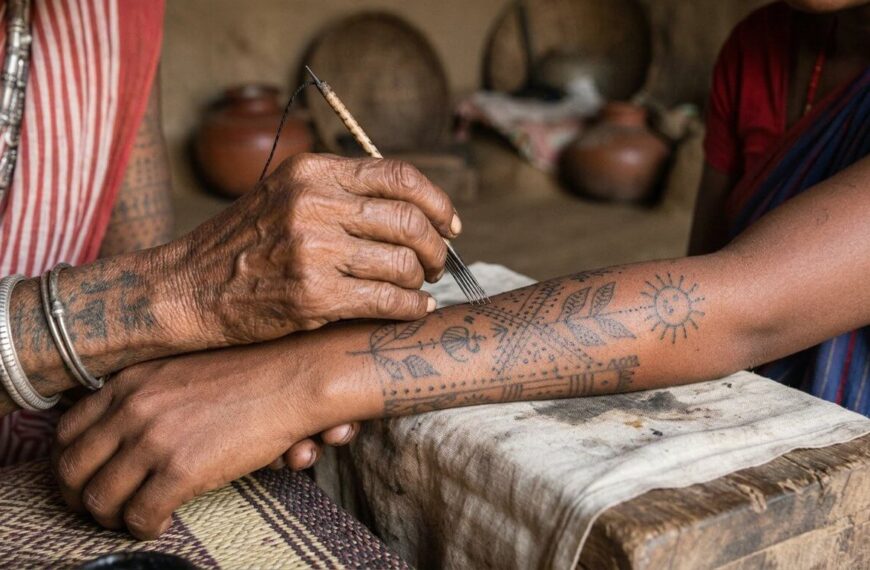
It may be noted that every child born to a reigning Royal must have an Oyo facial mark, and that is so to this day. According to the traditions, every child in Yoruba land is born into a patrilineal clan. This clan shares marks or ‘ila‘, the family name ‘oriki‘, taboos and poetry. Tribal marks mean different things and serve different purposes among the various tribes and families. Some facial marks can be identified as part of religious practices. In some parts of Yoruba land, tribal marks on the face are believed to grant spiritual power to children, protect a child from evil spirits and stop death from taking the child at a very young age.
The Yoruba present the highest dizygotic twinning rate in the world (4.4% of all maternities), possibly because of high consumption of a specific type of yam containing a natural phytoestrogen that may stimulate the ovaries to release an egg from each side.
Twins are very important for the Yoruba; they usually tend to give special names to each twin.
Twins are very important for the Yoruba; they usually tend to give special names to each twin. The first of the twins to be born is traditionally named Taiyewo or Tayewo, which means ‘the first to taste the world’ or the ‘slave to the second twin’; this is often shortened to Taiwo, Taiye or Taye. Kehinde is the name of the last-born twin. Kehinde, sometimes referred to as Kehindegbegbon, means ‘the child that came behind gets the rights of the elder’.
Twins are perceived as having spiritual advantages or as possessing magical powers.
In my next article, I will touch more on their art, craft, and the tradition of Masquerade.
Ẹni tó ńbẹ̀rù àti ṣubú, àti dìde á nira fún un (Whoever is scared of falling will find it hard to rise).
Picture design Anumita Roy

International author, corporate trainer, columnist, blogger, public speaker and a sociologist — Swati Kumar is certified by MIT. She is an avid reader, dynamic storyteller, passionate writer, and concerned sociologist. With a master’s degree in Sociology and a Gold Medal at that, she has engaged various learning platforms, business houses and organisations in developing their human resource assets. She believes transformation is possible if we co-create a just, inclusive, and progressive society.


 By
 By
 By

Enjoyed it and look forward to more.
Enjoyed n enriched with the information given . Looking forward for the next one.