


This article is written with the intention to generate support for the candidacy for Bharat Ratna award for Jaishankar Prasad, a Hindi language legend, simultaneously spreading awareness about his contribution to Hindi literature. A community called, ‘Bharat Ratna for Jaishankar Prasad’ has started a campaign for Bharat Ratna award in Varanasi on 30th August 2017. Amit advocates the cause, exclusively in Different Truths.
Contribution to the Hindi Language
Jaishankar Prasad (30 January 1890 – 15 November 1937) is one of the most famous figures in modern Hindi literature as well as Hindi theatre. As an author of a classic epic of the human  psyche, his magnum opus Kamayani, Prasad had acquired early eminence. But later his multifaceted personality burgeoned in his contribution to diverse fields of literature in spite of countless storms of personal tragedies, and national social and political upheavals. By temperament a reformer and humanitarian, through his devotion to literature he became a lyric poet, a dramatist, a story writer, and essayist. Thus, Prasad emerged as a literary genius. It would be no exaggeration if we rank him with such literary stalwarts as Kalidas, Tulsidas, Shakespeare, Dante, and Goethe in view of his vision and aesthetic consciousness (Dimitrova 2004, p.15)
Prasad propagated ‘Chhayavad’ a literary trend in Hindi literature. It is romanticism with a spiritual base and universalism, which touches every core of humanitarianism. Prasad’s most famous dramas include Skandagupta, Chandragu

Regarding his influence in Indian literature, the late scholar David Rubin writes in The Return of Sarasvati (Oxford, 1993), “To Jayshankar Prasad belongs the credit of making the first successful leap forward in the development of a genuine poetic art in khari boli Hindi and giving it, in Amsu, its first masterpiece.”
 He is considered one of the Four Pillars (Char Stambh) of Romanticism in Hindi Literature (Chhayavad), along with Sumitranandan Pant, Mahadevi Verma, and Suryakant Tripathi ‘Nirala’. His vocabulary avoids the Persian element of Hindi and mainly consists of Sanskrit (tatsama) words and words derived from Sanskrit (tadbhava words) – some of them made really exquisitely by himself. By this means, he arrives at a sophisticated diction that was typical for Hindi Romanticism of the 1920s and 30s.
Dramas and Other Writings
His dramas are considered to be most pioneering ones in Hindi. The majority of them revolve around historical stories of Ancient India. Some of them were also based on mythological plots. In the 1960s, Shanta Gandhi Professor of Ancient Indian Drama at while at National School of Drama, revived interest in Jaishankar Prasad’s plays for modern Indian theatre, by successfully staging his most  important play Skanda Gupta written in 1928, with little changes to the original script, thus quashing doubts over its stability.
He wrote short stories as well. The subjects were mixed – ranging from historical and mythological to contemporary and social. Mamta (motherly love) is a famous short-story based on an incident where a Mughal Badshah gets refuge in a Hindu widow’s home whose father was killed by Badshah’s army. Another one of his well-known short-stories called chhota  jadugar (little magician) portrays the life of a child who learns to earn his own living by performing small skits with his dolls on streets.
Needless to say, Jaishankar Prasad’s contribution to the Hindi language is immense and his impression on the Hindi language is indomitable, thus, he truly deserves the Bharat Ratna – a long overdue recognition to this literary legend.
(With inputs from community for Bharat Ratna for Jaishankar Prasad, Varanasi)
Reference:
https://en.wikipedia.org/wiki/
©Amit Singh
Photos from the Internet
#JaisankarPrasad #ChhayavaadPoet #PoetOfIndia #HindiPoet #BharatRatna #Kamyani #CoverStory #DifferentStories

Amit Singh is a human security and social justice expert. He is a doctoral candidate at University of Coimbra, Portugal; hold master degrees in history, human rights, and multiculturalism. He is a columnist for several newspapers in Norway and India.
 By
By
 By
By
 By
By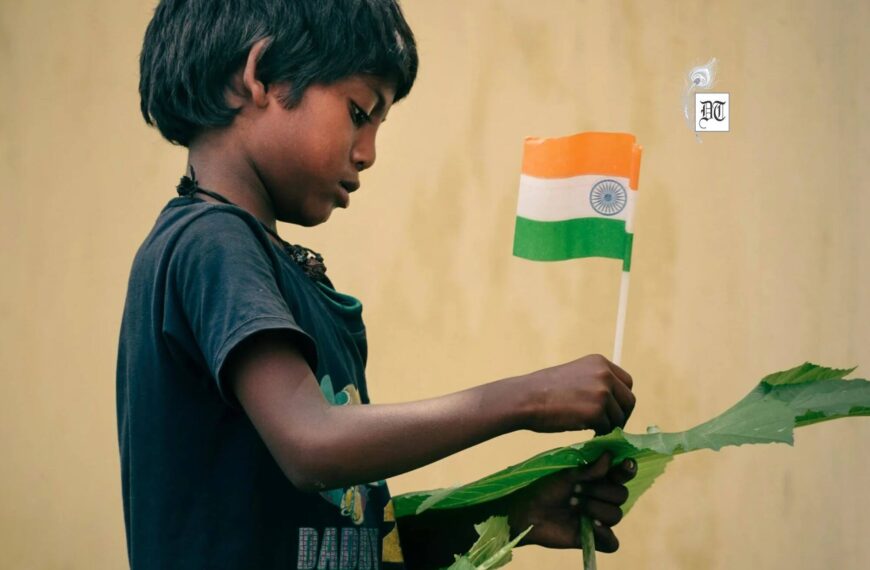
 By
By