Dr Madhumita explores Maya Sharma’s groundbreaking book for DifferentTruths.com, documenting the resilient lives of queer women in unprivileged North India.
AI Summary
- Challenging Myths: Debunks the “Western import” myth by documenting same-sex bonds within marginalised, rural, and working-class Indian communities.
- Social Realities: Details how poverty, caste, and patriarchy force queer women to negotiate their identities through “friendships” or forced marriages.
- Resilient Narratives: Showcases ten raw life stories of survival, highlighting the systemic erasure and the courageous persistence of grassroots queer love.
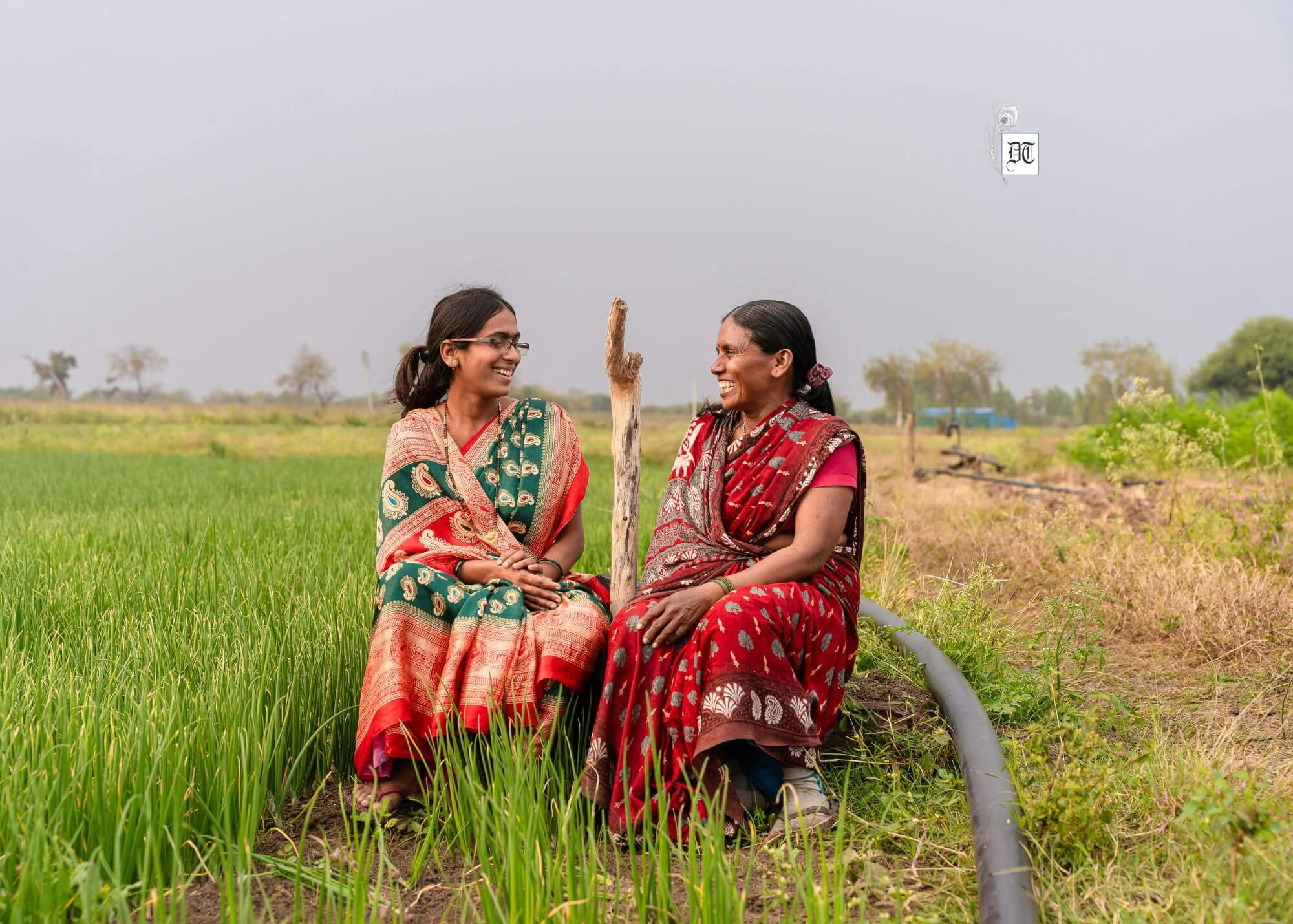
The book Loving Women: Being Lesbian in Unprivileged India (2006) by Maya Sharma presents a powerful and rare documentation of the lives of queer women belonging to marginalised and working-class communities in North India. Through ten life narratives, the book challenges the common misconception that homosexuality or lesbian relationships are merely a product of Western influence or an urban, elite phenomenon. Instead, it reveals that same-sex relationships and emotional bonds between women exist deeply within the social fabric of Indian society, even among those who lack social privilege, education, or urban exposure.
Maya Sharma’s work is based on interviews and personal interactions with women whose lives have largely remained invisible in mainstream discussions about sexuality. The author and her team undertook a difficult journey to document these stories because many of the women and their families initially denied or concealed such relationships due to social stigma and fear. Society often dismisses these relationships as “female friendship”, which reflects a cultural tendency to hide or reinterpret same-sex love in acceptable social terms. Despite these challenges, the book attempts to record these narratives faithfully to present an authentic picture of the lived realities of queer women.
The first life story discussed in the book is that of Guddi and Aasu, two women who loved each other deeply and wished to live together. Guddi’s family believed that her close relationship with Aasu was the reason for her “unusual behaviour”. Hoping that marriage would change her, Guddi’s mother arranged her marriage to a man. However, Guddi could not adapt to this forced relationship and soon returned to her mother’s home. Despite facing ridicule and harassment from neighbours and relatives, Guddi and Aasu continued to meet and maintain their relationship. Eventually, Guddi’s mother arranged Guddi’s husband’s marriage with Guddi’s younger sister, allowing Guddi to quietly live with Aasu away from public scrutiny. Their story reflects the pressures imposed by society and family structures, yet it also highlights resilience and the determination to pursue emotional truth.
Another striking narrative is that of Rekha and Dolly. In 2001, the two women fled from their homes in Indore and reached Dahod in Gujarat, where they attempted to marry each other. They later moved to Punjab and took shelter in a religious community known as the Radha-Swami Satsang. However, after their families filed police complaints, the authorities traced them and returned them to their respective families. This story illustrates how legal systems and social institutions often reinforce heteronormative expectations, leaving little space for women who wish to choose their own partners.
The third biography introduces Vimlesh, a person assigned female at birth but who identifies as male and prefers masculine clothing and behaviour. Growing up in a Brahmin family, Vimlesh struggled with social acceptance because of her gender identity. Despite facing marginalisation, Vimlesh also held certain caste prejudices, reflecting the complexity of social identities in India. Vimlesh openly expressed attraction toward women and desired to transform her body to match a male identity. Although Vimlesh experienced love relationships, family pressure forced the partners into conventional marriages, demonstrating how social expectations often destroy personal choices.
The book also recounts the story of two teenagers, Menaka and Payal, who ran away from their homes in Alwar to live together in Ajmer. When the police intervened and investigations began, Menaka eventually denied the relationship, perhaps due to fear or pressure. Payal, however, openly admitted their love. This narrative highlights how societal pressure can silence individuals, forcing them to deny their own experiences in order to avoid punishment or shame.
Another narrative focuses on Manjula and Meeta, who worked together in a Home Guard unit. People in their surroundings perceived them as a “husband-wife pair”. Both women were previously married but separated from their husbands. Meeta had a masculine appearance and behaviour, while Manjula was quieter and more reserved. Although their relationship carried emotional intimacy, Meeta often described it as merely friendship, perhaps to protect themselves from social judgement. Over time, conflicts emerged between them, and the author notes that it remained unclear whether they reunited. Their story demonstrates how relationships often remain undefined and concealed in order to survive within restrictive social environments.
Sheila’s story presents another dimension of queer identity. Born as Anuradha, she later changed her name to Sheila and adopted a masculine style of clothing and behaviour. From childhood, she felt attracted to women but lacked the language to describe her feelings. Sheila had relationships with several women but avoided long-term commitments, expressing a strong desire for independence and personal freedom. Her narrative reveals how identity formation often occurs without guidance, vocabulary, or support structures.
The story of Sabo and Razia illustrates how emotional intimacy can develop within the framework of ordinary domestic life. Both women were married and had children, yet they formed a deep emotional and physical bond with each other. Before meeting activists or researchers, they were unaware of terms like “lesbian” or “same-sex relationship”. For them, the relationship simply meant companionship and emotional support in lives otherwise marked by exploitation and hardship. Sabo explains that her marriage was imposed upon her, while the bond with Razia emerged naturally. Their story highlights how love and solidarity can arise even in restrictive circumstances.
Another biography tells the story of Mary, a tribal Christian woman with five children. After her husband’s death, she joined a women’s collective where she met another woman with whom she developed a close relationship. They shared daily life, emotions, and struggles. However, the group disapproved of their closeness, insisting that only male-female relationships were legitimate. Eventually, social pressure forced them apart. This narrative reveals how community norms often regulate women’s relationships and suppress unconventional bonds.
Juhi’s life story presents a long and complex journey of love, loss, and survival. She initially fell in love with a woman named Lucy during her school years. Later, Lucy formed another relationship, leaving Juhi heartbroken. When Juhi fell in love again, her partner’s family arranged her marriage with a man, ending that relationship as well. Eventually, Juhi herself married a man under social pressure but endured domestic violence throughout the marriage. After years of suffering, she separated from her husband and chose to live independently with her daughters.
The final biography describes the emotional bond between Hasina Bano and Fatima. Their relationship is marked by affection, attachment, and mutual dependence, yet it remains partially concealed. Hasina repeatedly expresses the need to follow traditional social structures because breaking them could bring severe consequences. Her story reflects the constant negotiation between personal desire and social survival.
Taken together, these ten life narratives present a powerful portrait of queer women navigating love, identity, and survival in a society that often refuses to acknowledge their existence. Maya Sharma’s work is significant because it shifts the conversation about sexuality away from elite, urban contexts and highlights voices from marginalised communities. These stories reveal that same-sex relationships are not foreign imports but lived realities embedded within everyday life. The book ultimately urges readers to reconsider social assumptions and recognise the diversity of human relationships that exist within Indian society.
Picture design by Anumita Roy

Dr Madhumita Ojha, a Hindi literature scholar, specialises in folk literature, cultural studies, gender, and marginalised narratives. She earned an MA and PhD in Hindi from Presidency University, plus a BEd from Mahatma Gandhi International Hindi University, Wardha. Author of Folk Literature and Culture, she has published extensively on Kinnar narratives, LGBTQ representation, women’s studies, and Dalit literature. She serves as a guest lecturer at the Hindi University, Howrah, Kolkata.