
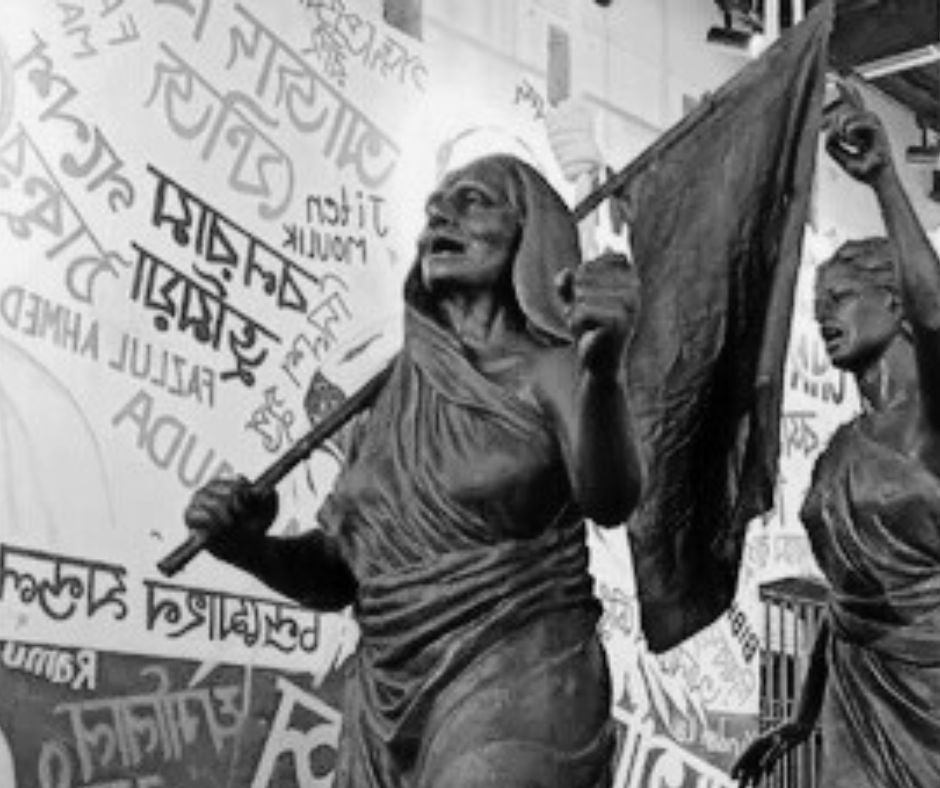
Rita profiles the heroic legacy of Matangini Hazra, the “Gandhi Buri” who defied British bullets to safeguard India’s freedom and flag, for Different Truths.

History often remembers the names of elite leaders and strategists, but the soul of India’s freedom struggle lived in the unwavering courage of its common folk. Among them, the story of Matangini Hazra, affectionately known as ‘Gandhi Buri’, stands as a monumental testament to sacrifice and patriotic fervour. Her journey from a poverty-stricken widow to a legendary martyr is a testament to her iron will, which continues to inspire generations.
Early Life: A Crucible of Hardship
Born in Hogla village near Tamluk, Matangini’s early life was marked by extreme adversity. Married at the tender age of twelve to a sixty-year-old widower, she was widowed by eighteen. Destitute and childless, she faced social marginalisation, yet her spirit remained unbroken. She sustained herself through manual labour, but her heart was destined for a much larger cause—the service of her motherland.
The Awakening: From Service to Sedition
Influenced by the teachings of Swami Vivekananda and the charisma of Mahatma Gandhi, Matangini found her life’s purpose in the Indian National Congress. She didn’t just follow the movement; she lived it. Whether it was the Salt Satyagraha, the non-payment of taxes, or facing the brutal batons of the British police, the septuagenarian woman was always at the forefront. Her fearlessness earned her several prison sentences, which she accepted with a smile, famously stating that there was no greater glory than suffering for one’s country.
The Supreme Sacrifice
The pinnacle of her bravery was witnessed during the Quit India Movement. On September 29, 1942, a massive procession marched toward the Tamluk police station to uproot British authority. When the police opened fire, and the crowd began to falter, it was the 73-year-old Matangini who stepped forward, clutching the Tricolour.
The scene remains etched in the annals of history
A bullet pierced her left arm, but the flag did not touch the ground.
A second bullet hit her right arm, yet she stood firm, chanting ‘Vande Mataram’.
Finally, under the cold-blooded orders of the British officials, a bullet was fired into her forehead.
As she collapsed into the lap of the earth, her blood stained the soil, but her grip on the flag remained tight until her last breath. She died as she lived—a fearless soldier of freedom.
Legacy of the ‘Gandhi Buri’
Matangini Hazra was not just a follower of non-violence; she was a revolutionary of action. Her martyrdom on that fateful day was accompanied by the sacrifice of twelve other patriots, including young souls like Lakshminarayan Das.
Today, she remains a symbol of the fact that age and education are no barriers to greatness. Her life reminds us that true revolution is born in the hearts of those who have nothing to lose but their chains. Matangini Hazra did not just witness the birth of a nation; she watered its roots with her own blood, ensuring that India’s future would be written in the ink of liberty.
Picture of a sculpture of Matangini Hazra

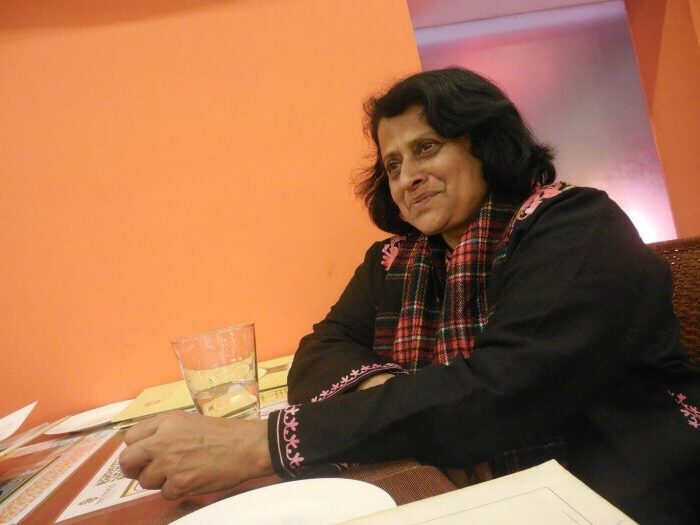
Born in Shillong, Rita Biswas Pandey’s diverse career spans education and corporate life. A North Eastern Hill University graduate, she holds multiple certifications in social welfare and computer studies. Retiring from UPS to pursue her passion, now a Delhi resident, is a published author (Tinkonya, Yuddha and Kabita somogro ). She also enjoys singing, poetry recitation,sketches, cooking, photography, Blogging and vlogging, sharing her life with her husband, Vinod, and their beloved pet, Titu.

 By
By
 By
By
 By
By
 By
By