
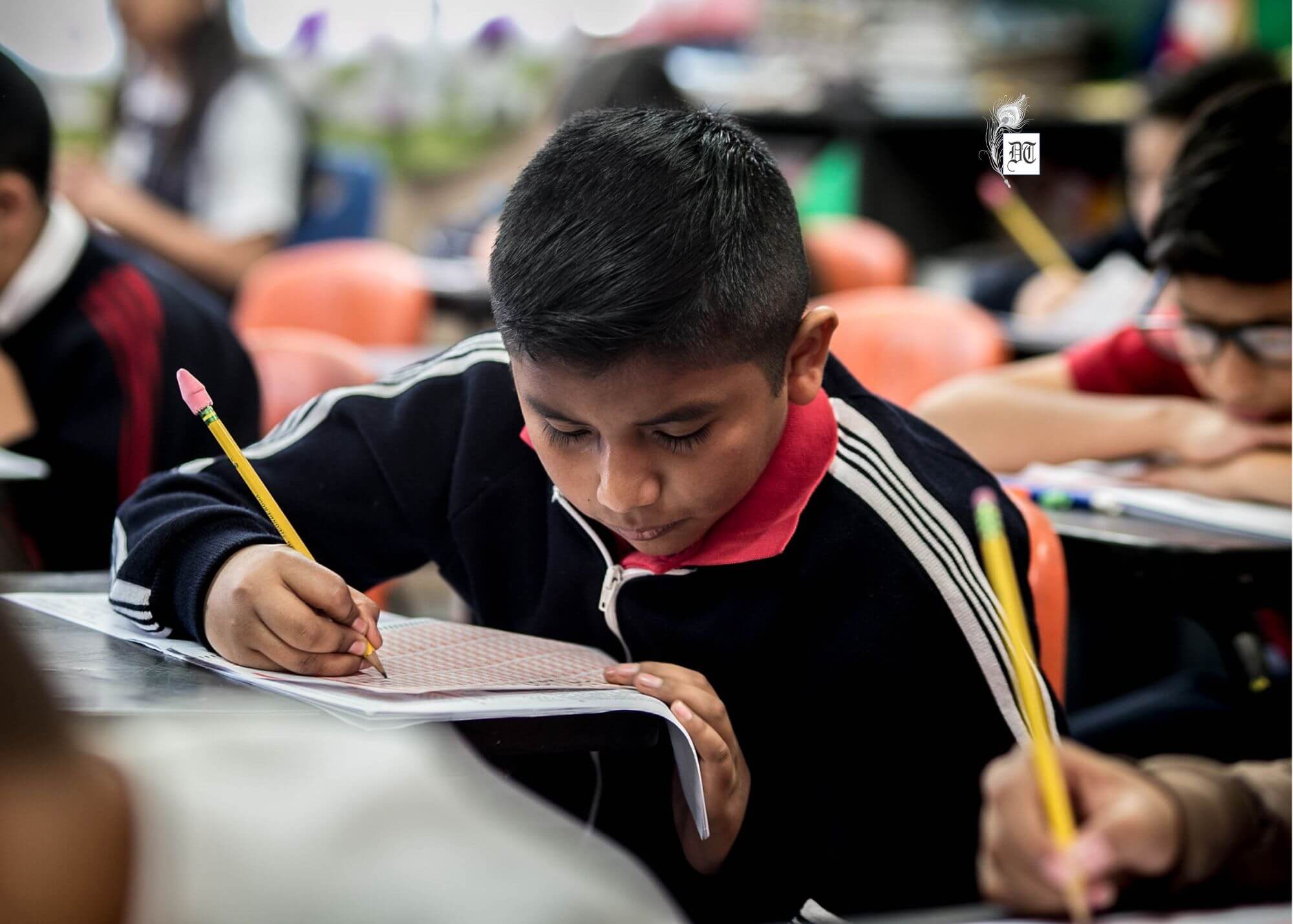

Shivangi on DifferentTruths.com exposes India’s toxic 99 per cent topper culture, urging a shift from marks to real-world skills like China’s bottle-rocket innovators.
AI Summary:
· India’s board results spark topper worship, sidelining 70-80% scorers and fuelling coaching ads, while ignoring practical skills amid a shifting job market.
· Contrast: Chinese kids build water-powered rockets in class, applying physics hands-on, unlike India’s rote memorisation focus.
· Call to action: Ditch “90% propaganda” for project-based learning, reviving Nalanda-like wisdom to build employable talent.
As summer arrives in India, a familiar and stressful ritual begins: the release of 10th and 12th board results. Instantly, our newspapers are filled with photos of “toppers” who scored a near-perfect 99%. Coaching centres spend crores on ads, using these children’s faces as trophies to attract more business.
But behind these celebrations lies a sad truth. In India, if you don’t get 90%, you are often seen as a failure. Students who score 70% or 80%, who might be brilliant in other ways, are pushed into the shadows. We have become a nation obsessed with “fancy numbers” on a piece of paper, while ignoring whether our students actually know how to apply what they learn.
The Lesson from a Plastic Bottle
While our students are busy memorising the definition of gravity to pass a test, children in other parts of the world are seeing gravity in action. A recent story from China went viral, showing primary school students building and launching a two-stage rocket made from plastic soda bottles. [1]
Using just water, air pressure, and basic physics, these young kids managed to make a rocket that separated in mid-air, a complex task usually left to real space scientists. As reported by the Times of India, this wasn’t a special project for geniuses; it was a normal classroom activity. In China, the focus is shifting to “doing”, while in India, we are still stuck on “reciting”. They are building machines; we are just building marksheets.
The ‘90 Per cent’ Propaganda
For many schools and institutes, a student is no longer a learner; they are a walking billboard. By focusing only on the few who get top marks, these schools create a “topper culture” that acts as free advertising. This system turns schools into factories that produce “high-scorers” who often have no real-world skills.
By 2026, the job market will be changing fast. Employers today care more about what you can do than what you scored. A degree shows you passed a test, but a project shows you can solve a problem. Yet, our education system remains stuck, using board marks to keep a broken system running.
Losing Our History
It is ironic that India, once home to great learning centres like Nalanda and Takshashila, is now trapped in a race for degrees. Our ancient Gurukuls taught students how to think and master crafts, not just memorise facts. Today, we have traded deep wisdom for a digital marksheet that loses its value within a few years.
The Way Forward
The truth is that 10th and 12th-grade marks are becoming less relevant every day. To compete globally, India must break the wall between “book learning” and “practical doing”.
We need to ask ourselves: do we want a generation that can define a rocket in an essay or one that can actually build one out of a plastic bottle? If we keep rewarding the “90% club” while ignoring practical talent, we will produce a nation of “toppers” who are unemployable in the real world.
It’s time to stop chasing fancy numbers and start chasing real knowledge.
Picture design by Anumita Roy
[1] https://timesofindia.indiatimes.com/world/china/rocket-made-from-cola-bottles-chinese-students-genius-launch-wins-the-internet-watch/articleshow/122795769.cms#:~:text=A%20parachute%20then%20deployed%2C%20allowing,comments%20with%20praise%20and%20introspection.

Shivangi Khare is a Silver Medallist in Public Administration and a dedicated researcher at the intersection of governance and social impact. With legislative experience in the Office of a Member of Parliament and a leadership background in institutional reform, she has authored recognised research in public management. Currently, Shivangi leads social welfare initiatives focused on women and child development, blending academic rigour with a profound commitment to creating measurable change in India’s developmental landscape.


 By
By

 By
By
 By
By