


“Saturday morning, is that clear?” Ma’s voice sliced right through my intense focus. I was under my desk, trying to untangle a chaotic knot of cables that looked like a spider had a nervous breakdown. I had landed from the US 2 days back and was trying to set up my laptop and the various other components.
I attempted a quick tactical retreat and slammed the top of my skull directly into the wooden underside of the table. A string of fabulously colorful expletives poured out of my mouth like liquid lava. Just in time, I locked eyes with my birth-giver standing at the bedroom door. Her eyes had widened to the size of two full-grown watermelons.
“Ehh, what did you say, Ma?” slipped out as an angelic, polite reply, completely betraying my throbbing skull. There are moments when your brain and your mouth operate on entirely different planets. I swear upon every single God and Goddess in Bengal and the neighboring states that this was one of those moments.
“I said we are going to the municipal market on Saturday morning. Is that okay with you?” She enunciated every syllable as if she were explaining quantum physics to a toddler.
Rubbing the fresh bump on my head, I just nodded. I had no clue if I had actually volunteered for this market expedition or if I had been drafted into it against my will. Half of my brain was still stuck under the desk, admiring the black, stringy modern art installation made of charging cords.
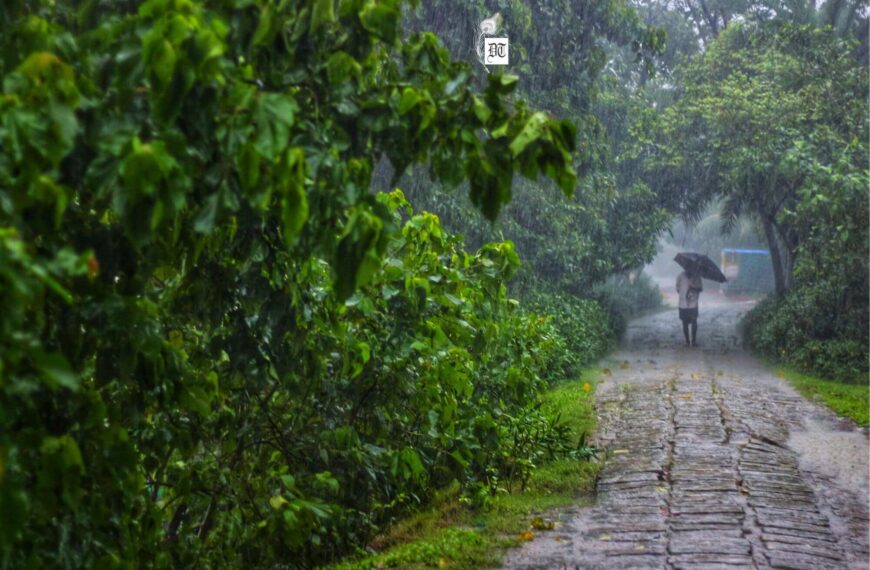
Saturday arrived with dramatic thunder and a torrential downpour, only for the rain to vanish the exact second it was time to leave. The Gods are clearly on Ma’s payroll, I grumbled, aggressively brushing my teeth.
A cup of chai served as my pre-workout fuel. I threw on a pair of capris, a cotton T-shirt, and my most aerodynamic rubber slippers, arming myself with a small mountain of empty bags.
It would be absolute sacrilege not to explain the bag hierarchy. Every Bengali household operates on a strict segregation policy: separate bags for produce, meat, poultry, eggs, and—the undisputed celebrity of the ensemble—the fish bag.
The fish bag is a feat of engineering. It requires a double-layered setup where one bag nestles securely inside the other. Make no mistake: the inner layer must be non-porous to contain the ocean, while the outer layer must be breathable. The materials are non-negotiable, though the exact technique for looping the straps is a matter of fierce personal artistry. I had zero formal training in this, yet I was ready to embrace the chaos.
Ma prefers to walk to the market from the apartment gates. The trek began, and my body was instantly thrown into an unannounced game of Dodge the Pothole and Incoming Traffic.
Puddles the size of small lakes materialized out of nowhere. As I gracefully leaped over one, I nearly stepped straight into the path of a speeding autorickshaw. The driver leaned dangerously out the side, unleashing a symphony of the most poetic Bengali galagali (curse words) I had ever heard.
I was so mesmerized by his rich vocabulary that I froze in the middle of the road, staring after the three-wheeler in pure admiration. My trance was shattered by a kaku (uncle) aggressively ringing his bell on a bicycle loaded to the brim with groceries.
“What are you doing standing in the middle of the road? Do you have a death wish?!”
Before I could answer, Ma’s hand shot out like a cobra and yanked me back onto the pavement.
We resumed our majestic hop, skip, jump, and sway toward the municipal market. Part one of my adventure was off to a roaring start.
Sadly, the Gods above were not done messing with me.
“Watch your step,” was the only warning Ma gave before the gates of sensory overload swung wide open.
Endless rows of vendors displaying vibrant produce and leafy greens immediately hijacked my senses. I fell madly in love with every shape and color on display, staring at the vegetables like a lovestruck puppy ready to adopt the entire aisle.
Ma jabbed an elbow into my ribs. “Close your mouth, unless you want the local flies and mosquitoes to set up a housing colony in there.”
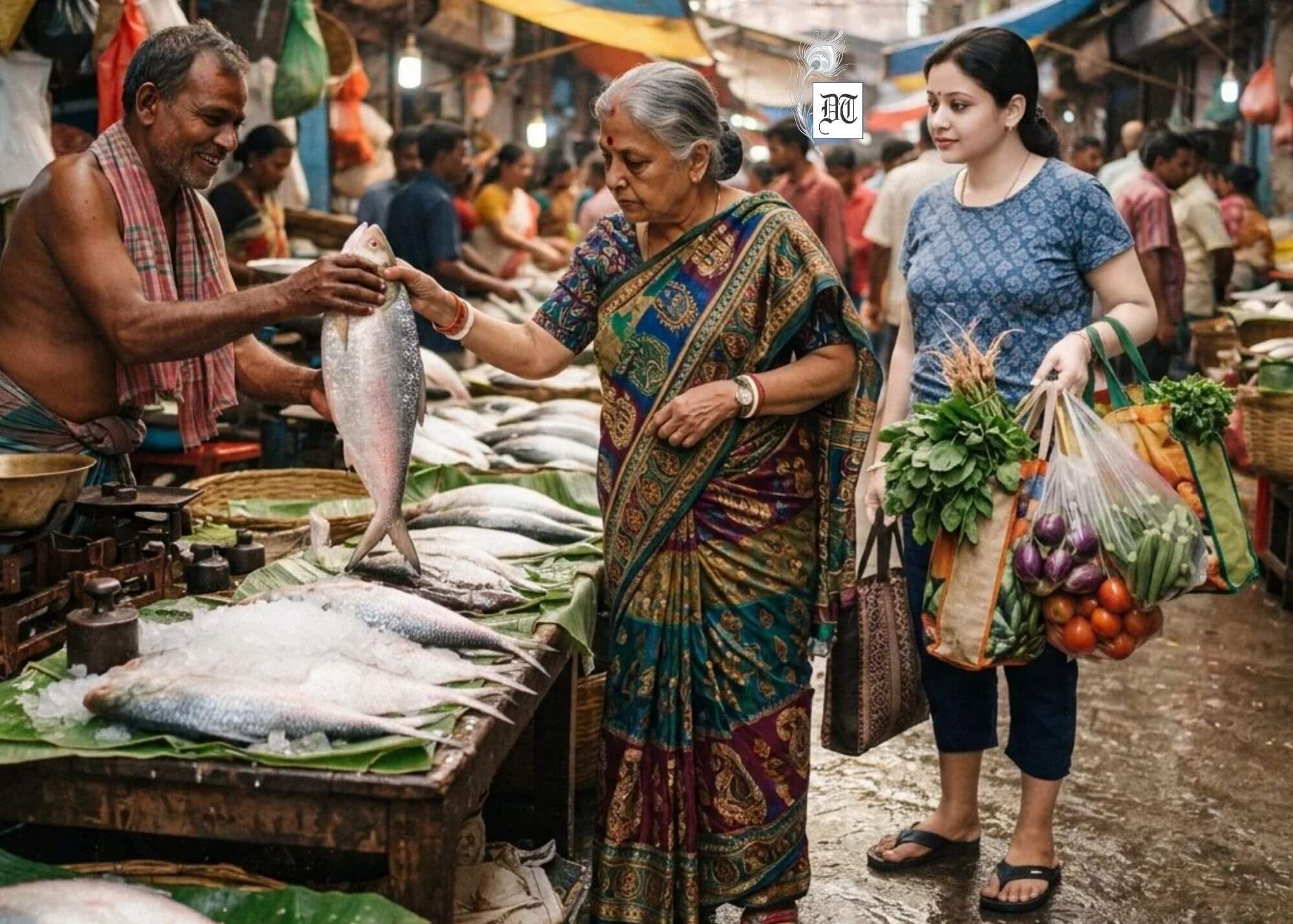
After stuffing laal shaag (red amaranth), begun (eggplant), potol (pointed gourd), kumro (pumpkin), and jhinge (ridge gourd) into their designated fabric homes, I waddled over to the main event: the fish section.
Oh, sweet heavens. The dormant Bengali gene inside me suddenly woke up and chose violence. I had arrived in fish heaven.
Ilish, Katla, Rui, Chingri, Pomfret, Magur, Bhetki, Pabda, Parshe—the glorious lineup stretched on into eternity.
“Ma, let’s get this one, and that one, and that one over there too!” I pleaded, practically vibrating with excitement.
Ma shook her head, muttering, “Here goes the resident alley cat.”
She stepped up to the counter and began her forensic investigation, poking and prodding the fish with the intensity of a detective at a crime scene.
Remembering her strict rule against voicing doubts in front of the vendors, I twisted my face into a series of dramatic, silent question marks, trying to telepathically ask why she kept rejecting perfectly good fish.
“Tui bujhbina (you wouldn’t understand),” was the only dismissal I got.
Once she finally selected the chosen ones, she barked out hyper-specific instructions regarding slice thickness and geometry.
I stood transfixed as the fishmonger went to work. He was scaling, chopping, and hacking away on a massive boti—a curved blade fixed to a wooden base that looked like a weapon stolen straight from the set of Baahubali. Squatting over his wooden throne, the vendor sliced through the fish with such rhythmic, effortless grace that I briefly envisioned him bathed in a golden
cinematic spotlight.
“Omni ha kore ki dekhchis (why are you gaping like a statue)? Put the fish in the bag!” Ma snapped.
It was my moment to shine. I stepped up with the legendary fish bag. The mission was simple: pull the inner bag slightly out of the outer one, slide the fish packet inside, and escape without a single drop of fish juice touching my skin.
Easier said than done.
My fingers brushed directly against the slimy, wet plastic. My soul briefly left my body as I grimaced in horror.
Before I could panic, Ma whipped a wet wipe out of her purse like a gunslinger in a Western movie and handed it to me. My mother is a flawless human being. Thank you, universe, for a woman who comes prepared for every possible biohazard.
I thought the ordeal was over. I was wrong.
Apparently, potatoes, onions, garlic, and ginger require their own VIP vendor. Oh, the sheer volume of adult knowledge I was absorbing! Naturally, there was a separate, strictly enforced bag just for alu and piyaj (potatoes and onions).
With my arms and shoulders now sagging under the weight of roughly forty-seven bags of varying shapes and gravitational pulls, I shot Ma a desperate look, silently begging for the sweet release of going home.
Instead, she tottered cheerfully into the deepest maze of the market, straight toward the flower stall.
The flower vendor lit up like a Diwali lamp, and the two of them began chatting like long-lost siblings reuniting after a decade. And no, the flowers were not allowed to mingle with the peasants in my bags.
They were royalty; they got to ride in their own pristine plastic bag, carried exclusively by Ma.
Finally, Ma turned around, took one good look at my sweaty, tomato-red face, and sighed. “I think we need to take a rickshaw home. You look like you’re about to pass out.”
I offered a weak, delirious smile and nodded with the last two percent of my battery life.
Surviving the ride home on a slippery, sloping three-wheeler seat while clutching fifty pounds of raw seafood is a tragedy for another day.
For now, I bow down in absolute respect to every bazaar-braving warrior across India.
Picture design by AI

Anumita Roy is an artist at heart and legal/medical interpreter by profession. She creates word images in her verses and loves to write short stories. Mother of children in the spectrum, she advocates special needs issues in whichever way possible. Born in India, brought up in several countries, makes her a true global citizen. She now lives in the Columbus, Ohio, with her family and follows her passion for writing and advocacy being the Managing Editor of Different Truths.

 By
 By
 By

 By