
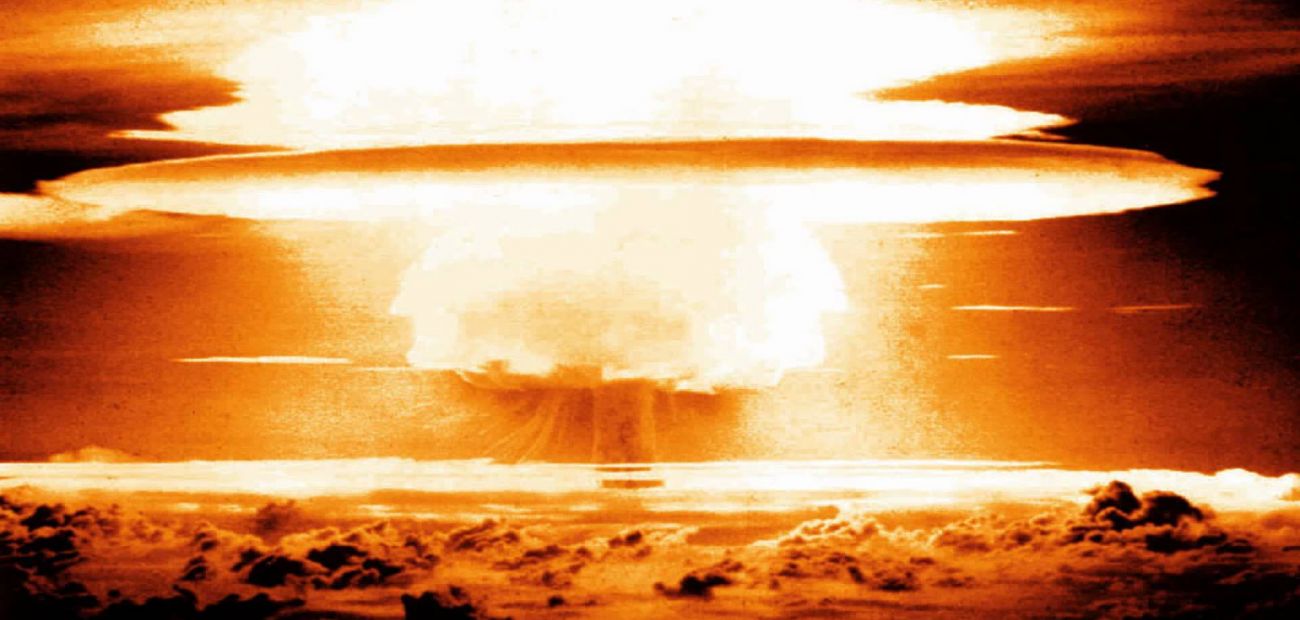

The contention that nuclear weapons serve as deterrence is totally unfounded. Peace cannot be sustained on the basis of fear; peace is long lasting if it is based on mutual trust. Despite the presence of nuclear weapons and threat of their use, peace is a far cry and there are conflicts going on in several parts of the world. These low-level skirmishes could at any time escalate into larger conflicts, which could, in turn, develop into a nuclear exchange. An analysis, for Different Truths.
The recently held campaigners meet of the 2017 Nobel Peace Prize Laureate organisation, the ICAN (International Campaign to Abolish Nuclear Weapons), at Geneva has appealed to the world leaders to have a wake-up call of the threat the nuclear weapons pose today. Their very presence is a grave danger to the existence of life on earth. Studies done in this regard have shown that even a limited nuclear exchange between India and Pakistan using 100 Hiroshima sized nuclear bombs would put two billion people at risk. But a larger nuclear exchange between US and Russia could lead to the extinction of all life forms from earth. The contention that nuclear weapons serve as deterrence is totally unfounded. Peace cannot be sustained on the basis of fear; peace is long lasting if it is based on mutual trust. Despite the presence of nuclear weapons and threat of their use, peace is a far cry and there are conflicts going on in several parts of the world. These low-level skirmishes could at any time escalate into larger conflicts, which could, in turn, develop into a nuclear exchange.
Even if nuclear weapons are not used, their manufacture, possession, putting them on alert and maintenance cost huge amounts, which could have otherwise been used for people’s well being. The nuclear-armed states spend close to US$ 300 million (Rs. 2000 crores) every day on nuclear forces. Global annual expenditure on nuclear arms is around US$ 105 billion or US$ 12 million an hour. As per World Bank estimates, only half of the annual global expenditure would be enough to meet the poverty alleviation programme needs. As 5th largest expender on arms with an annual outlay of nearly $60 billion, India is presently the biggest buyer of arms with 12% of total arms imports. Similar is the situation of Pakistan. Whereas the central government’s spending on arms budget is 1.62 of the GDP, on health, it is only 0.29%. UN Secretary-General Ban Ki-Moon has said “The world is over-armed and peace is underfunded. End of Cold War had led the world to expect massive peace dividend. Yet there are 20,000 nuclear weapons around the world. Many of them are on hair-trigger alert, threatening our own survival”.
According to the government’s own data, 30% of our population is below the poverty line, which means that about 42 crore people of the country are devoid of basic food requirements. As a result, as per the report of Food and Agriculture organisation of the UNO, there are 194.6 million people in India who are undernourished. India accounts for 22% of 6.3 million under 5 years deaths every year globally. Similarly, about 45,000 mothers die every year due to causes related to childbirth. This accounts for 17% of such deaths globally.
With the government’s definition of below poverty line (BPL) to be Rs. 32 per day in rural and Rs. 47 in urban areas, it can be easily made out how it is impossible for the average population of the country to get a balanced meal at the present rate of inflation.
Our people need money, which should be equitably distributed for them to live a decent life. But we too are trapped in the arms race. This wasteful expenditure, if utilized for welfare, can easily fulfill the basic needs for food, housing, education and healthcare of our people. It is, therefore, time that these issues are highlighted and made part of public debate.
Dr. Arun Mitra
©IPA Service
Photo from the Internet


 By
By
 By
By
 By
By
 By
By