
Ruchira describes many aspects of Indian summer, in literature, culture and nature. An exclusive for Different Truths.
 In temperate regions of the globe, the local inhabitants look forward to the bright sunny days of summer, which proffers respite from sub-zero temperatures, thick mantles of snow, icy winds and inclement weather. I am reminded of the popular lines from Sara Coleridge’s poem:
“April brings the primrose sweet
Scatters daisies at our feet”
Or
“June brings tulips lilies roses,
Fills the children’s hands with posies”
…the very mention of the summer season in lands closer to the tropics conjures up images of abundant bright sunlight, warm temperatures, long days with short nights, not to forget the profusion of aromatic flowers and foliage
On the other hand, the very mention of the summer season in lands closer to the tropics conjures up images of abundant bright sunlight, warm temperatures, long days with short nights, not to forget the profusion of aromatic flowers and foliage
“The wandering airs they faint
On the dark, the silent stream —
The Champak odours fail
Like sweet thoughts in a dream”
These lines penned by none other than the renowned poet Shelley offer a vivid description of an Indian (tropical to be precise) summer.
Don’t we all know that Indian summer season has been amply written about in short stories novels and poetry in diverse vernaculars as well as international languages?
The quintessential Indian summer – during pristine and pastoral ages – used to be mesmerising: the eastern horizon depicting a riot of rich vibrant hues, birds hailing the new morn with their merry twitter, a balmy breeze wiping away faintest traces of sweat, alongside creating ripples on the river waters
The quintessential Indian summer – during pristine and pastoral ages – used to be mesmerising: the eastern horizon depicting a riot of rich vibrant hues, birds hailing the new morn with their merry twitter, a balmy breeze wiping away faintest traces of sweat, alongside creating ripples on the river waters; early devout bathers 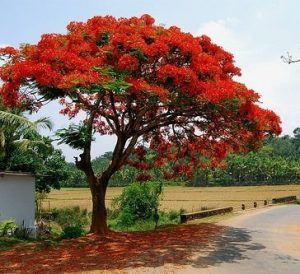 performing ablution in the river and pouring oblations to the effulgent sun god, known by various names Surya, Savita, or Aditya the veritable storehouse of all energy and power that lights up the world.
As always summer would breathe life into flora and vegetation, so to say. The subtle fragrance of mango blossoms, gulmohar and amaltas (Cassia Fistula) setting meadows and fields ablaze; the scent of flowers like beli, chameli, juhi (all variants of jasmine), mallika (mogra) raat ki rani (cestrum), Madhu malati (Chinese honeysuckle/ Rangoon Creeper), not forgetting the captivating and sensuous Rajanigandha (tuberose) would hang heavy in the evening air.
As the day grew longer and the sun climbed higher up in the sky, people would congregate under the sprawling banyan, peepul, and mango trees for all purposes be it socialising, group discussions or the much-needed siesta. Owing to the thick foliages the day’s heat would be muted at such shady spots.
When twilight arrived and the sun began to decline, cowherds gathered their livestock and commenced the homeward journey. Likewise, the weary farmers after daylong toil plodded their way home.
When twilight arrived and the sun began to decline, cowherds gathered their 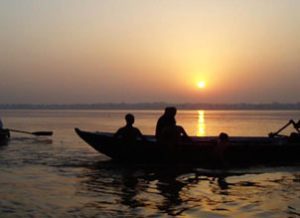 livestock and commenced the homeward journey. Likewise, the weary farmers after daylong toil plodded their way home.
Finally, darkness would envelop all…by way of nightlife and entertainment, folks, friends and families would gather in tiny groups, to indulge in gossip, intelligent conversation, folk dance, music, theatre, interspersed with religious discourses, and what have you…in places located near rivers, or by seaside, moist, cool evening breezes provided an additional bonus.
By way of dispelling the darkness of the night, the humble individuals would resort to earthen lamps candles, flaming torches and lanterns. However, outshining their illumination, was the soothing silvery beams of the moon, at times waning and waxing at others; this was further accentuated by the shimmering glittering light of millions of stars dotting the firmament…
Not anymore. The picture, shockingly, has changed beyond recognition. Path-breaking advancements in science engineering and technology have made summer months more comfortable, but in the process, humans have drifted away from Mother Nature…
Photo from the Internet

Born in Guwahati and raised across Delhi and Punjab, Ruchira Adhikari Ghosh is an alumna of Sacred Heart Convent, Ludhiana. She holds a master’s degree in English literature from Punjab University, Chandigarh, and a postgraduate diploma in Journalism. With nearly 25 years of experience in print, web, and television media, she has carved a niche as a feature writer. Her writing focuses on women’s issues, food, travel, and literature, reflecting both versatility and depth.

 By
By
 By
By
 By
By