
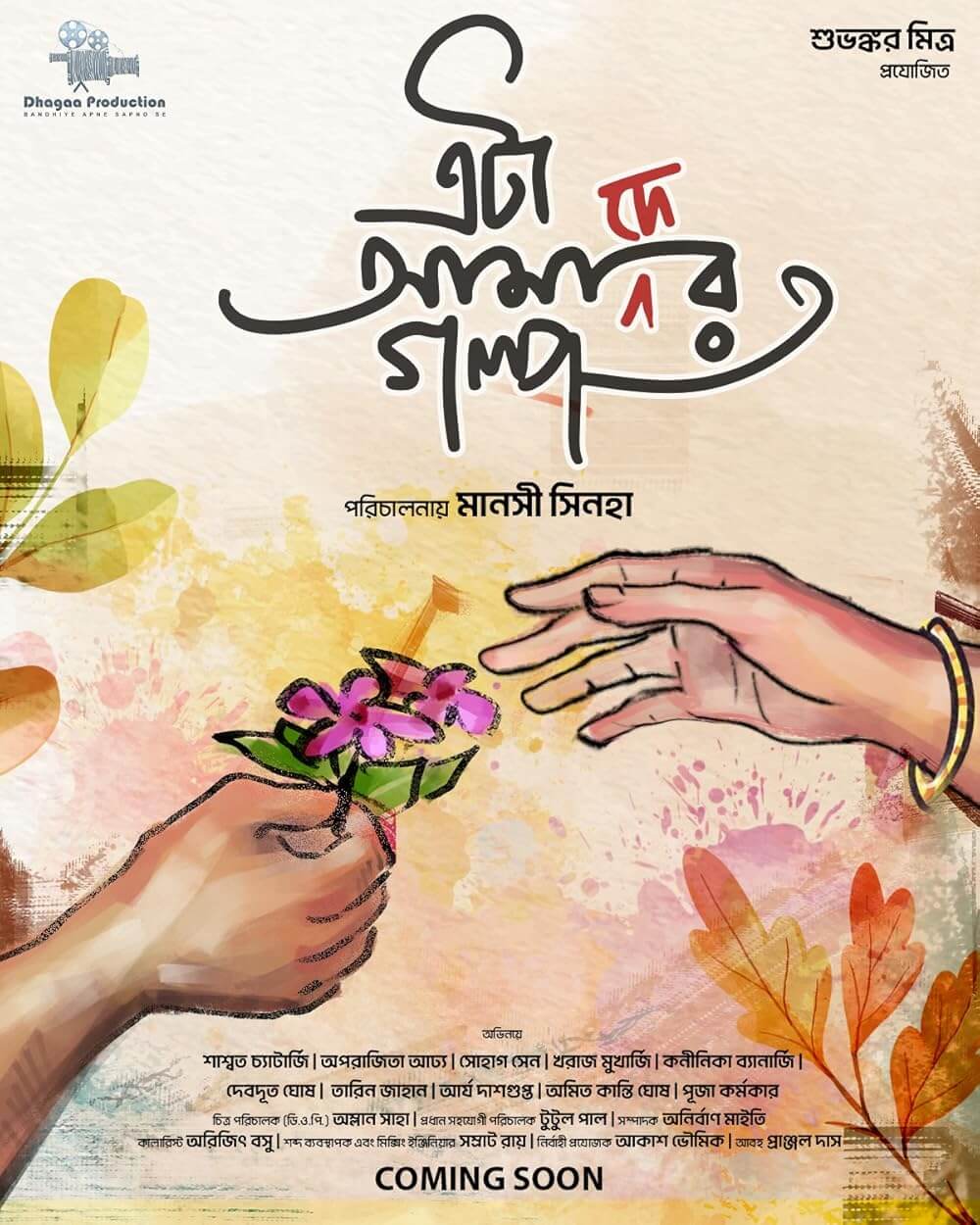

Ruchira critiques a Bengali film that explores love between elderly individuals Pravin and Sreetama, navigating societal expectations and personal challenges, offers a unique perspective on family relationships, exclusively for Different Truths.
I am sure movie buffs and regular cine-goers are going to sit up and take notice when they learn about Eta Amader Golpo, which happens to be veteran Bengali actress-turned-director Manasi Sinha’s debut film
Indian tinsel world has a rich repertoire of films based on the perennial theme of love. However, it is undeniable that, out of the entire lot, those focusing on the theme of love that springs up between mature, elderly folks (aka senior citizens) may be counted on one’s fingertips. Kudos to Sinha for achieving this with élan.
Yes, it is a film with a difference. An elderly Punjabi bachelor, Pravin Sharma (played by Shashwata Chatterji) falls in love with a Bengali widow, Sreetama (Aparajita Auddy), a fellow early morning jogger in a nearby park, who has two grown-up, married children, grandchildren, and a formidable daughter-in-law in tow. The elderly gentleman lives with his younger brother’s family of three, plus an old aunt. Another boy in the family is in the army. He is Pravin’s (deceased) older sibling’s son and now his protégé. He stays behind the scenes throughout the flick. Nevertheless, his existence is crucial to the plot.
As days and months pass, their love deepens, and a yearning for steady companionship in the evening of their lives grows more intense. When the duo breaks the news to their respective families, there is great wonder, surprise and gawking everywhere. The Sharma family soon comes to terms with reality. Sritama’s children, grandkids, and son-in-law appear reconciled to the new development. But it is her daughter-in-law who strikes the discordant note. She admonishes her mom-in-law for tarnishing the family’s reputation and prestige. However, the hearts-in-love forge ahead undaunted. Fortunately for the couple-to-be, their very young acquaintances and neighbours are highly impressed by their bold decision and stand by them like a solid rock.
The next part of the movie is replete with maudlin, ‘girly’ stuff, and elaborate shopping expeditions, all women’s song & dance sessions (a salient feature of Punjabiyat) tomfoolery and lovey-dovey stuff, which could easily have been left out. Probably the director intended this to be a comic interlude before ushering in the serious atmosphere of the concluding part.
During the countdown to D-Day Sreetama is perplexed: torn between the memories of her past married life and anxiety regarding what the future holds for her.
As the wedding day dawns, the bride’s household is agog with excitement and a flurry of activities. While Sreetama dresses herself for the occasion, there suddenly appears a bolt from the blue! Pravin has suffered a heart attack, upon receiving the news of the death of his Fauji nephew, and is dead! In what may be termed a cruel irony of fate, a hearse arrives at the wedding venue instead of the baarat (the groom’s procession). Surprisingly, Sreetama accepts the calamity with stoicism and calm instead of giving in to grief and despair. Perhaps she realises that it was not meant to be, after all.
As the movie ends, we see Sreetama maintaining her composure as the two households rally around her. Together, they decide to live as one family to perpetuate the memory of their dear departed.
Picture from IMDb

Ruchira Adhikari Ghosh brings a liberal, wide-ranging outlook shaped by extensive travel across India and abroad. Educated at Holy Child School, New Delhi, Sacred Heart Convent, Ludhiana, and Panjab University, Chandigarh, she holds a Master’s in English Literature and a postgraduate diploma in Journalism and Mass Communication. With three decades in media, she writes on travel, books, music, performing arts, women’s issues, and especially food, drawing inspiration from rich life experiences. She is our Features Editor.



 By
By
 By
By

 By
By