
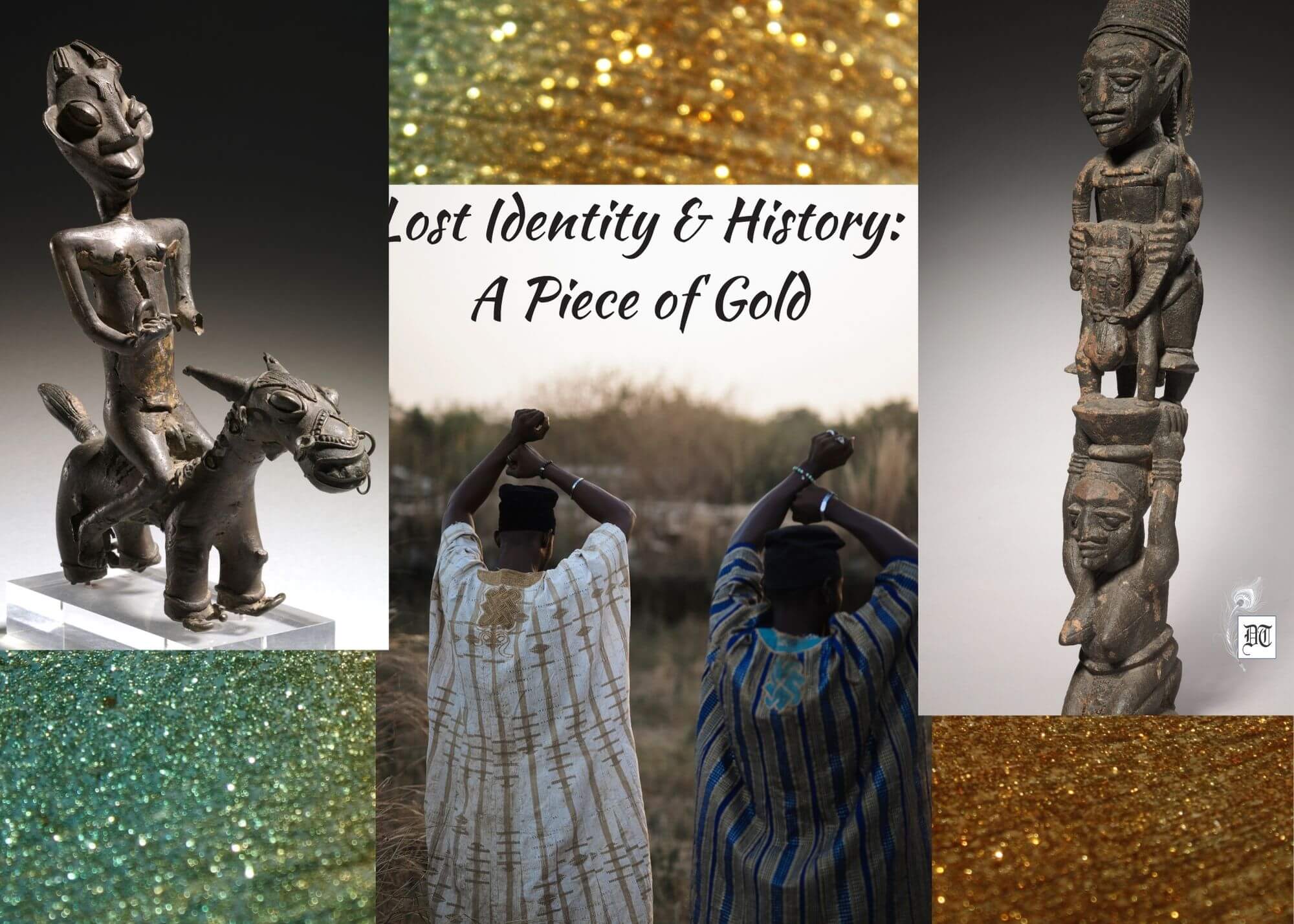
For centuries before the arrival of the British colonial administration, most Yoruba already lived in well-structured urban centres, informs Swati, in an eclectic write-up – exclusively for Different Truths.
Wúrà tó máa dán, á la iná kọjá
“A piece of gold that wants to shine must pass through fire first.” – Famous Yoruba Proverb
A beautiful land spreads north from the Gulf of Guinea and west from the Niger River into Benin and Togo. Mangrove forests characterise this land, estuaries and coastal plains in the south, which rise steadily northwards into rolling hills and a jagged highland region in the interior, commonly known as the Yorubaland plateau or Western upland. Several large rivers flow in two general directions within the Yoruba country; southwards into the lagoons, estuaries and creeks, empty into the Atlantic Ocean, and northwards into the Niger river.
The people who lived in Yorubaland were not initially known as the Yoruba, although they shared a common ethnicity and language group. The historical Yoruba develop in situ, out of earlier (Mesolithic) Volta-Niger populations, by the 1st millennium BC. The oldest known textual reference to the name Yoruba is found in an essay (titled – Mi‘rāj al-Ṣu‘ūd). Mi‘rāj al-Ṣu‘ūd provides one of the earliest known ideas about the ethnic composition of the West African interior. The reference implies that Yoruba was already in popular demotic use as far back as the 1500s.
Research based on oral and written sources suggests that this name existed before the 1500s.
Regarding the source and derivation of this name, guesses were proposed by various sociologists like – Ya’rub (son of Canaanite, Joktan), Yolla Ba (Mande word for the Niger River) etc. These guesses suffer a lack of support from many locals for being alien to (and unfounded in) the Yorubas’ traditions. In his work, Abeokuta and the Camaroons Mountains, the English ethnologist Richard F. Burton notes that the name “Yoruba” derives from Ori Obba, i.e., The Head King. Research based on oral and written sources suggests that this name existed before the 1500s.
The Yoruba are among the most urbanised people in Africa. For centuries before the arrival of the British colonial administration, most Yoruba already lived in well-structured urban centres organised around powerful city-states (Ìlú) centred around the residence of the Oba (king). In ancient times, most of these cities were fortresses with high walls and gates. Yoruba cities have always been among the most populous in Africa.
Interestingly the history of the Yoruba people begins in Ile-Ife (Ife Empire).
Interestingly the history of the Yoruba people begins in Ile-Ife (Ife Empire). This kingdom was founded by the deity Oduduwa, who is believed to have created the world. Oduduwa was the first divine king of the Yoruba people. The Yoruba people believe their civilisation began at Ile-Ife, where the gods descended to earth. We will read more about this interesting detail in the following columns.
A kì í mọ iyì wúrà tí kò bá sọnù

A piece of gold is seldom appreciated until it gets lost.
(Famous Yoruba saying)
Picture design by Anumita Roy

International author, corporate trainer, columnist, blogger, public speaker and a sociologist — Swati Kumar is certified by MIT. She is an avid reader, dynamic storyteller, passionate writer, and concerned sociologist. With a master’s degree in Sociology and a Gold Medal at that, she has engaged various learning platforms, business houses and organisations in developing their human resource assets. She believes transformation is possible if we co-create a just, inclusive, and progressive society.


 By
By
 By
By
 By
By
 By
By