
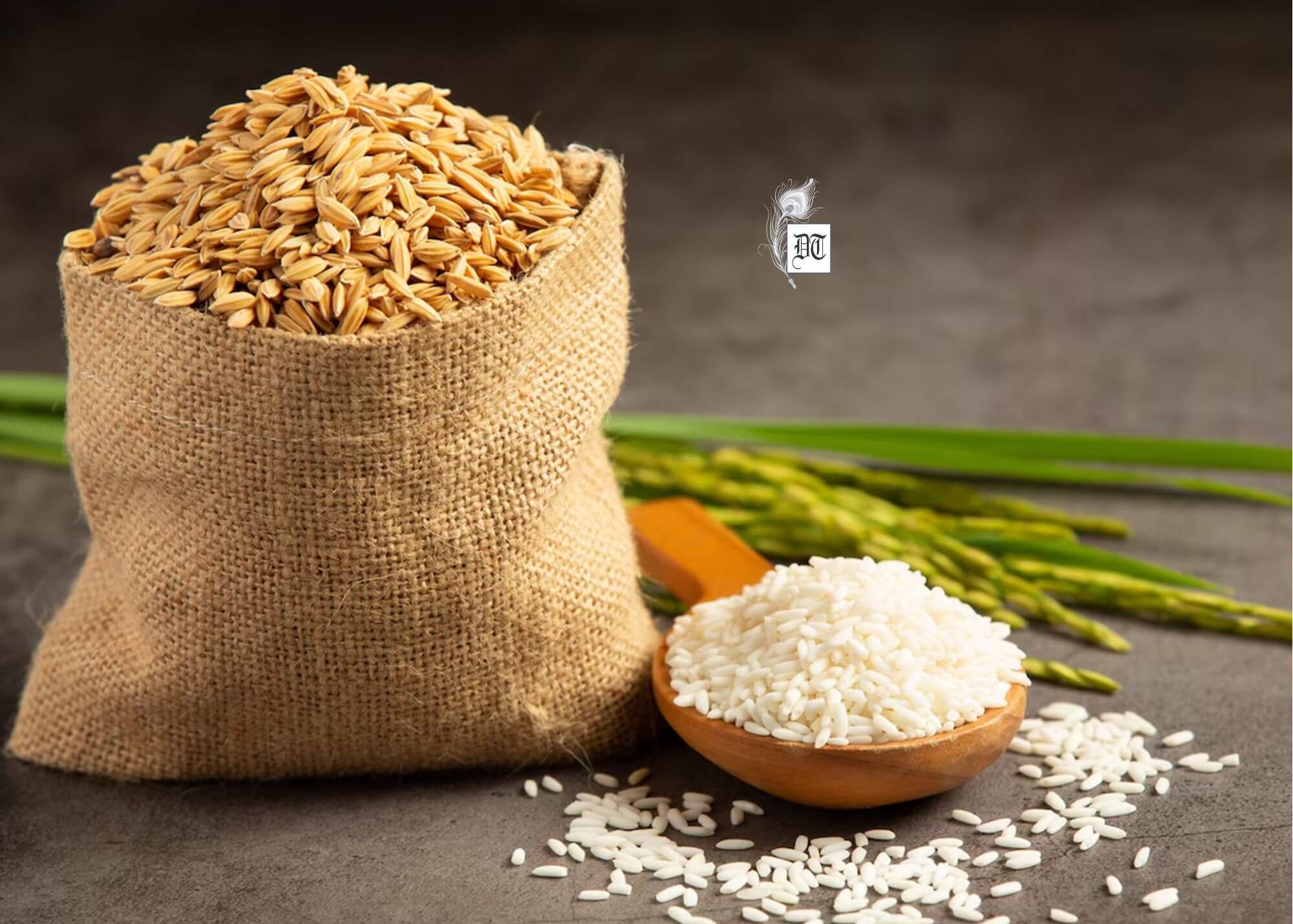

Ruchira explores the profound cultural significance of rice, a global staple, featured on DifferentTruths.com.
AI Summary
· Rice, a staple with ancient origins, is central to various global cultures and diets, especially in Asia.
· It holds deep symbolic meaning in ceremonies, from Chinese emperor rituals to Indian weddings and baby showers.
· The grain’s importance extends to religious veneration and daily life, as seen in Bengali traditions and Nichiren Buddhism.
Rice – this word brings pure delight to devoted consumers. The white, fluffy grains emit a natural aroma and are a feast for the eyes. The history of rice is lost in the mists of a distant past, with no documented evidence of when humans first recognised the rice plant as a source of food and began its cultivation. Historians suggest that rice was cultivated around 5000 BC.
Archaeological findings indicate that rice was discovered in India around 4530 BC; however, other sources claim that it originated in China around 2800 BC. Legends suggest that the Chinese emperor Shen Nung recognised rice’s importance for his subjects and established annual rice ceremonies in its honour before the sowing season. As befitting his status, the emperor would scatter the first seeds. Over the centuries, many variants of these ceremonies evolved to highlight rice’s significance, and today, the Chinese dedicate one day of their New Year festivities to observing it.
Globally, rice was introduced to Europe and the Americas through a multitude of travellers—explorers, soldiers, merchants, and pilgrims—who carried the seeds and cultivated them in their new environments. Certain parts of America and regions of Europe, such as Italy and Spain, have favourable climates and access to water that allows rice cultivation to thrive. Some historians believe that rice was brought to America in 1694 on a British ship bound for Madagascar.
It is refreshing to note that the extensive landmass from Japan to India is primarily inhabited by people who consume rice, as rice is native to Asia. The predominantly tropical climate and the availability of irrigation water significantly enhance the cultivation process.
In our country, rice is a precious commodity, enjoying tremendous prestige in most households nearly every hour of the day. Bachelor or stag parties of the West appear in a new format in our society. For instance, Bengalis refer to their bachelor parties as “aaiburo bhaat” (aaiburo means single or unmarried, and bhat means ‘rice’), indicating it is the last meal enjoyed before entering into wedlock.
In coastal states of India, during baby showers, the expectant mother is traditionally fed rice, a symbol of fertility. It is in continuity with this belief that the custom of throwing rice at newlyweds during and after the wedding exists. We are familiar with the tradition of “Annaprashanam”, where infants around five to six months old are fed rice, along with other dishes, as their first solid meal.
A medley of folklore and legends has emerged around rice. In many cultures and societies, it is deeply integrated into religious beliefs. For example, in Japan, rice has its own deity, Inari, while in Indonesia, the rice goddess, Dewi Sri, is venerated. The highly popular alcoholic beverage of Japan -Saki- is brewed from rice. Such is its importance that it is used in socio-religious ceremonies.
On a personal note, I have long been a follower of Nichiren Buddhism (of Japanese origin), where adherents venerate a sacred scroll called the Dai Gohonzon. When a practitioner enshrines the Gohonzon in their home, ceremonial offerings of (uncooked) rice grains and fruits are made.
Closer home, after a Bengali bride steps into her new residence, a ceremony is conducted in which she serves rice (e.g., pulao or fried rice) to the elderly members—traditionally men, though this has now changed to include women—of her spouse’s family. This act symbolises her acceptance into the family.
During my childhood vacations spent at our family home in Kolkata, I would watch in amazement as office-going family members had rice for breakfast and carried portions for lunch. School-going children also ate rice in the morning. By tea time, they would get back home and settle down for yet another meal of—yes, rice! Dinner, too, was invariably rice, naturally.
From its early beginnings to the present day, rice continues to play an integral role in sustaining both the world’s appetites and cultural ethos.
Picture design by Anumita Roy

Ruchira Adhikari Ghosh brings a liberal, wide-ranging outlook shaped by extensive travel across India and abroad. Educated at Holy Child School, New Delhi, Sacred Heart Convent, Ludhiana, and Panjab University, Chandigarh, she holds a Master’s in English Literature and a postgraduate diploma in Journalism and Mass Communication. With three decades in media, she writes on travel, books, music, performing arts, women’s issues, and especially food, drawing inspiration from rich life experiences. She is our Features Editor.


 By
By
 By
By
 By
By
 By
By