

Sarika shares a soulful reflection on DifferentTruths.com, blending nostalgic Northeast Assam winters with the timeless aroma of traditional Bengali cuisine.

AI Summary
- Nostalgic Traditions: Sarika reminisces about childhood winters in Assam, defined by golden sunlight, family reunions, and the local book fair.
- Maternal Tribute: The narrative honours the quiet grace and immense labour of mothers who anchored seasonal celebrations through food and warmth.
- Culinary Heritage: Features a detailed recipe for Koraishutir Kachuri, a classic pea-stuffed bread that symbolises Bengali winter comfort and connection.
Winter has a unique way of arriving every year in the Northeast of Assam, like an old friend returning, bringing with it a chill that wraps the world in a crisp embrace, but also a warmth that settles deep within the heart. It’s a time for reflection, joy, and, of course, the kind of warmth that only the winter months can bring. Every winter brings a pool of memories of the shared moments and traditions we’ve built over the years. In the part of Assam where I was born and grew up, winter is a season unlike any other, and for me, it has always been filled with warmth that goes beyond the tangible.
Growing up in a Bengali family in this beautiful part of the world, winter meant not just the occasional fog hanging in the morning air, but a time for food that spoke volumes about love, community, and tradition. The kitchen became the centre of all activity during these months, with rich and aromatic dishes like shorshe ilish, different types of macher jhol, nuton alu r dum, patishapta, and pithe puli, countless, each bite of these meals adding to the sense of warmth that filled the house. The food was never just food; it was an experience, a connection to the past, and a reminder of the season’s essence.
But winter was never just about food; it was about the way the world seemed to slow down, giving us time to pause and appreciate the little things. We’d spend our days enjoying the outdoors—bundled up in woollens, we’d go for picnics in the weak winter sun or enjoy a peaceful session of sunbathing on the veranda. The sun in Assam, even in winter, held this special magic—its golden light seemed to transform everything, making even the coldest days feel warm in a way that was unique to this place.
Winter in Assam also meant Boimela, the much-awaited book fair, with the promise of new stories and fresh experiences. We’d get lost in the pages of books, with the warmth of tea in our hands and the joy of reading, which was a winter tradition that made everything feel complete.
Then there were the family visits. The arrival of cousins was always a highlight of the season. The laughter and energy filled our home with a contagious liveliness. Every visit felt like a mini celebration, with endless rounds of food and snacks, and stories shared from one generation to the next. The kitchen was always abuzz with activity, as pithas and sweets were served, and our home transformed into a hub of warmth, joy, and connection. We stayed up late into the night, laughing, reminiscing, and weaving our own family tales into the fabric of those winters.
Looking back now, I realise just how much Maa had to manage during those days to make all of this happen. The preparations, the endless cooking, and the organising—none of it was easy. But she did it all with such grace, ensuring that we felt the magic of the season in every way possible. As I reflect now, as an adult, I understand the effort that went into those days, and I realise how exhausting it must have been for her to carry the weight of it all. While we were enjoying the warmth of family, food, and fun, she quietly held everything together, ensuring that no moment went unappreciated.
Winter is never just a season. It is an experience that brought everything we loved together: the food, the traditions, the family, and the deep sense of belonging. In those fleeting days of cold air and warm hearts, I now realise that what made winter so special wasn’t just the meals or the fun, but the warmth of connection, the quiet sacrifices, and the effort that made each winter unforgettable. It was in those simple moments, gathering around a fire, sipping tea with a book in hand, and laughing with family, that I learned the true meaning of warmth. And it’s these memories, rooted in the heart of winter in Northeast Assam, that I carry with me, a constant reminder of the beauty of family, love, and tradition.
Bengali winters are almost synonymous with koraisutir kachori. At least once every winter, nearly every Bengali household brings this delicacy to the table. It’s more than just food — it’s nostalgia, warmth, and emotion wrapped in a golden, puffed shell. While changing times are reshaping our eating habits and nudging us toward healthier and quicker alternatives, traditional dishes still carry stories, memories, seasonal wisdom, and nourishment that go beyond nutrition charts. They take time, yes, but they also give back comfort and connection. I love balancing both worlds, cooking modern recipes and returning, time and again, to traditional favourites.
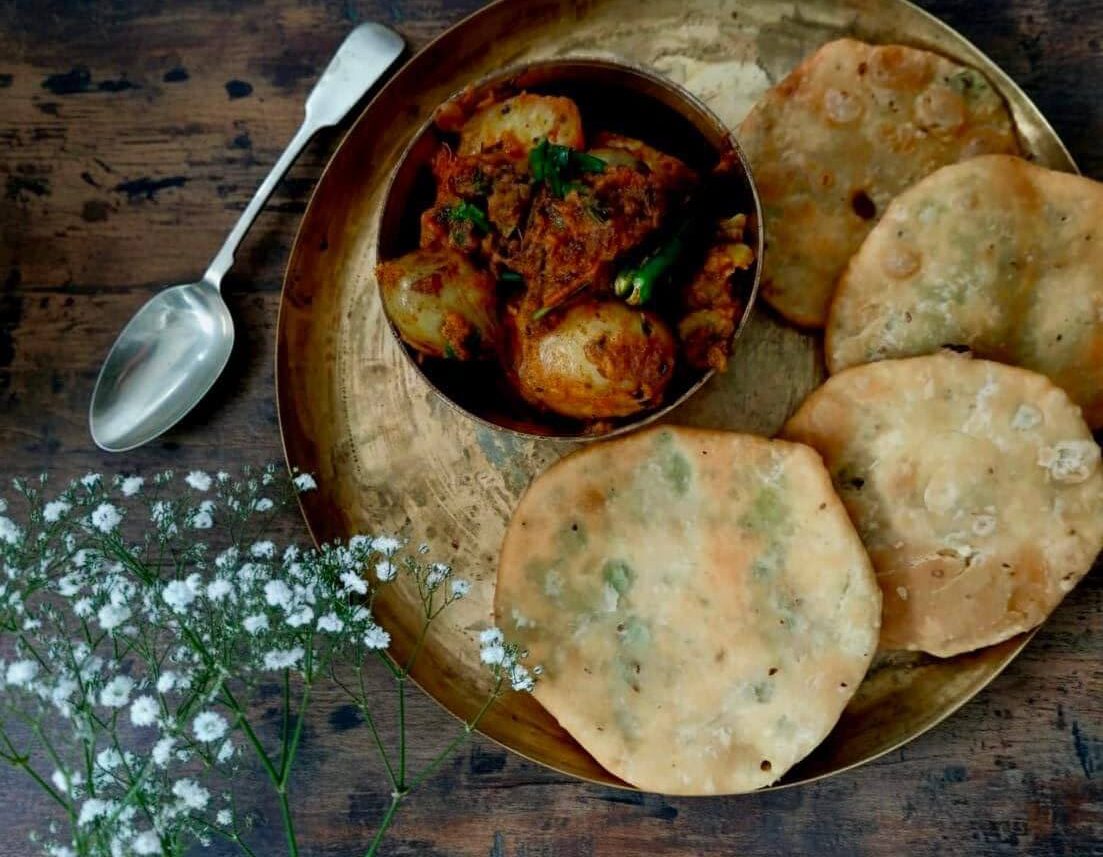
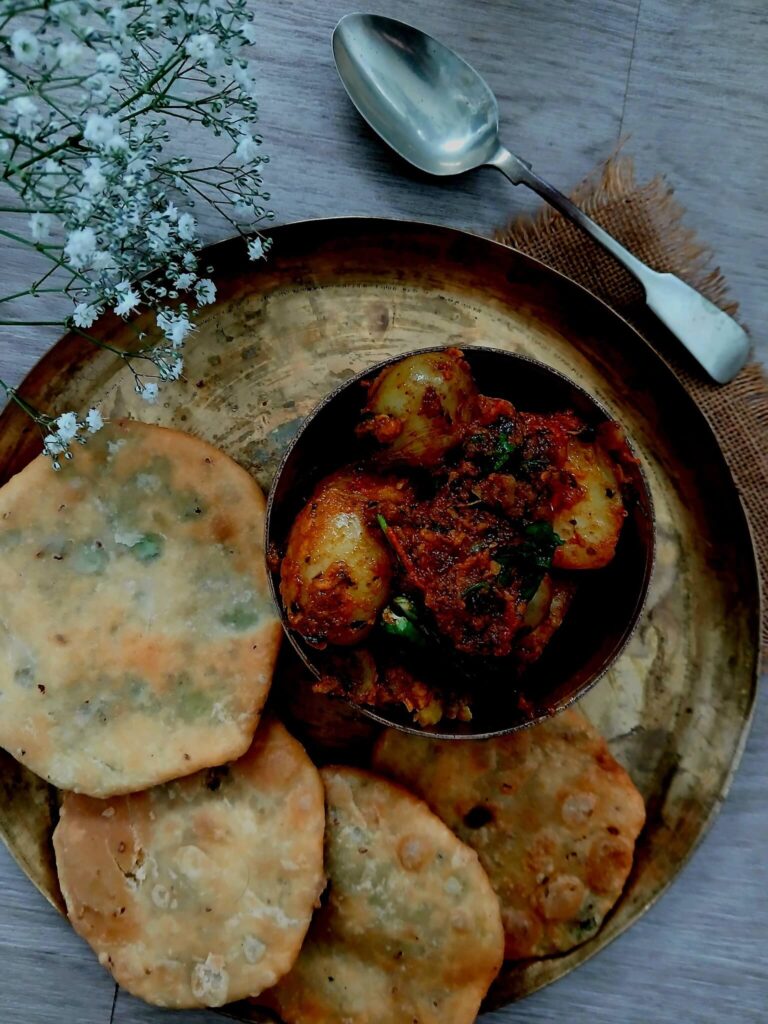
This time, I made korai sutir kachori paired with notun alur torkari.
Koraisutir kachori (Bengali Peas Kachuri):
Fresh green peas were ground with ginger and spices, tucked into soft dough, and rolled with care and love. As each kachori slipped into hot oil, it puffed into a golden, crisp shell — light, flaky, and full of winter magic. Served hot, and the smile on the corners of the lips of the loved one is beyond words.
Koraishuti, the Bengali term for peas, is the key ingredient in Koraishutir Kachuri, a popular flatbread from Bengali cuisine. These golden, crispy fried breads are stuffed with a delicious green pea filling, making them a cherished snack or breakfast dish in Bengali households.
Course: Bread, Cuisine: Bengali
- Prep Time:30 minutes
- Cook Time:30 minutes
- Total Time:1 hour
- Servings: 25 Kachuris
Ingredients
For the Dough:
1. 400 g All-Purpose Flour
2. 100 g Whole Wheat Flour
3. ½ teaspoon Salt
4. 2 teaspoons Refined Oil
5. Water (about 1 cup and 3-4 tablespoons)
For the Stuffing:
1. 500 g Green Peas (Koraishuti/Matar), shelled
2. 2 teaspoons Ginger Paste
3. 2 green chillies (to taste)
4. ½ teaspoon Salt
5. 1 teaspoon Sugar
6. ¼ teaspoon Asafoetida (hing)
7. 1 tablespoon Refined Oil
For the Spice Mix:
1. 1 teaspoon Cumin Seeds
2. ½ teaspoon Carom Seeds (Ajwain) – optional
3. 1 Dried Red Chilli
For Frying Kachuri:
200 ml Refined Oil (for deep frying)
Instructions
(I) Bhaja Masala:
1. Toast the cumin seeds, carom seeds (if using), and dried red chilli in a non-stick pan over low heat for 1-2 minutes until fragrant.
2. Let the spices cool completely.
3. Grind the cooled spices into a coarse powder and set aside.
(II) Prepare the Stuffing:
1. Blend the green peas and green chillies into a smooth paste using a blender or mortar and pestle (sheel nora).
2. Heat 1 tablespoon of oil in a non-stick pan. Add asafoetida and ginger paste. Sauté for 1 minute on low heat.
3. Add the blended pea mixture and cook on medium heat.
4. Stir in the bhaja masala, salt, and sugar. Continue cooking until the mixture is no longer sticky.
5. Remove from heat, and let the stuffing cool completely.
(III) Make the Dough:
1. Sift the all-purpose flour, whole wheat flour, and salt together in a large bowl.
2. Add 2 teaspoons of refined oil. Mix by hand until crumbly. (Optional: add 1 teaspoon of ghee).
3. Gradually add water (about 1 cup and 3-4 tablespoons), kneading until smooth but not too tight.
4. Cover the dough with a damp cloth and let it rest for 10 minutes.
(IV) Assemble the Kachuris:
1. Divide the dough into 25 equal portions. Shape each into a ball.
2. Flatten each ball into a small disc.
3. Place a spoonful of pea stuffing in the centre. Fold the edges to seal and roll it back into a ball. Then flatten gently into a disk. Use a rolling pin if needed.
4. Repeat this with the remaining dough and stuffing.
(V) Fry the Kachuris:
1. Heat enough oil in a wok or deep-frying pan over medium heat for deep frying.
2. Flatten each stuffed ball into a 4-5-inch disc, ensuring there are no holes.
3. Gently drop the kachuris into the hot oil. Fry until golden brown on both sides.
4. Remove the kachuris from the oil and drain on paper towels to remove excess oil.
Ready to serve.
Photos by the author

A teacher, day dreamer, random experimental cook and some hit and miss photography, and at last love to call myself a full time mother.


 By
By
Painting with words to water mouths and rumble tummies!