

Hemashri discovered healthy boundaries, self-worth, and effective parenting for a life filled with genuine love and care, exclusively for Different Truths.
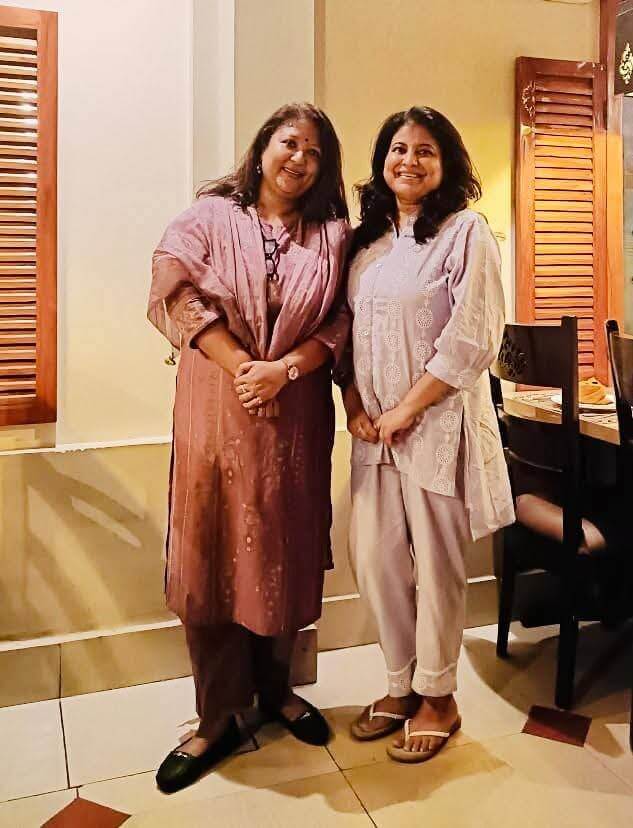
Meeting Shehnaj Parveen a few years ago was nothing short of a blessing. I had gone to her for counselling of our traumatised son, who had become very withdrawn and silent after losing his father at the age of 14. Another blow came immediately when he had to give up his passion, i.e., swimming, for two years due to the COVID lockdown. He was committed to swimming with a dream to pursue it further. He had represented the state at the national level and had won a Sports Authority of India (SAI) scholarship for swimming.
Just as I was about to leave her chamber, driven by curiosity, I told her, “Maybe I also need a session.” I had always noticed that despite going out of my way to help or serve people (I love it), those very individuals often failed to show even basic courtesy, let alone gratitude. While this taught me the value of being grateful myself, I still used to wonder, Why does this keep happening?
She looked at me and said bluntly, “The problem is not in them. It’s in you. You’re a people pleaser.”
I was initially taken aback, disgusted by her audacity. But once I returned home and gave her words some serious thought, to my utter surprise, I realised she was right.
Indeed, I was a people pleaser. Constantly reaching out, volunteering to help or spending time with others, only to be taken for granted.
As I explored this hidden part of me, I traced it back to my childhood. Being the firstborn, I was always told to be the role model—the typical big sister. Perhaps that’s when I began this lifelong (mis)adventure of trying to be a ‘good Samaritan’. In the process, I may have imposed myself on many people, many times, without even realising it.
I was always vocal when it came to standing up for others, but when it came to my inconvenience or even humiliation, I would keep silent. Not out of fear, but because I hated hurting others and wanted to test my resilience. The result? Growing resentment, silent frustration, and dormant depressive tendencies.
It was only after interacting with Shehnaj that I learnt the life-changing concept of healthy boundaries.
What is a Boundary?
We all know about the boundaries we put up around our homes—fences and gates to keep our property secure, to prevent trespassers, and to mark what is ours.
In much the same way, we need to maintain healthy emotional and psychological boundaries in our relationships. When someone disrespects or humiliates us, we must assert ourselves. Failing to do so leads to resentment, anger, and emotional exhaustion. If asserting or venting out is not possible, the next best thing is to maintain distance and cut the cord.
Healthy boundaries are essential for protecting our peace.
Shehnaj made me aware of this, and for that, I shall remain forever grateful. Since then, I have been sincerely trying to implement this awareness in my life. I’ve realised that while we often try to change others, the real challenge is in changing our habits, patterns, and responses.
I’m still a work in progress, but I’m committed to growing. As parents, we need to instil healthy behaviour patterns in our children. Unhealed childhood trauma, repressed anger, or frustration can have unhealthy repercussions even in later phases of life. We need to understand our parenting style. There are various styles of parenting, like authoritative, authoritarian, permissive, and uninvolved. As parents, we must also unlearn and relearn many things ourselves to be able to guide or understand our children better. We must act as role models to let our children appreciate “self-worth” and “self-preservation” to face real-life challenges head-on.
Thank you, Shehnaj Parveen.
Photo by the author

Hemashri Hazarika is an Officer of the Assam Civil Service since 1997. Her research on Assam Civil Service brought reforms in 2015. A first-class Postgraduate in Economics from Gauhati University, she was awarded JRF/NET by UGC in 1997. Her experience as a bureaucrat has sensitised her to human sufferings. A solutionist by passion, she takes an active interest in issues related to Governance, Development, Women, Children, etc. Reading, Writing, Speaking and Painting are her hobbies.


 By
By
 By
By
 By
By
 By
By
I’m so glad to read this article and witness your journey and the efforts you’ve put in to help and change your patterns, from being a people pleaser to trying to set boundaries in every aspect of your life is remarkable.
We are all work in progress so keep working on yourself and remember that we are all patterns and being mindful of our patterns can help us achieve our goals.
Thank you for mentioning me and my best wishes to you to keep achieving and setting healthy boundaries.
Shehnaj Parveen
Life coach
Boundary coach
NLP Practitioner
Excellent write up .
Truly eye opening.